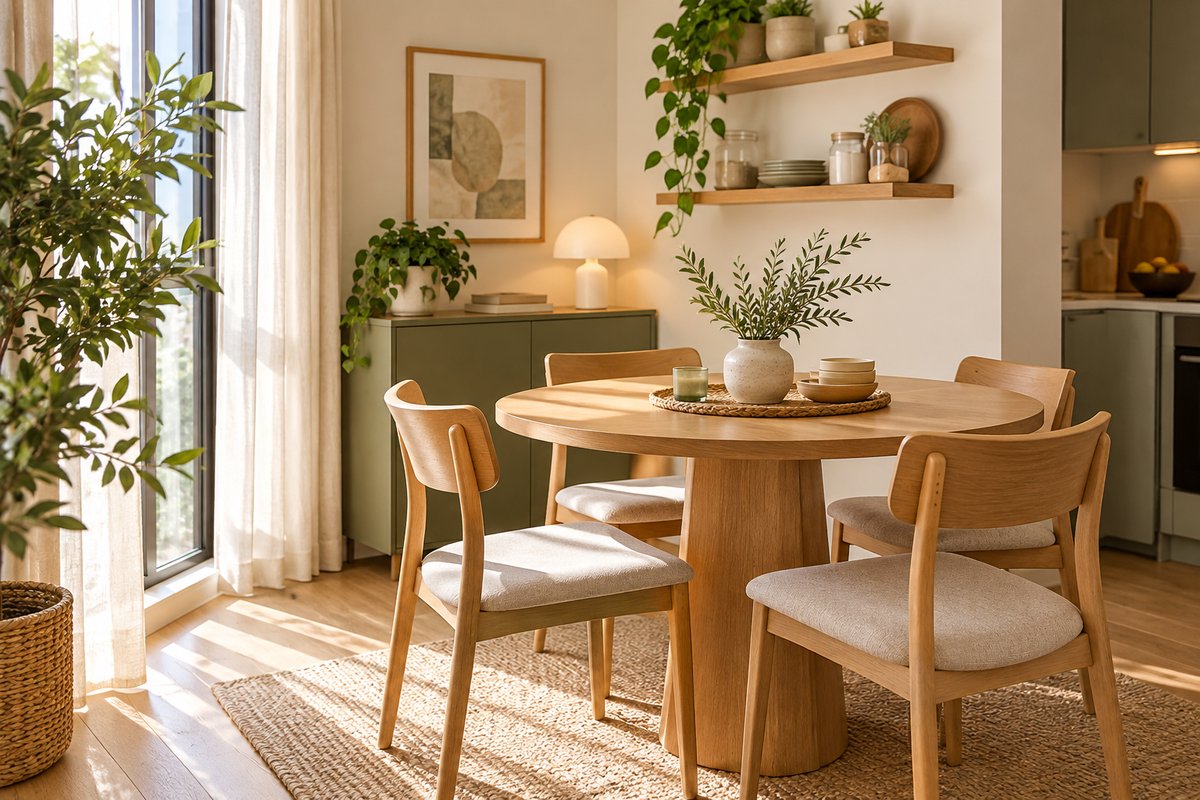
15 Small Dining Area Organization Ideas for Apartments
A small dining area can become one of the busiest places in an apartment. Meals happen there, but so do laptops, mail, grocery bags, homework, and the random things that need a temporary place to land.
The best small dining area organization ideas do not try to turn a compact corner into a formal dining room. They make the space easier to reset, easier to walk through, and easier to use for the activities that actually happen there.
The key takeaway: Keep the dining surface available for dining. Give everything else — papers, chargers, linens, serving pieces, and work supplies — a nearby home that does not compete with the table.
Start by looking at how the area is used during a normal week. A dining setup that works for one person with occasional guests needs a different system from a table that doubles as a daily workspace.
Quick Small Dining Area Wins
- Clear everything from the tabletop that does not support a current activity.
- Keep one nearby basket or drawer for items that usually land on the table.
- Leave enough open floor space for chairs to pull out comfortably.
- Store occasional serving pieces away from the everyday dining zone.
- Reset the table at the end of each day instead of letting clutter accumulate.
Plan the Switch Between Meals and Other Uses
If your dining table also supports work, homework, or sorting mail, decide where each activity’s supplies go when the next one begins. A nearby storage spot only helps if you can clear and set the table without carrying loose items around the apartment.
Try this no-purchase handoff for a normal week:
- Before a meal: Put papers, laptop, and chargers together in one existing basket, drawer, or shelf; clear the table for the place settings you actually use.
- Before work or homework: Return meal items to their normal homes, bring out only the current task’s kit, and leave a place for the next meal.
- At day’s end: Return the kit and clear the table so it can be used without a new sorting session.
Fit check before adding furniture: Pull out each chair as you normally would, open nearby doors and drawers, and walk the route past the table. Note the clear width and the depth of any proposed storage piece while it is open, not only when it is closed.
Review: Which item still landed on the table? ______ Where could it go using storage you already have? ______ Could you change activities without blocking the walking route? ______
1. Keep the Tabletop Mostly Empty
The dining table works better when it begins each day with open space. If most of the surface is covered by decorative objects, mail, chargers, and containers, the table becomes harder to use before a meal even begins.
Keep only one small centerpiece if you enjoy having one. Everything else should have a nearby storage spot. A clear surface also makes the room feel larger because the eye can see the full shape of the table.
2. Create One Landing Spot Away From the Table
If keys, receipts, sunglasses, and mail always end up on the dining table, the problem is usually not the table. The apartment is missing a convenient landing spot.
Use a shallow tray, small wall shelf, narrow console, or basket close to the entry path. The goal is to intercept everyday items before they reach the dining surface.
3. Match the Table Size to the Space You Actually Have
A table that is slightly too large can make an apartment dining area feel much smaller than it is. Measure not only the table itself, but also the space needed to pull out chairs and walk behind them.
If circulation feels tight every day, consider a narrower rectangular table, a small round table, or a drop-leaf design. The best table is not the one with the most seats. It is the one that works when those seats are not in use.
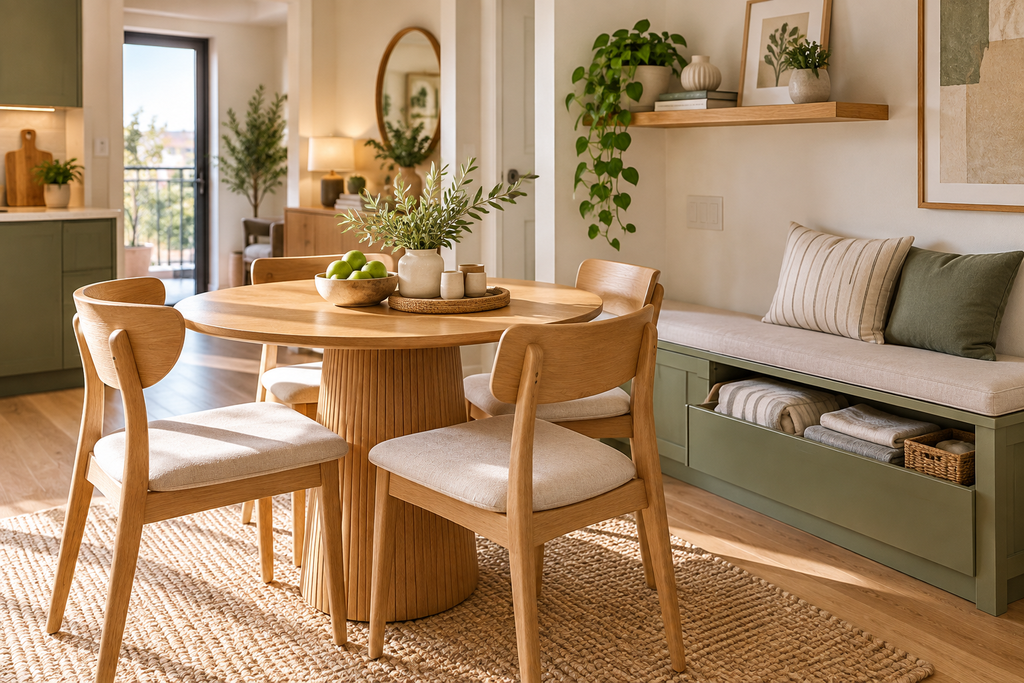
4. Use a Bench Where Chair Clearance Is Tight
A bench can be useful when one side of the dining area sits close to a wall. Unlike individual chairs, it can slide fully under the table and reduce visual clutter.
A storage bench can also hold table linens, reusable shopping bags, or occasional dining items. Keep the contents limited so the bench remains easy to open instead of becoming another hidden clutter zone.
5. Give Placemats and Napkins One Small Zone
Table linens often create unnecessary clutter because they are stored in several different places. Keep the everyday set together in one drawer, basket, or shallow shelf near the dining area.
Seasonal or rarely used linens can live elsewhere. The dining zone only needs the items you reach for regularly.
6. Keep Serving Pieces Separate From Everyday Dishes
Large platters, serving bowls, cake stands, and extra glasses do not need the easiest storage positions if they are used only occasionally.
Move them to an upper cabinet, pantry shelf, or another protected storage area. This leaves the most accessible kitchen and dining storage for items that support everyday meals. If your kitchen cabinets are already tight, our small kitchen cabinet organization guide can help you reorganize those zones first.
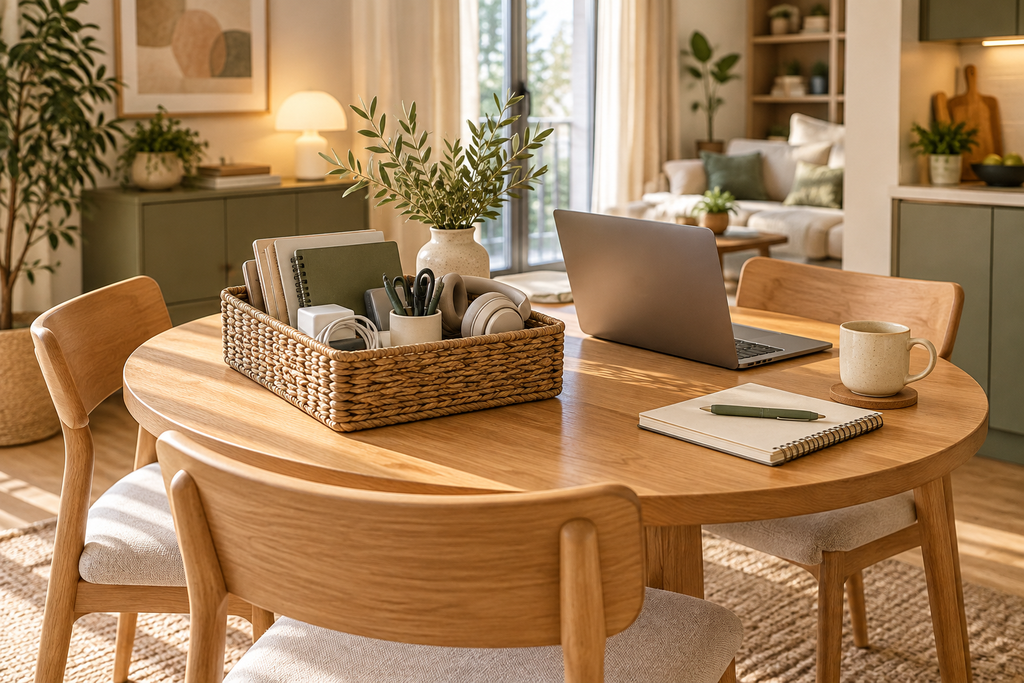
7. Use One Basket for Dining-Table Work Supplies
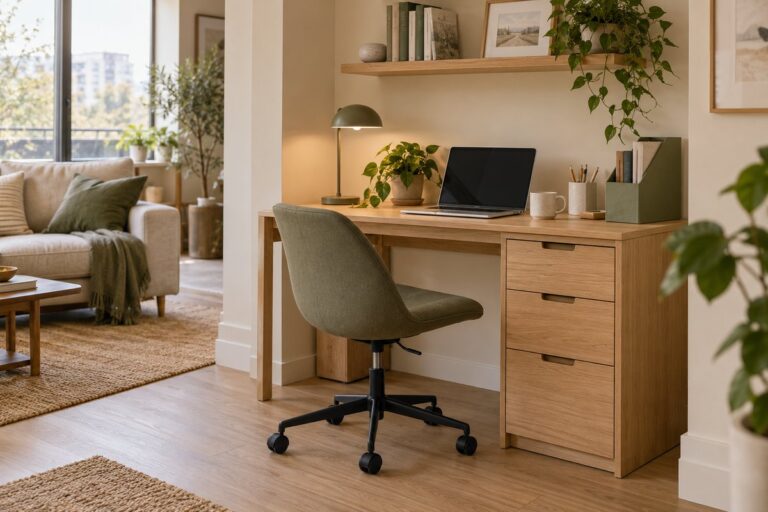
In a small apartment, the dining table may also be a desk. Trying to prevent that completely is often unrealistic. A better approach is to make the transition between work and meals quick.
Keep the laptop charger, notebook, pens, headphones, and other daily work supplies together in one portable basket or bin. When work ends, the whole kit can move off the table in one trip.
8. Store Chargers So They Do Not Live on the Table
Cables make a small dining area look cluttered very quickly. If you regularly charge devices at the table, route one cable neatly from the nearest outlet and give the charger a fixed storage place when it is not being used.
A small cable pouch inside the work basket from the previous section keeps spare adapters and short cables contained instead of scattered across the dining surface.
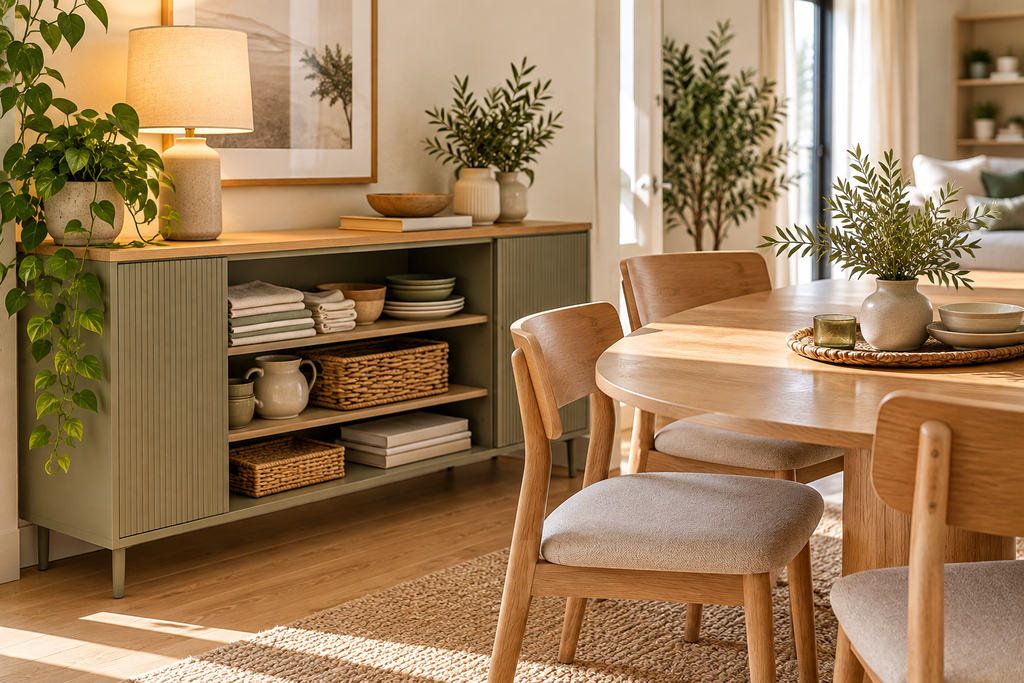
9. Add a Narrow Storage Piece Instead of a Deep Cabinet
A shallow cabinet, narrow console, or slim shelving unit can add useful dining storage without taking too much walking space.
Use it for napkins, candles, serving pieces, coasters, or the work kit. Avoid filling it with unrelated household clutter just because there is an empty shelf.
10. Use Vertical Space Without Filling the Wall
One or two shallow wall shelves can be enough to support a small dining area. They can hold a few glasses, a small tray, or lightweight serving items.
Do not cover the entire wall with storage unless you truly need it. Leaving some blank wall space keeps a compact dining corner visually lighter.
11. Keep Dining Storage Visually Calm
Open storage can work in a small space, but too many visible categories can make the room feel busy. Group similar items and limit the number of containers, colors, and decorative objects.
Closed storage is useful for items with irregular shapes or packaging. Open storage works best for a few simple categories that are easy to maintain.
12. Separate Dining Clutter From Living-Room Clutter
In many apartments, the dining area and living room share one open space. Without clear boundaries, books, blankets, remotes, and dining items can slowly migrate between the two zones.
Give each side of the room its own storage. Living-room items should return to the living-room zone, while dining supplies stay close to the table. Our small living room organization ideas can help you organize the other half of the space without mixing the two systems.
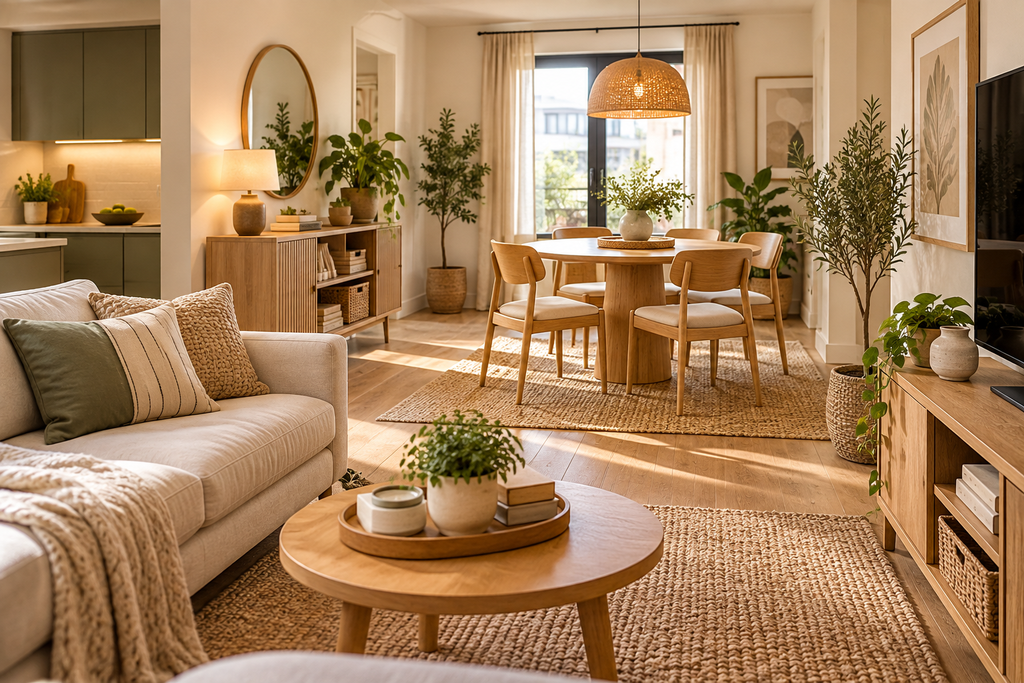
13. Keep Extra Chairs Out of the Everyday Path
Extra dining chairs often consume floor space even when nobody is using them. If you only need additional seating for guests, consider folding chairs or lightweight chairs that can be stored elsewhere.
Your everyday layout should support the number of people who normally live in the apartment, not the largest gathering you host a few times a year.
14. Protect One Clear Walking Route
A small dining area feels uncomfortable when people have to turn sideways around chairs, bags, or storage furniture. Choose one main path through the area and keep it consistently clear.
Check the path while chairs are pulled out, not only when they are pushed under the table. That is when circulation problems become obvious.
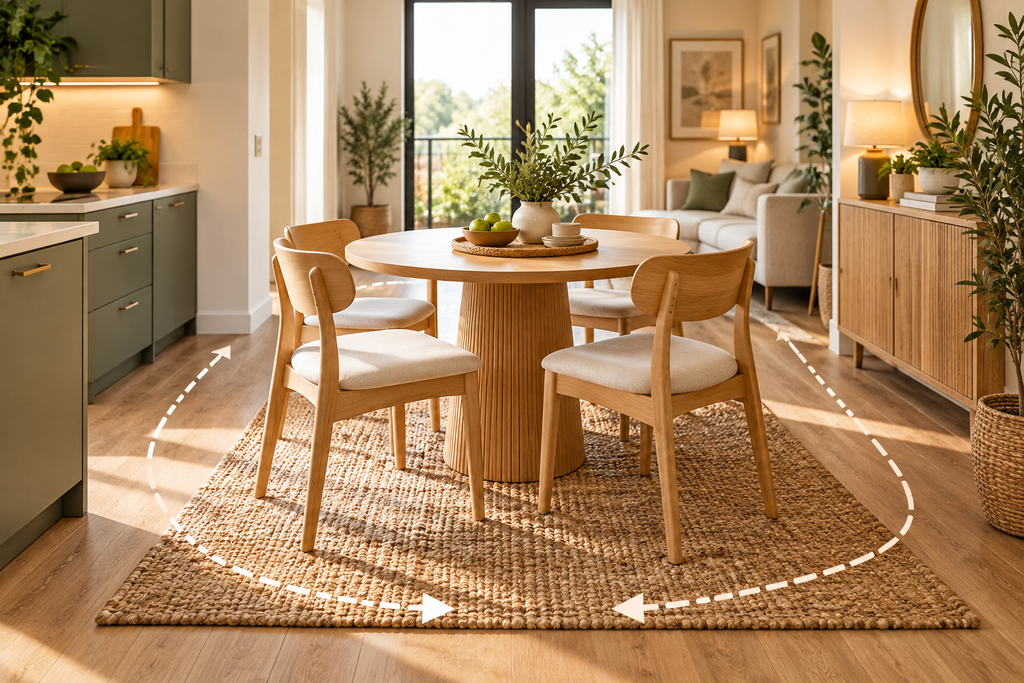
Small-space rule: If a storage solution makes it harder to sit down, pull out a chair, or walk through the room, it is costing more space than it saves.
15. Do a Two-Minute Dining Area Reset Every Evening
The easiest dining area to maintain is one that never gets far from its baseline. At the end of the day, return work supplies, mail, dishes, and chargers to their assigned places.
Wipe the table, push the chairs back into position, and leave the surface ready for the next meal. A two-minute reset prevents several days of small items from turning into one large cleanup.
Small Dining Area Organization Should Make the Space Easier to Use
A compact dining area does not need a complicated storage system. It needs clear boundaries, enough room to move, and simple places for the items that regularly compete with the table.
Start with the tabletop and walking path. Then solve the categories that keep returning: work supplies, mail, linens, chargers, and occasional serving pieces. The goal is not to create a perfect dining room. It is to make a small dining area easy to use and easy to reset every day.
Continue your space
Keep Organizing
Practical guides for the rooms and storage zones connected to your dining area.