21 Small Living Room Organization Ideas for Apartments
A small apartment living room often has more jobs than places to put things. It may be your reading spot, TV room, work area, and the first space you enter after coming home. The coffee table collects the evidence: chargers, mail, mugs, and whatever has no clear place yet.
The most useful small living room organization ideas give those everyday items a home without filling the room with storage furniture. Start with what repeatedly lands on your surfaces, then choose a system you can reach and put away easily.
You do not need to use all 21 ideas. Pick the two trouble spots that interrupt your day, test a small change, and keep enough open space to sit down, move around, and use the room comfortably.
Quick Living Room Wins
- Return items that belong in another room before adding storage.
- Give remotes and small essentials one reachable home.
- Keep enough coffee-table space clear for a drink or a plate.
- Measure furniture with its drawers or lids fully open.
- Finish the evening by returning a few items to their usual places.
1. Decide Which Activities Belong in the Room
List the things you actually do here: watch TV, read, work, play games, or fold laundry. Choose a storage spot for the supplies each activity needs.
Remove supplies for activities that happen elsewhere. If the whole apartment needs clearer boundaries, our small apartment organization ideas can help you decide which room should hold each category before you buy another cabinet.
2. Give the Coffee Table a Clear-Space Rule
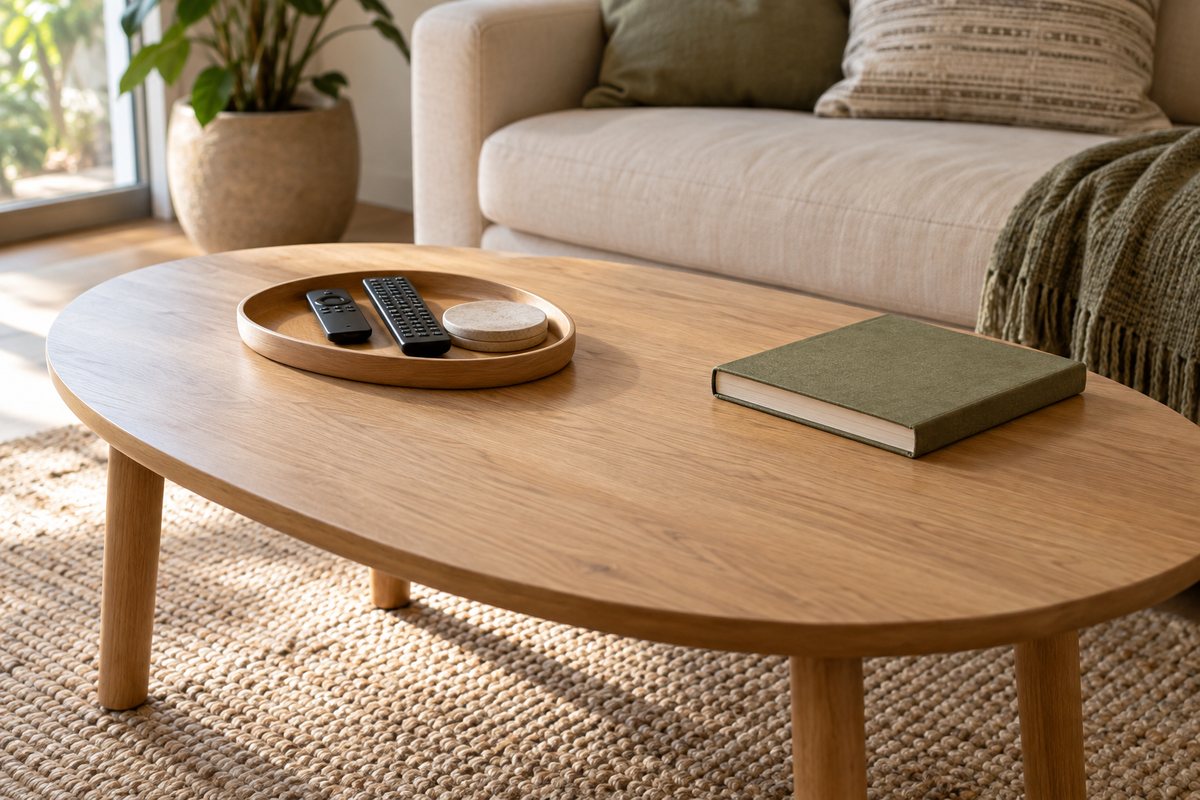
Choose a portion of the coffee table that stays clear enough to use. Keep a small tray for the few items you reach for daily, then move everything else to a drawer, shelf, or another room. The tray should not occupy the entire tabletop.
Try the rule during an ordinary evening. Can two people put down drinks without shifting a stack of objects? If every meal or board game begins with clearing the table, reduce what lives there permanently rather than adding another tray.
3. Put Remotes Where You Actually Sit
Give remotes one small drawer, shallow box, or sofa-side pocket within reach of the main seat. Include only the controls you use in this room.
Check the location from a seated position. A box across the room may look tidy but will probably remain empty while remotes collect on the sofa.
4. Divide the Media Console by Function
Separate your media console into a few useful zones: equipment, current games or accessories, and small maintenance items. Keep controllers together and use a shallow container for spare batteries or connection adapters. Avoid one deep drawer containing all three categories.
Keep the equipment zone accessible and follow each device’s ventilation instructions. Do not pack baskets around warm electronics or cover air openings. Before adding bins, check that you can reach the connections and remove a device without emptying the entire console.

5. Route Cables Along One Predictable Path
Trace each cable from its device to the power source, then remove disconnected cables that serve no current purpose. Gather remaining loose lengths with reusable ties and route them along the rear of the console where practical. Leave enough slack to access connections.
Keep cords out of walking routes, away from pinch points, and accessible for inspection. Follow the equipment instructions rather than enclosing power strips in a decorative box. See ESFI’s electrical safety tips for outlet and cord placement. If you use removable clips in a rental, check surface compatibility and test an inconspicuous spot first.
6. Make One Reachable Charging Spot
Choose a side-table drawer or small open tray close to a suitable outlet for the devices you charge in the living room. Keep only the cables needed there, with ends easy to find. Store spare chargers separately instead of letting them accumulate around the sofa.
Keep devices and chargers uncovered while charging and follow their instructions. Try the arrangement with the lamp and other items already using the table.
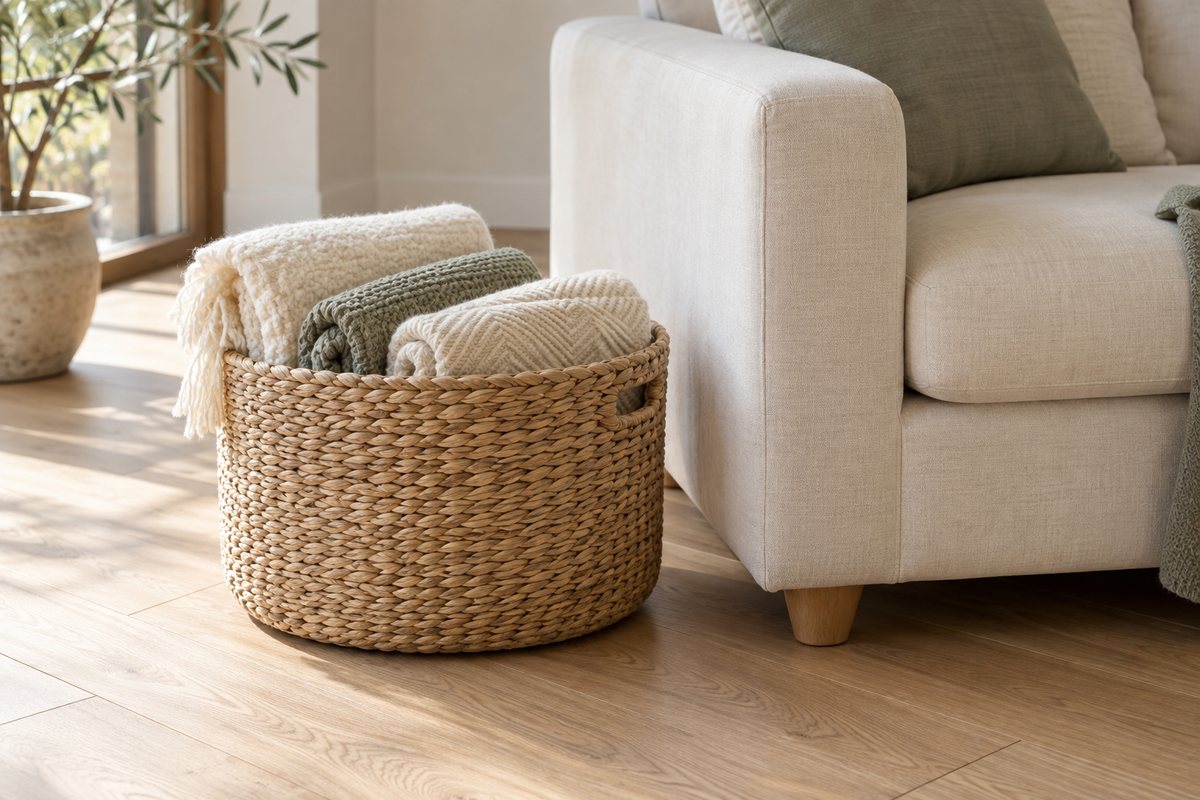
7. Store Blankets Beside Their Usual Seat
Keep the throws you regularly use in one basket, drawer, or storage ottoman beside the sofa. Fold loosely or roll them in a way you can repeat.
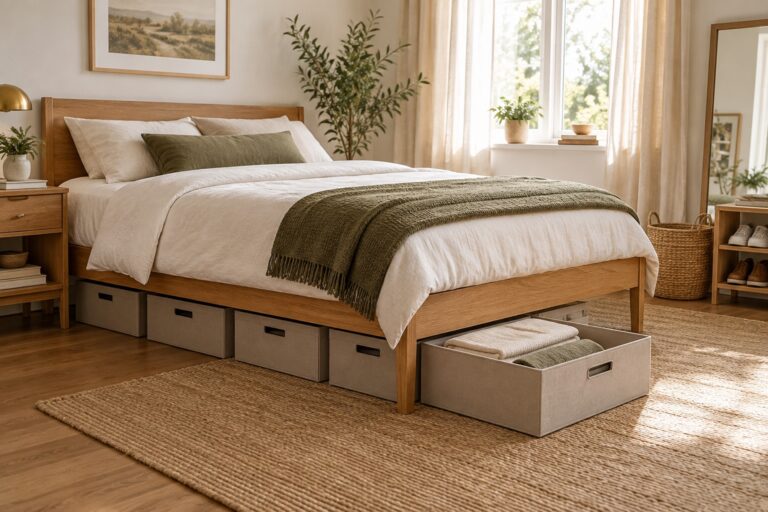
Limit this spot to the amount that fits comfortably. Guest bedding and seasonal quilts can live elsewhere; our under-bed storage guide covers options for bedroom overflow. Separate those occasional supplies from the blanket someone wants to grab during a film.
8. Test Hidden Storage With the Lid Open
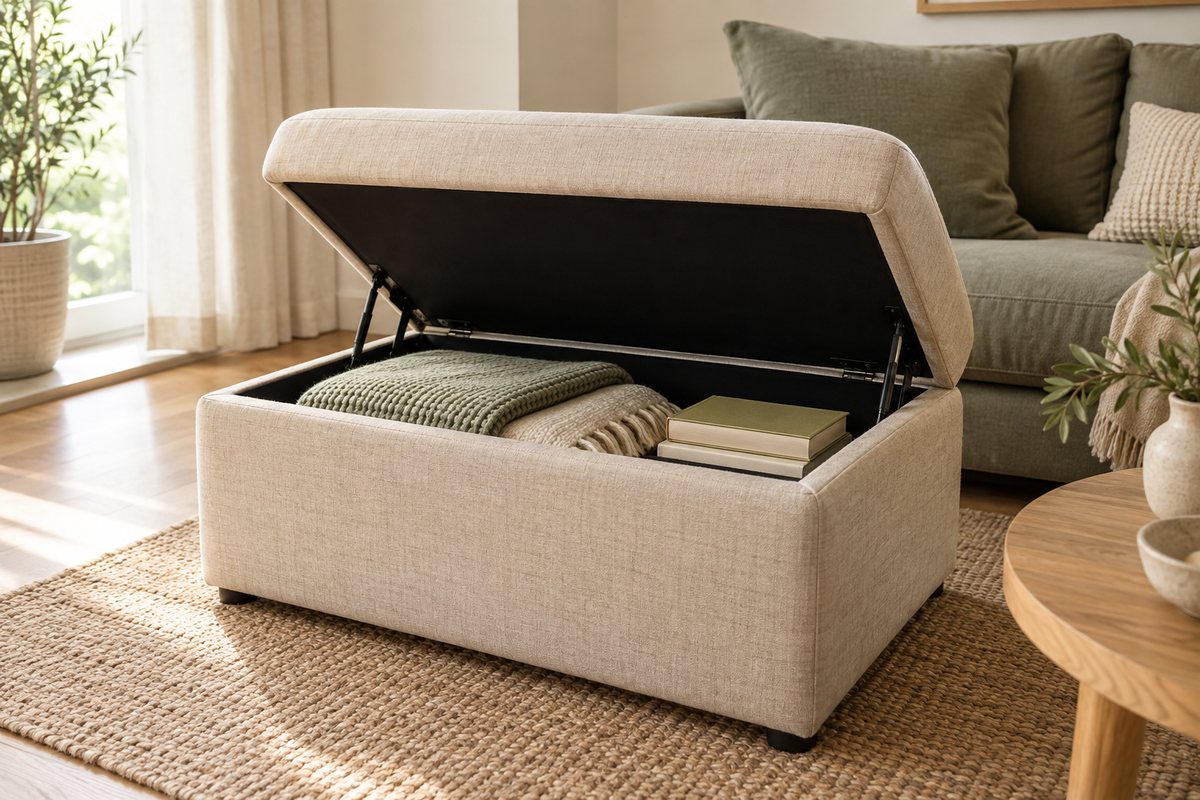
If you are considering a storage ottoman or lift-top table, measure the space it occupies while open. Check the hinge position, nearby furniture, and whether you can reach the contents without moving the sofa or clearing objects off the lid every time.
Store items that suit that access pattern. A lift-top compartment may work for occasional games but frustrate someone retrieving a charger several times a day. Follow the furniture instructions and keep the mechanism unobstructed. Useful hidden storage should be straightforward to open and close.
9. Add a Shelf Below a Table Before Another Unit
An existing coffee table or side table with a lower shelf can hold a shallow basket of frequently used supplies. Check what fits without protruding into the leg space or making the table difficult to clean underneath.
Use that shelf for a defined category, such as current magazines or a small game collection. Avoid treating it as a parking spot for everything removed from the tabletop. If the shelf is too low to reach comfortably from your seat, reserve it for less frequent items.
10. Keep Only Current Reading Beside the Sofa
Create a small place for the book you are reading and the magazines you still intend to use. Return finished books to the main bookcase or another shelf. This keeps a side table from becoming a second library.
Set a simple limit based on the space, such as one narrow file holder or one short stack. If the stack keeps growing, choose what you will actually read next.
11. Organize Books for Retrieval, Not Display
Group books in a way you can remember: subject, author, or the categories your household uses. Keep frequently consulted books on an accessible shelf and heavier volumes lower down. Leave room to pull one out without lifting an entire horizontal pile.
If you cannot return a book without rearranging several objects, simplify that shelf.
12. Give Floating Shelves a Specific Job
A floating shelf is useful when it holds something that otherwise crowds a surface, such as a small book group or a lightweight reading accessory. Decide that job before mounting it. An extra shelf can become another clutter surface if its purpose is only to add storage somewhere.
Check your rental agreement, wall type, fitting instructions, and load limits before installation. Position shelves where they will not obstruct movement or doors.
13. Match Baskets to What Comes Out Together
Use a basket for a group you retrieve as a unit, such as knitting supplies, children’s building pieces, or game accessories.
Try the basket partly full. Can you see the contents and lift it easily? Use a smaller insert for tiny pieces that sink to the bottom. One oversized basket mixing unrelated items may hide clutter quickly, but it makes finding and returning those items harder.
14. Build a Work Kit You Can Put Away
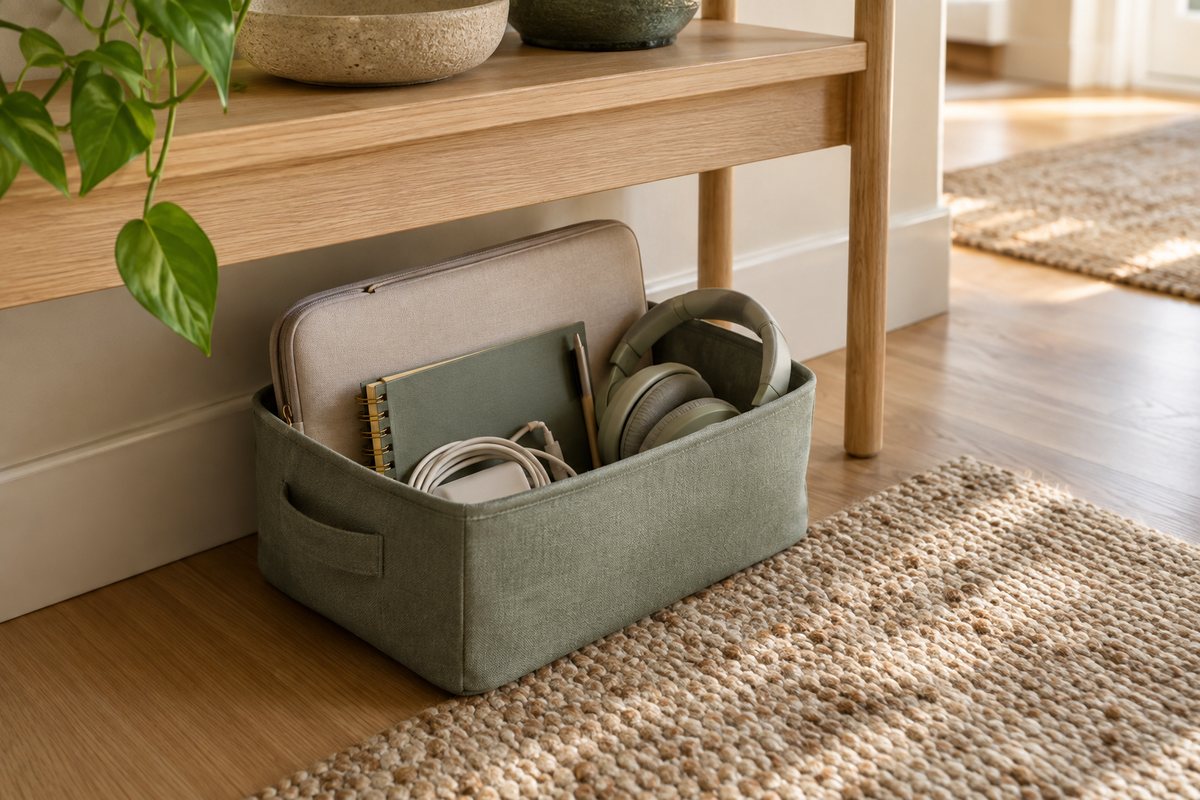
If your living room doubles as an office, collect your notebook, mouse, headphones, and other small work tools in a portable caddy or one drawer. Keep the laptop in a suitable dedicated spot when the workday ends.
Make the kit fit your actual routine. Supplies used all day deserve easier access than spare stationery. Before closing up, return the tools and clear the work surface so it can serve its evening purpose. Keep drinks away from electronics and avoid tightly packing warm devices into storage.
15. Make Games Easy to Take Out and Return
Keep games near the place you play, with the boxes stored in a way that lets you remove one without collapsing a stack. Smaller card games can share a shallow container, while larger boxes may work better upright if their contents stay secure.
Keep instructions and pieces with their game. Use a small internal bag or compartment for loose parts rather than moving everything into an unmarked general bin. If the collection exceeds the shelf, choose what stays accessible and relocate rarely played games.
16. Set a Boundary Where the Entryway Meets the Sofa
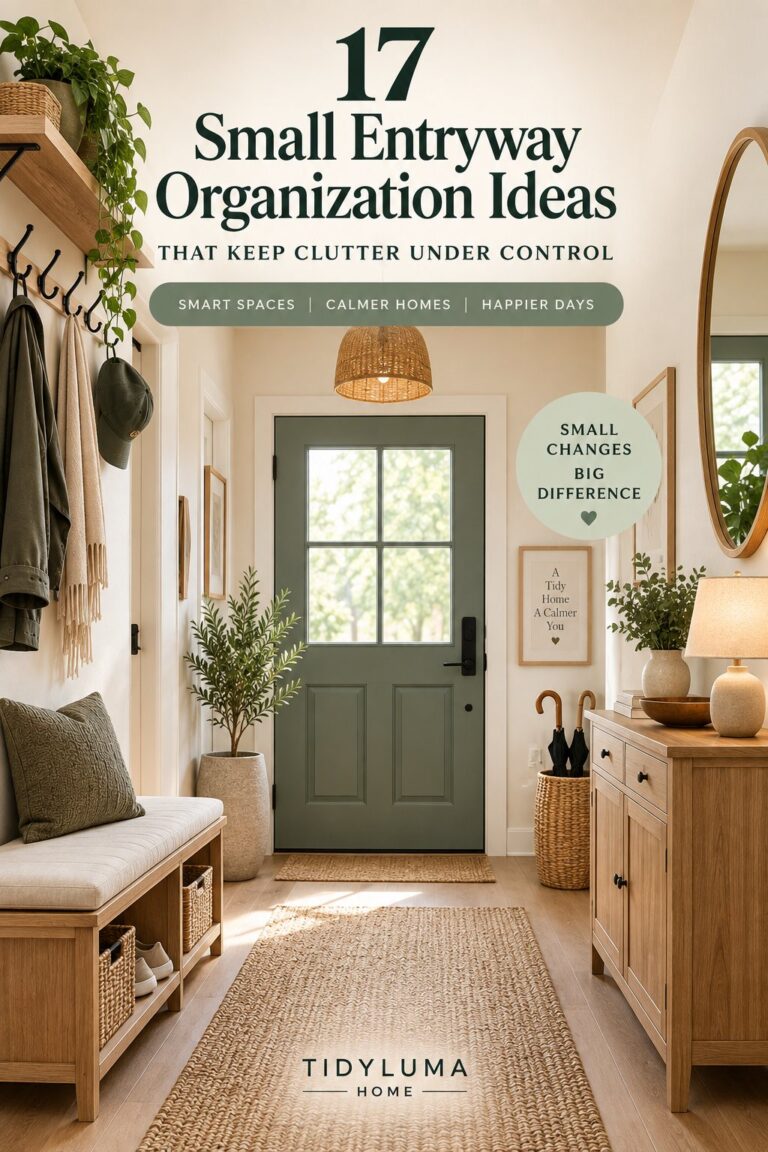
In apartments without a separate hall, shoes, bags, and mail can spread into the living area. Give arriving items a compact landing spot near the door, with a defined place for the bag and shoes you use most.
Our small entryway organization ideas cover this arrival routine in detail. Keep the living-room side focused on relaxing and daily activities. If coats or spare shoes exceed the landing spot, move the extras to their usual storage rather than extending the drop zone along the sofa.

17. Put Side Tables to Work Without Filling Them
Choose a drawer or lower shelf for items used at that seat, such as reading glasses, a notebook, or tissues. Keep the top available for a lamp and a drink.
Check the drawer from where you sit: can it open fully, and can you see inside? A slim table with accessible storage may be more useful than a larger one with a deep, awkward compartment. Rearrange existing pieces before deciding to replace furniture.
18. Keep Paper From Becoming a Permanent Stack
Give incoming papers one small temporary holder, then choose a regular time to sort them. Move documents you need to keep to their proper file, act on the current items, and recycle what is no longer needed.
Set a limit that makes an overflowing pile obvious. If papers arrive through the front door, the holder may belong in the entry zone rather than on the coffee table.
19. Protect the Route Through the Room
Walk through the room carrying a laundry basket or grocery bag. Notice where you have to turn sideways, move a footstool, or step around a storage bin. Shift movable pieces so everyday journeys remain comfortable.
Check doors, drawers, and furniture in use, not just closed. A bin that fits beside the sofa may still block a cabinet door. Leave the floor space needed for movement and access to the furniture you already own.
20. Use One Temporary Return Basket
During a quick tidy, gather items that belong in other rooms into one small basket. Then carry it around and return those items.
Empty the basket during the same reset rather than storing it full beside the sofa. If the same category returns every day, investigate why: perhaps its proper home is hard to reach. A temporary collection tool should help you put things away, not become permanent overflow storage.
21. Finish With a Short Evening Reset
Before leaving the room for the night, return remotes, put work supplies away, gather dishes, and bring the coffee table back to its clear-space rule. Choose a few repeatable actions instead of attempting a complete cleaning routine every evening.
After a week, notice which items still remain out. Move their storage closer, simplify a crowded compartment, or give them a clearer home. Small living room organization ideas work best when the daily reset reveals what needs adjusting, rather than asking you to maintain an impractical arrangement.
A Small Living Room That Is Easier to Use
An organized living room should make it easy to sit down, find what you need, and change activities without clearing piles first. A reachable remote drawer, a limited blanket basket, and a work kit that packs away may solve the busiest parts of the room.
Start with one surface and one storage spot. Use them through an ordinary week, including a working day or an evening with guests, then adjust what felt awkward. Keep the arrangements your household can maintain without constant reminders.
Leave room for real life: a current book, a drink, or a blanket in use belongs in a living room. The aim is a clear place to return those things when you are finished, with enough open space for the room to keep doing its different jobs.
Keep Organizing
Continue with more practical TidyLuma ideas for small spaces.