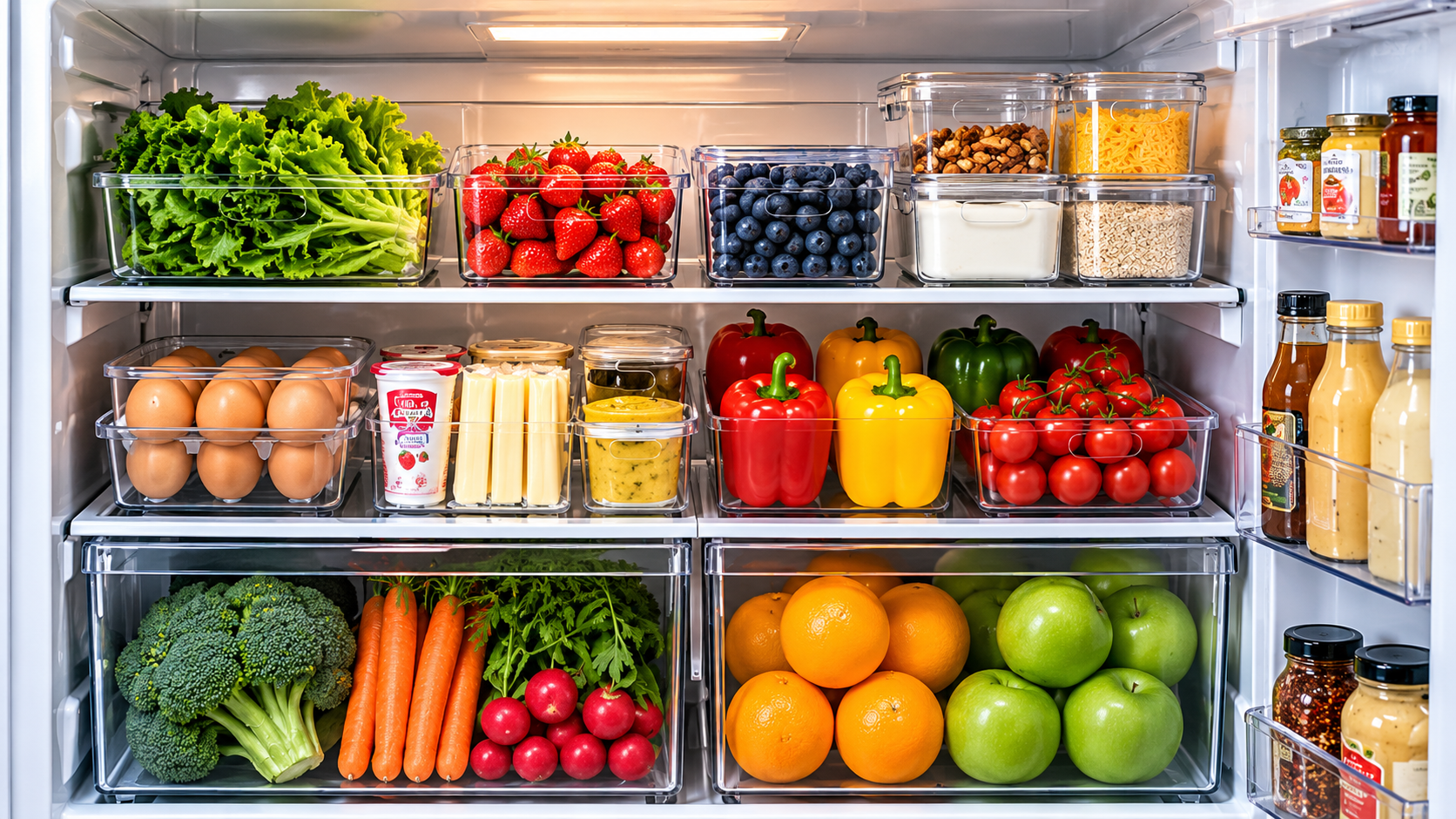
17 Small Fridge Organization Ideas for Apartments
Leftovers hidden behind containers and produce buried in drawers can make a small fridge feel full before the weekly groceries arrive. A clear place for each food group makes it easier to see what you have and avoid buying duplicates.
The good news is that you do not need a bigger refrigerator to make food easier to see and reach. A few simple small fridge organization ideas can help you use the space you already have more efficiently while keeping the fridge practical for everyday life.
The goal is not to create a picture-perfect refrigerator filled with matching containers. It is to build a simple system that makes groceries easier to find, reduces forgotten food, and is easy to maintain.
QUICK START
Quick Fridge Organization Wins
- Check leftover dates and discard food that is spoiled or past its safe storage time.
- Group similar foods together.
- Keep frequently used items easy to reach.
- Create a visible zone for food that should be eaten soon.
- Avoid filling every inch of available space.
- Measure shelves before buying organizers.
Food-safety note: Use an appliance thermometer to keep your refrigerator at 40°F (about 4°C) or below. Store foods securely, clean spills promptly, and leave space for cold air to circulate. See the FDA’s refrigerator temperature guidance.
1. Start With a Shelf-by-Shelf Reset
Before adding bins, work through one shelf at a time. Keep perishable food cold while you clean; use a cooler with ice packs for a longer cleanout. Seeing each shelf clearly makes it easier to judge the space you have.
Wipe down the shelves and drawers, then check what should go back inside. Discard spoiled food and anything you know you will not use. Starting with less makes every organization step that follows easier.
2. Measure Before Buying Fridge Organizers
Clear bins can look useful online but quickly become wasted space if they do not fit your refrigerator.
Measure the width, depth, and height of your shelves before buying anything. Pay special attention to narrow shelves and the spaces around drawers.
For a small apartment fridge, a few correctly sized organizers usually work better than filling every shelf with containers.
3. Create Simple Food Zones
Instead of placing groceries wherever they fit, give broad categories a regular home. This makes it easier to find ingredients and put groceries away without having to reorganize the refrigerator every week.
You might create simple zones for:
- Breakfast foods
- Dairy
- Drinks
- Snacks
- Produce
- Leftovers
- Ingredients for upcoming meals
The system does not need to be complicated. The purpose is simply to make it obvious where something belongs.
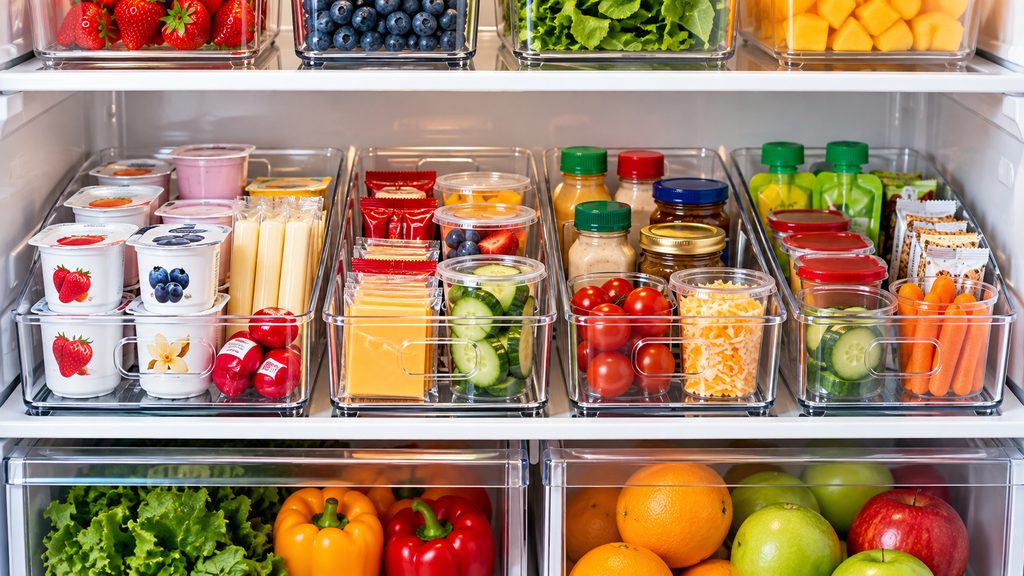
4. Use Clear Bins for Small Items
Small yogurt cups, snack packs, cheese, sauces, and similar items can easily disappear behind larger containers.
A shallow clear bin keeps them together while still allowing you to see what is inside. Choose bins that slide out easily so you can reach items at the back without rearranging an entire shelf.
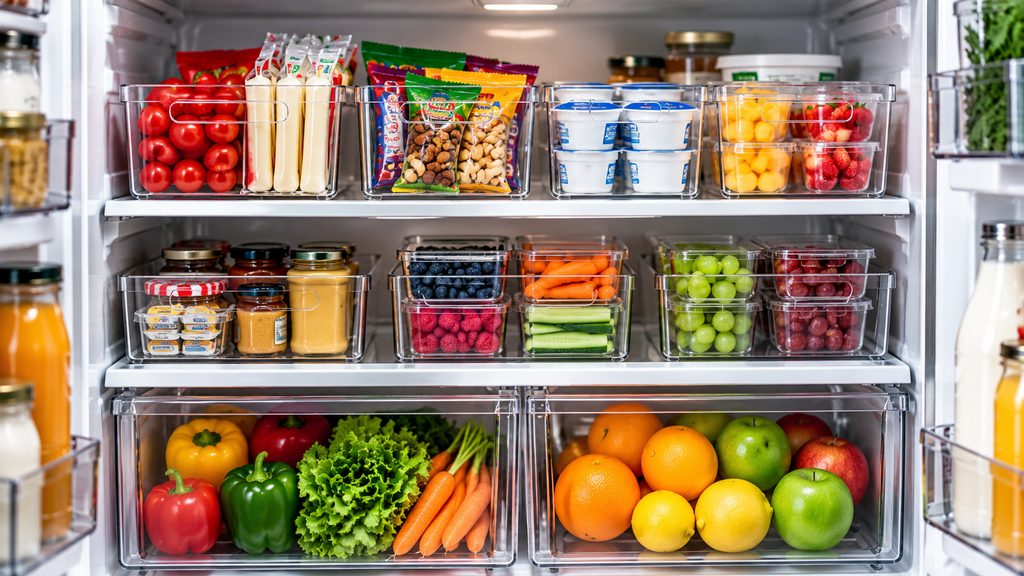
5. Add a “Use First” Bin
Create a small container or clearly visible section for food that should be used soon. Leftovers, opened packages, and produce that needs attention can go here.
Checking this area before preparing a meal helps you see what is already available before opening something new or buying more food. A “Use First” label does not extend a food’s safe storage time, and appearance or smell alone cannot confirm it is safe.
6. Use Stackable Containers for Leftovers
Random bowls and oversized containers can consume valuable shelf space. When practical, use food-safe containers that stack neatly.
Keeping a few compatible sizes makes it easier to use the vertical space between shelves without creating unstable piles. Clear containers are especially useful because you can identify leftovers without opening everything.
Date leftovers and refrigerate them within two hours, or one hour when the air temperature is above 90°F (32°C). Divide large portions into shallow containers for faster cooling; do not leave food on the counter to cool completely.
Use refrigerated leftovers within three to four days, or freeze them for longer storage. See USDA guidance on storing leftovers safely.
7. Keep Everyday Foods at Eye Level
Reserve the easiest-to-reach areas for the foods you use most often. That might include yogurt, prepared ingredients, breakfast foods, or other everyday staples depending on your household.
Items used less frequently can occupy less convenient spaces. A small fridge works better when accessibility influences where things are stored.
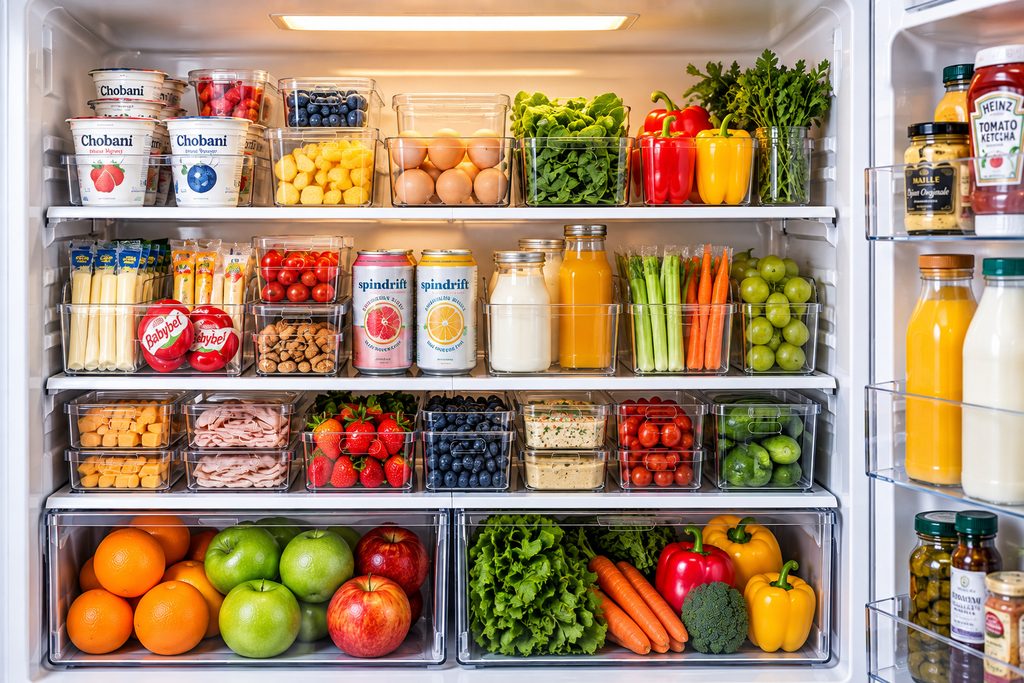
8. Use a Turntable for Jars and Condiments
A small turntable can make a deep refrigerator shelf much easier to use. Instead of moving several jars to reach something at the back, rotate the tray until the item you need comes forward.
This works particularly well for small bottles, jars, sauces, and condiments that would otherwise get lost behind one another. Measure the turntable’s full diameter first; a narrow tray or straight row may use a small rectangular shelf more efficiently.
9. Organize the Fridge Door Carefully
The refrigerator door is useful for condiments, sauces, drinks, and other suitable items, but it should not automatically become storage for everything that fits.
Door temperatures can vary more as the refrigerator is opened and closed, so foods that require more consistent refrigeration are generally better kept on an interior shelf.
Keep eggs in their original carton on an interior shelf, following USDA egg-storage guidance. Follow each product’s refrigeration instructions when choosing its place.
10. Give Produce Drawers a Clear Purpose
If your refrigerator has two drawers, decide what each one is for and keep the system consistent.
You might separate fruits and vegetables or organize produce according to how your particular refrigerator drawers are designed.
The important part is visibility. Check the drawers regularly so produce does not become out of sight and forgotten.
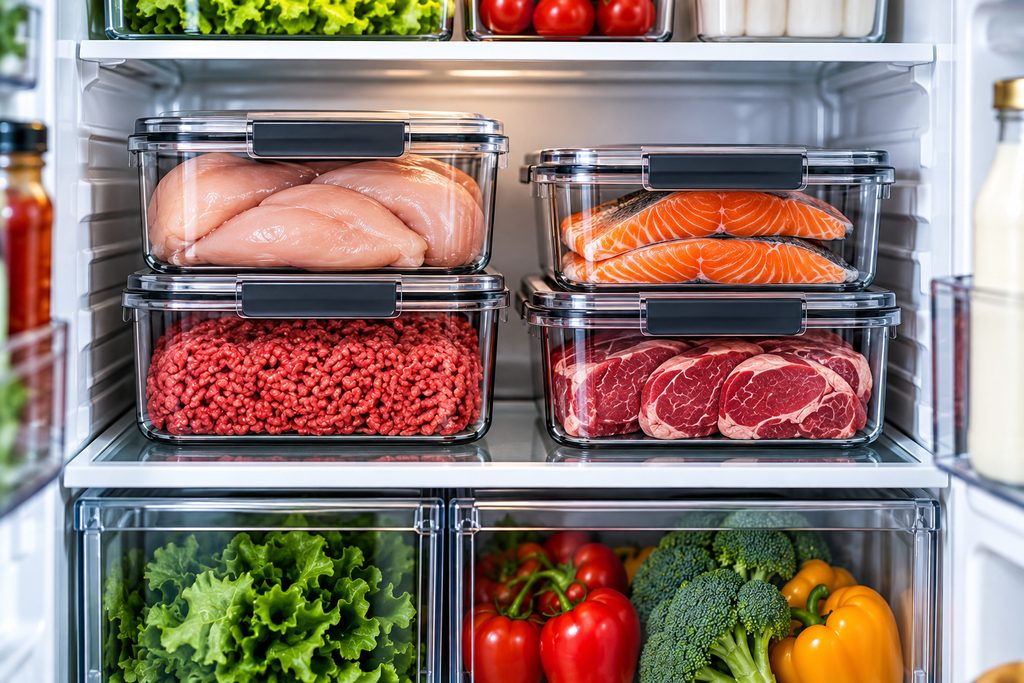
11. Store Raw Meat to Prevent Leaks
Organization should never come at the expense of food safety. Keep raw meat, poultry, and seafood securely contained so juices cannot leak onto other foods.
A sealed, leak-resistant container on a low shelf helps keep raw juices away from ready-to-eat foods. Keep these food groups separate, and do not assume the lowest shelf is always the coldest part of every refrigerator.
12. Make Better Use of Vertical Space
Look at the unused space above shorter containers. If your refrigerator allows it, adjusting shelf heights or using an appropriate stackable organizer can make some of that space more useful.
Do not feel that every gap needs to be filled. A refrigerator still needs enough open space for cold air to circulate properly.
If your kitchen has the same problem with cabinets and counters, our small kitchen organization ideas can help you use the rest of the room more efficiently too.
13. Create a Grab-and-Go Snack Zone
If refrigerated snacks are used frequently, give them one easy-to-reach area.
A small bin can hold yogurt, fruit cups, cheese, or other refrigerated snacks your household regularly uses. This prevents small packages from spreading across several shelves and makes it easier to see when supplies are running low.
14. Keep Drinks Together
Bottles and cans can take over a small refrigerator surprisingly quickly. Choose one defined area for drinks instead of placing them wherever there is space.
If you regularly store cans, a compact dispenser may help, but only if it fits your fridge without blocking more useful storage.
For very small refrigerators, limiting the number of drinks chilled at once may save more space than adding another organizer.
15. Label Only What Actually Needs a Label
Labels can make a refrigerator easier to maintain, but too many can make the system unnecessarily rigid.
Use labels for broad categories that stay relatively consistent, such as Snacks, Leftovers, or Use First.
A flexible system is easier to maintain when your groceries change from week to week.

16. Leave Some Empty Space
A well-organized refrigerator does not need to look completely full.
Leaving some open space gives you room for new groceries, meal-prep containers, and unexpected leftovers. It also makes it easier to see what you already have instead of constantly moving items around.
Think of empty space as part of the organization system rather than wasted storage.
17. Do a Five-Minute Fridge Reset Each Week
The best fridge organization system is one you can maintain. Once a week, spend a few minutes checking what is inside and putting everything back in order.
Your quick reset can include:
- Checking leftovers.
- Moving food that should be used soon forward.
- Wiping small spills.
- Removing spoiled or unwanted food.
- Returning misplaced items to their zones.
This short routine prevents small amounts of clutter from turning into a complete refrigerator cleanout later.
Small Fridge Organization Ideas That Work in Real Life
A small refrigerator does not need dozens of organizers to function well. The biggest improvements usually come from creating simple zones, keeping food visible, using containers strategically, and leaving enough space to see what you already have.
Start with one or two changes rather than redesigning the entire fridge at once. Once those habits feel natural, add another system only if it solves a real problem.
If your refrigerator is part of a compact kitchen, continue with our 20 Small Kitchen Organization Ideas for Tiny Apartments. For organization beyond the kitchen, explore our small apartment organization ideas for more practical ways to make limited space work harder.
Keep Organizing
Continue with more practical TidyLuma ideas for small spaces.