21 Small Linen Closet Organization Ideas for Apartments
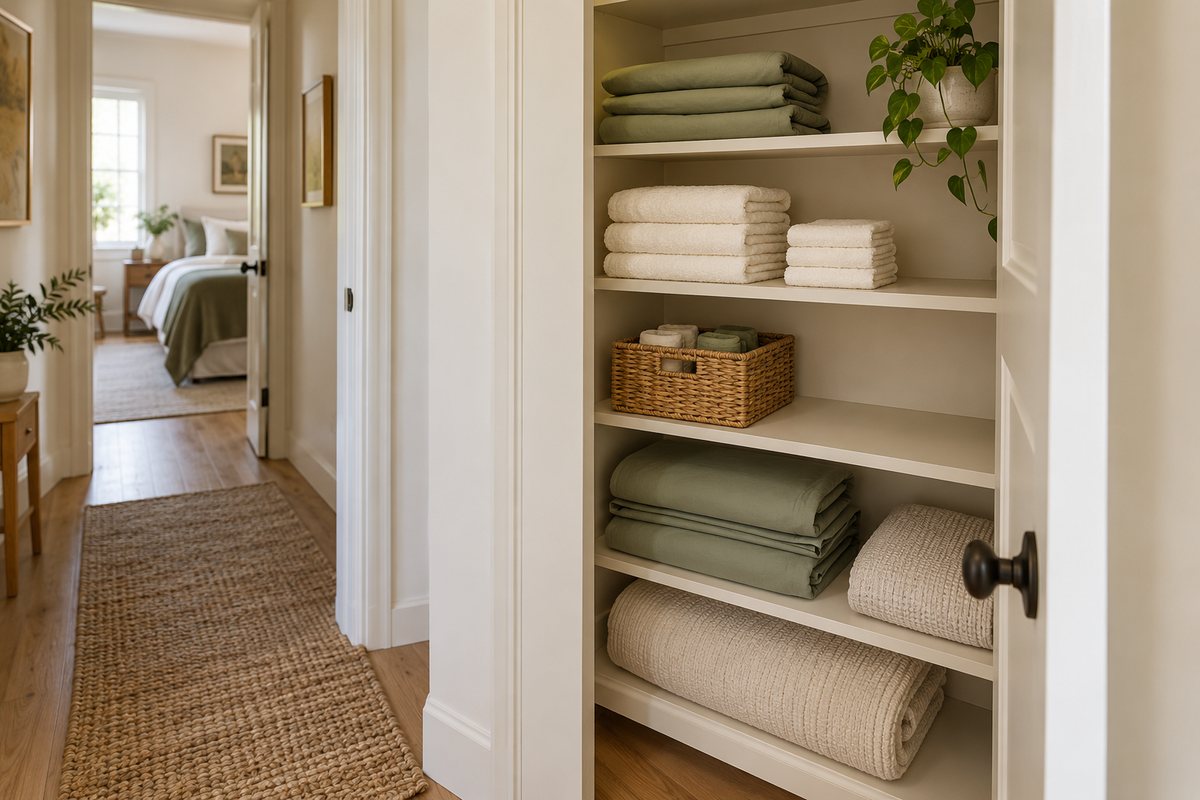
A small linen closet can look full even when you cannot find the right sheet set. Towels lean into bedding, spare toiletries occupy the easiest shelf, and clean laundry waits outside because there is nowhere to put it.
These small linen closet organization ideas focus on usable capacity: the linens your household needs, shelves you can reach, and a simple way to return everything after washing. They work for narrow hallway closets and for an apartment cupboard doing the same job.
Start with one category and test the arrangement before buying storage. The aim is a cupboard that works when all the laundry is clean, with enough space to take out a towel without rebuilding the shelf.
Quick Linen Closet Wins
Count linens by bed size and your laundry schedule. Put weekly towels on the easiest shelf. Split tall piles into short stacks. Label similar sheet sets. Leave a gap for clean laundry returning.
1. Count Linens by the Household You Have
Start with the beds, people, and laundry rhythm in your apartment. Count sheet sets by bed size and towels by actual use, including anything needed while a load is washing.
Lay out one category at a time and choose a realistic quantity. There is no universal number that suits every household. Keep enough to manage your washing schedule, then question duplicates that have not left the shelf for months.
2. Measure the Usable Shelf, Not Just the Closet
Measure shelf width, depth, and the opening with the door fully open. Note hinges, shelf supports, and any lip that limits a basket sliding forward. A container can fit inside the closet yet still be impossible to remove through the doorway.
Measure a folded bath towel and a complete sheet set too. Test the footprint with an existing box before shopping. Leave room for fingers above each stack; filling the height exactly makes every return awkward.
3. Reserve the Easiest Shelf for Weekly Linens
Place regularly used bath towels and the next sheet change between comfortable waist and shoulder height. Stand where you normally reach into the closet and check which shelf you can use without bending around the door or lifting another category.
Less convenient shelves can hold genuinely occasional linens, but only where you can reach them safely. In a narrow hallway closet, this may mean keeping two short towel stacks on the middle shelf rather than arranging everything by color.
4. Divide Deep Shelves Into Front and Back Zones
Use the front of a deep shelf for the linens currently in rotation. Put infrequently used, clearly identified items behind them, rather than hiding a second row of daily towels. The front should pull out without disturbing the rear.
Try one shallow removable basket at the front and one separate bundle behind it. Keep the rear category on a visible shelf-edge label so it does not disappear from memory. If you repeatedly need to unload the shelf to reach the back, move that category forward or reduce the contents.
5. Fold Towels to Fit the Shelf Depth
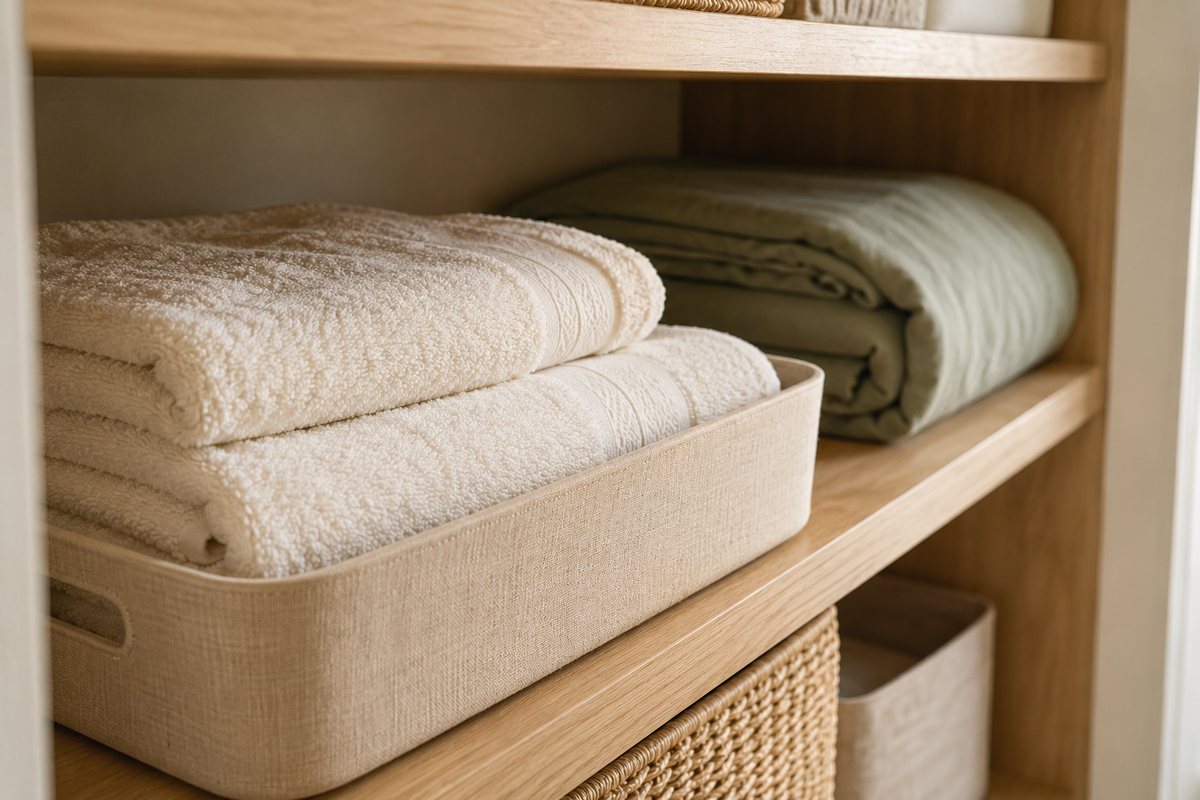
Fold one towel several ways and choose the shape that uses the shelf without hanging over its edge. A narrow shelf may suit a compact rectangle; a deeper one may suit a longer fold.
Leave the folded edge facing forward so the pile stays tidy when you remove a towel. Avoid refolding every towel into an elaborate shape solely for appearance. A method that works straight from the laundry basket is more useful than one you abandon on a busy evening.
6. Use Short Stacks You Can Lift Easily
Build towel stacks low enough that you can take the top item without catching the shelf above. Split a tall pile into two shorter stacks if the shelf allows it. Give each stack a clear purpose, such as bath towels or hand towels.
Test the arrangement by removing and returning an item several times. If everything leans sideways, use fewer pieces or one broad divider. Do not solve an overloaded shelf with a row of tiny compartments; the goal is stable stacks with room to put clean laundry back.
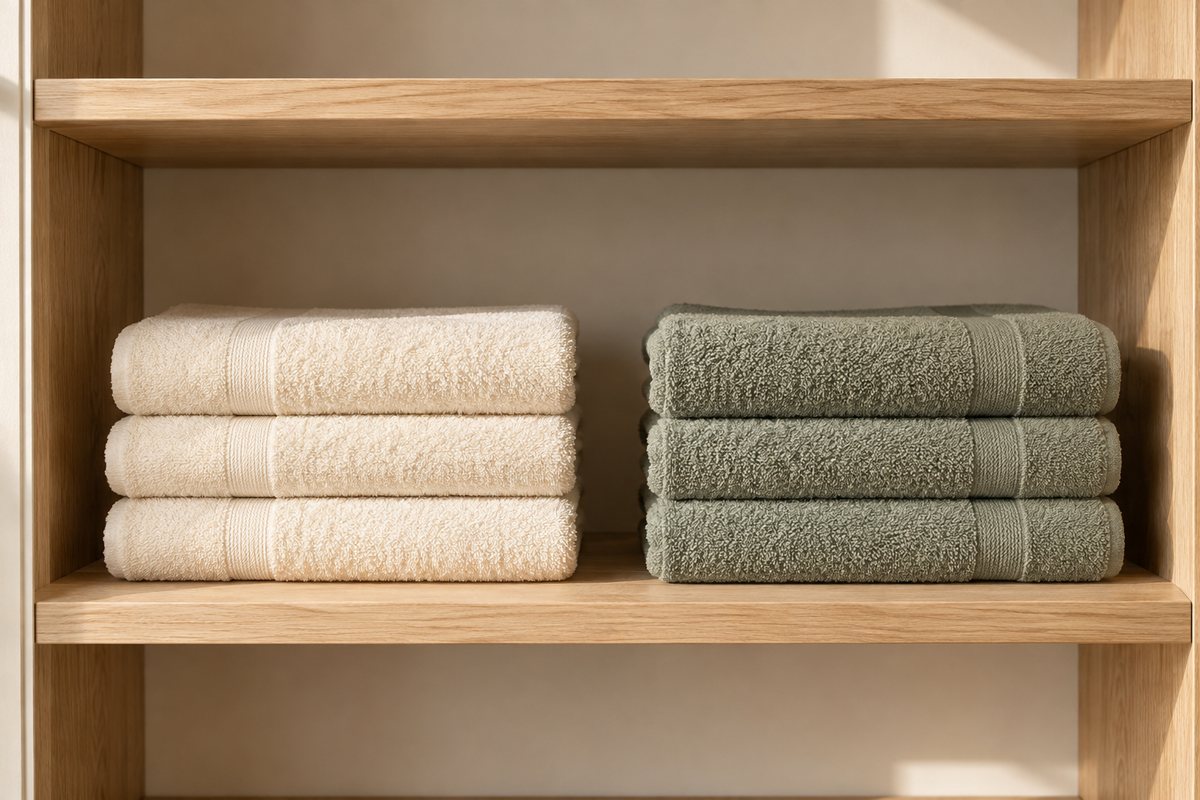
7. Separate Washcloths From Full-Size Towels
Small washcloths tend to disappear between larger folded towels. Give them one shallow bin or a small open section beside the hand towels. Store them upright or in a low stack, whichever lets you take one without pulling out several.
Keep the container within the shelf edge and easy to lift. This is a useful place to reuse a clean, smooth-sided box before buying a matching set of organizers.
8. Label Bed Sizes Where You Can See Them
Place complete sheet sets in separate groups for twin, full, queen, or whichever sizes you own. Add a plain size label to the shelf edge or container front. Similar-looking fitted sheets should not require unfolding every set before you change the bed.
Keep pillowcases with the relevant set, and separate extra pillowcases if they have a different role. Our small bedroom organization guide covers storing bedding near its point of use.
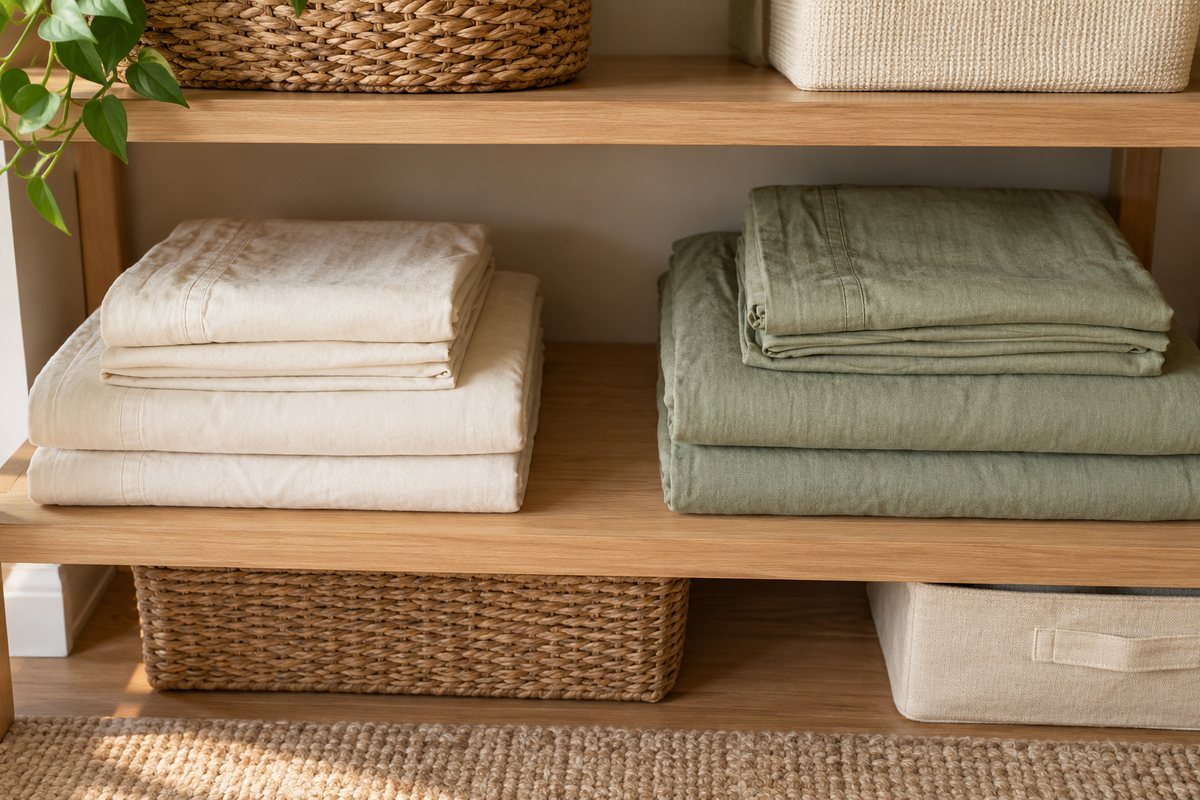
9. Keep One Next-Change Set at the Front
Choose the clean set you plan to use next and keep it immediately accessible. Move the freshly washed set behind it when laundry returns.
Keep the arrangement loose enough to reverse when seasons change. If a set needs repair or no longer fits a bed you own, move it out of the active row and decide its next destination. A linen shelf should show usable choices, not become a holding area for unfinished decisions.
10. Give Guest Linens One Complete Home
Group the bedding and towels you normally offer overnight guests in one manageable zone. Keep it separate from everyday rotation so preparing for a visit does not mean borrowing pieces from several shelves.
Choose the contents for your actual guest setup, whether that is a sofa bed or spare mattress. Avoid building a hotel-sized reserve for rare visits. Check the kit before someone arrives, especially if the space is also used for seasonal bedding during the rest of the year.
11. Keep Bulky Bedding Out of Prime Towel Space
A spare duvet can consume the entire shelf that should hold daily towels. Assign bulky bedding a separate, defined area and keep only pieces you use. Follow the care instructions for storage and avoid compression when it is unsuitable for the filling.
If the linen closet cannot hold the bulky category comfortably, use an existing alternative rather than forcing it into several gaps. Our under-bed storage guide explains access and container choices for that location.
12. Create a Visible Limit for Bathroom Backups
If the closet also stores spare toiletries, give them one bounded bin on a separate shelf section. Keep unopened replacements distinct from linens so bottles do not lean into towel stacks. Store products according to their packaging instructions and keep anything prone to leaking contained.
Restock the bathroom from this bin before adding more to a shopping list. The bathroom organization guide covers separating everyday products from backups.
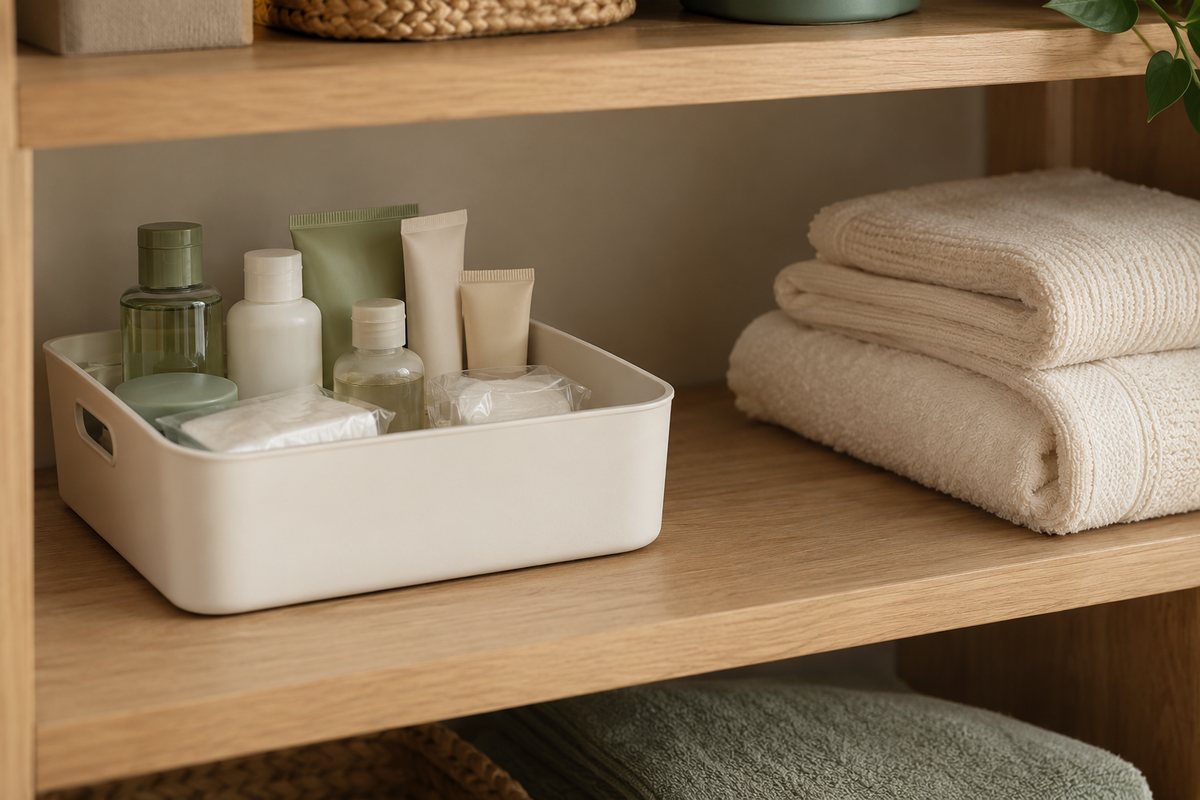
13. Choose Baskets for Access, Not Matching Appearance
Use a basket where it makes a category easier to remove, such as washcloths or a guest kit. Open shelves may work better for large towels. Choose smooth interiors that will not snag fabric and a size you can lift when full.
A handle helps on a deep shelf, but check that the basket clears the hinge and fits through the opening. Avoid filling every shelf with identical containers before you know their jobs.
14. Add a Divider Only Where Stacks Drift
Try a shelf divider between two categories that repeatedly merge. One divider can keep towels upright beside a sheet stack without enclosing each item in a box. Check the shelf thickness and the divider’s fitting instructions before choosing a removable model.
Make sure it cannot scratch the shelf or catch fabric during removal. If you need dividers every few inches to hold the contents in place, reduce the amount on the shelf or adjust the folds rather than turning storage into a complex filing system.
15. Use Door Storage Only When the Door Still Works
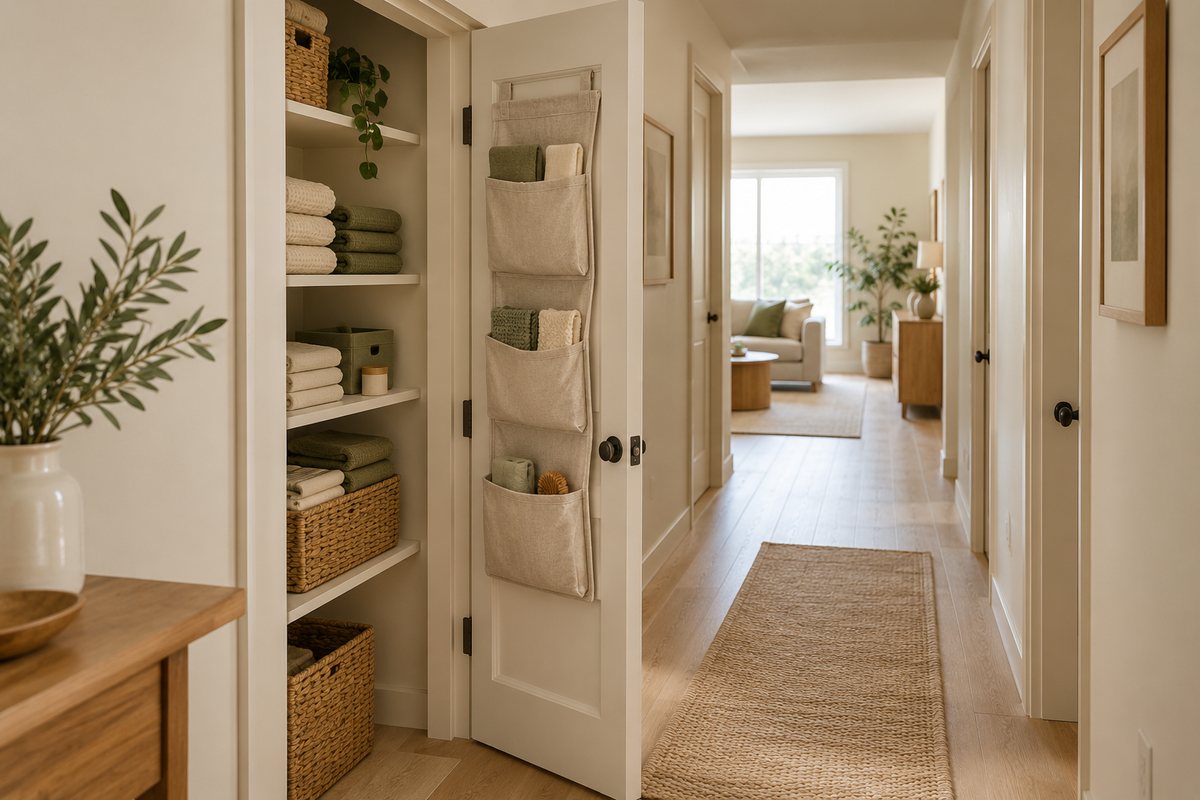
A shallow door organizer may hold lightweight extras if the closet has enough clearance. Check the door swing, hinge side, and space behind the door when closed. Over-door hardware should suit the door thickness and your rental rules.
Try closing the door gently with the organizer empty before loading it. Keep heavy bottles and bulky towels on shelves. If the door rubs, fails to latch, or crowds the hallway, remove the organizer; an extra pocket is not useful when it makes the whole closet harder to access.
16. Store Only Fully Dry Linens
Put away towels and bedding only when they are clean and fully dry. Packing damp fabric into a tight basket can make the whole shelf unpleasant to use. Leave the stack loose enough for easy handling instead of pressing fresh laundry into every available gap.
If the closet is near a bathroom and regularly feels damp, address that moisture problem rather than masking it with fragrance. Do not place leaking products or wet cleaning tools in the same zone as spare bedding.
17. Give Seasonal Linens One Defined Zone
Separate items that genuinely rotate with the weather, such as a warmer duvet cover or lighter blanket. Keep the category together in one suitable, labeled location. Check the care instructions before using sealed or compressed storage.
At the season change, swap the active and stored categories instead of keeping both on the easiest shelf indefinitely. If your apartment temperature stays similar all year, you may not need a large seasonal reserve.
18. Make a Linen Zone When There Is No Closet
Choose one existing cupboard section, dresser drawer, or bedroom shelf for household linens. Measure it and assign categories before adding another piece of furniture. Separate the linen area from clothes or food so putting laundry away has a clear destination.
For several beds, keep a labeled reserve in one shared location and one active spare near each bed if that fits your routine. Our apartment organization guide can help allocate space across rooms.
19. Make Laundry Returns Part of the Layout
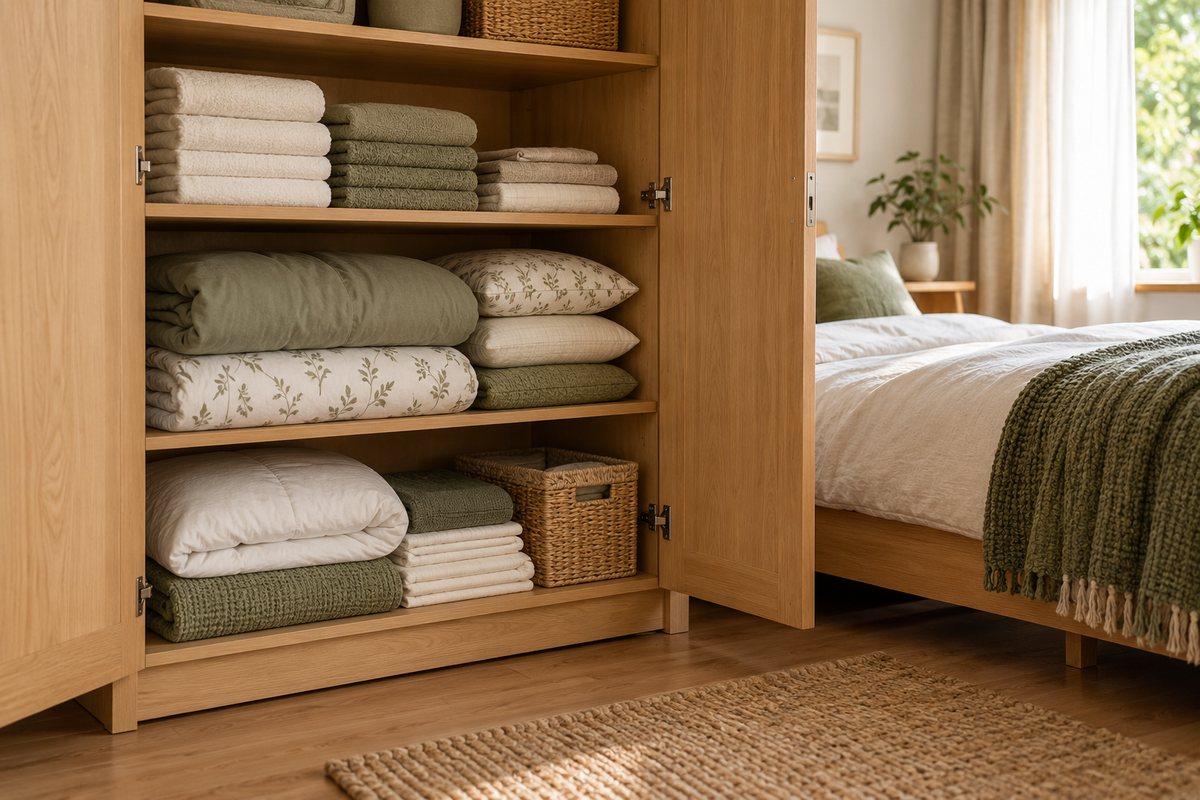
Leave a usable gap where freshly washed towels or bedding will go. If the shelf looks perfect only while half the linens are in the wash, the system is too full.
Return each category directly rather than leaving a folded pile on a chair. Our laundry organization guide helps with the washing and folding end of that routine. Keep the shelf labels simple enough that anyone sharing the apartment can put things back.
20. Keep a Small Repair or Repurpose Decision Separate
A torn pillowcase or worn towel should not remain hidden among ready-to-use linens. Put it in one small temporary bag with a clear next step: repair, repurpose, or find an appropriate textile collection option locally. Check the condition before donating anything.
Choose a review date and keep this bag outside the active linen shelf. Avoid automatically turning every worn towel into a cleaning cloth; retain only the amount you will use.
21. Reset the Shelf Before Buying More Linens
During a weekly laundry return, straighten the front row, check the next sheet set, and notice categories reaching their limit. Look behind the active zone occasionally so stored linens do not become forgotten duplicates.
Before buying towels, sheets, or another organizer, check what already fits and what is actually missing. Small linen closet organization ideas work best when you can remove one item and return one item easily. Keep the system simple enough to survive an ordinary week.
A Linen Closet That Works After Laundry Day
Start with the category that makes laundry returns hardest. Count it, choose its shelf, and test a fold or container that makes access easier. Keep the next sheet change visible and protect daily towel space from bulky extras.
You do not need matching baskets or more shelves in every gap. A useful linen zone has clear categories, manageable quantities, and room for everything when the wash is finished. Make one change this week, then keep the arrangement that your household can repeat.
Keep Organizing
Continue with more practical TidyLuma ideas for small spaces.