21 Small Home Office Organization Ideas for Apartments
A small apartment workspace often shares a bedroom, living room, or dining table. The problem is not always the size of the desk: it is the mail, chargers, notebooks, and spare supplies that gradually occupy every usable surface.
These small home office organization ideas focus on keeping work accessible while protecting the rest of the room. You do not need a separate office or matching storage furniture. Start with the tasks you do, then give the materials for those tasks a clear route in and out.
Use the ideas that fit your setup, whether you work from home every day or need a place for occasional paperwork. Measure before buying, keep storage close to its purpose, and test each change during a normal week.
Quick Home Office Wins
Clear enough desk space for one task. Put unprocessed papers in one inbox. Gather spare chargers into a pouch. Remove tools you never use. Choose a five-minute closing routine before buying new storage.
1. Give the Workspace a Specific Job
List what you actually do here: laptop work, video calls, household paperwork, studying, or a mix. Keep the tools for those activities nearby and move unrelated belongings elsewhere.
Choose one main task when space is especially tight. Occasional projects can use a portable kit rather than permanent desktop storage.
2. Reserve a Clear Working Rectangle
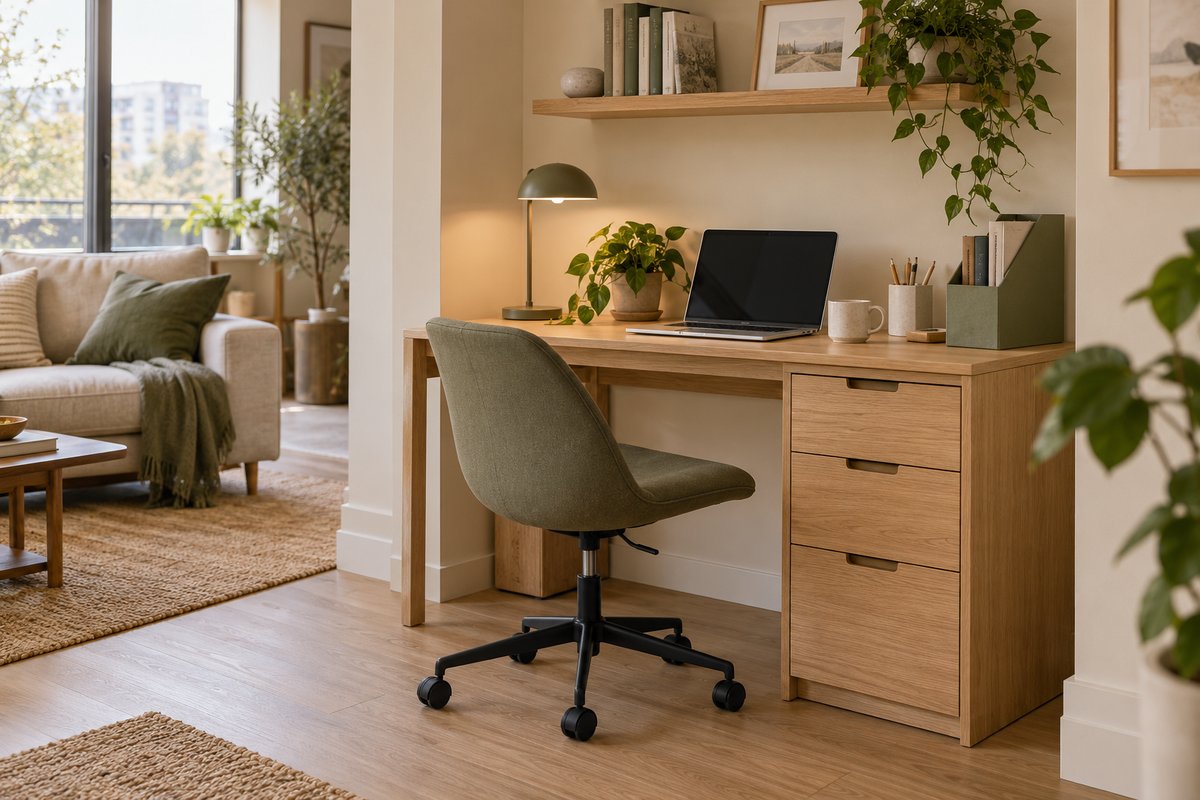
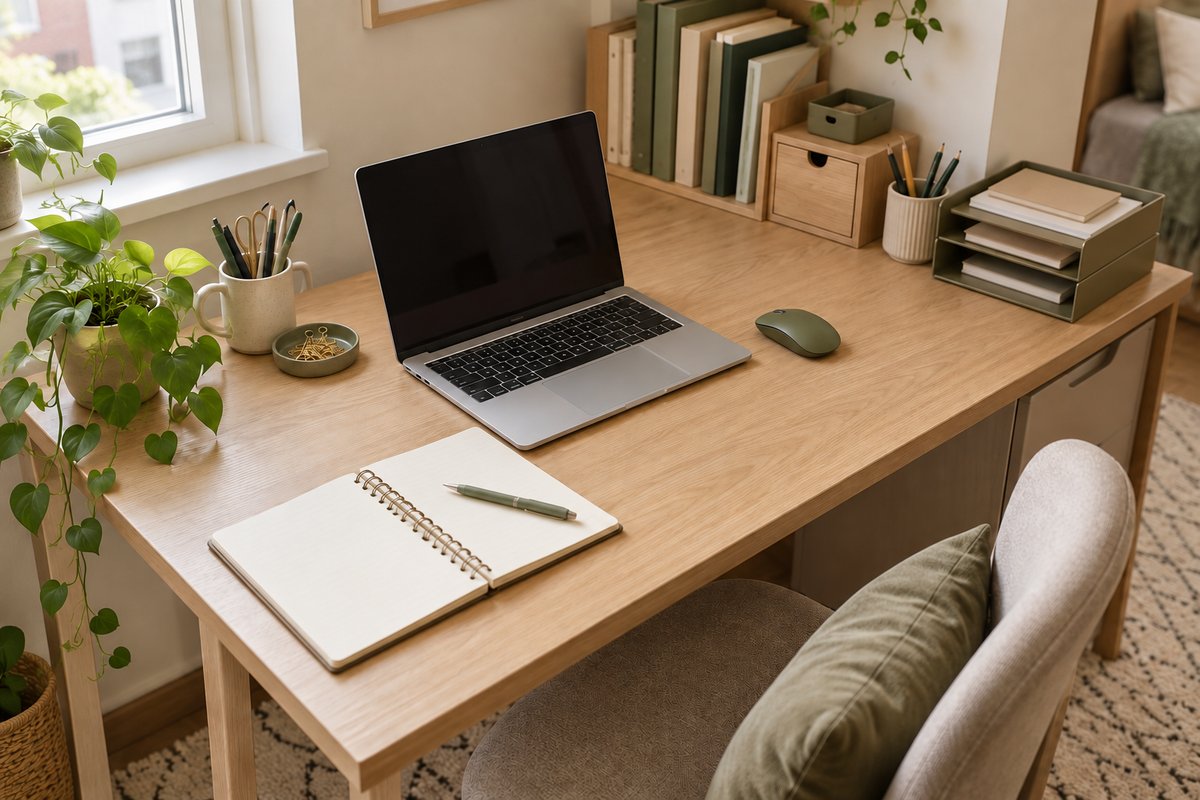
Sit down with your normal equipment and mark the surface you need for the keyboard, mouse, and one open notebook. That working rectangle should stay clear of supply cups, incoming mail, and decorative objects.
Keep only the current task inside this area. If papers need to spread out briefly, move the other tools into a nearby tray first. Keep the setup usable; OSHA’s workstation checklist can help you review equipment placement.
3. Measure Storage With the Chair Pulled Out
Check the desk opening, drawer depth, and nearby walkway before adding organizers. Then pull the chair back, open the drawers, and test where your knees and feet go. A slim cabinet can still be too large if it blocks the only route through the room.
For an office corner in a bedroom, use the clearance checks in our small bedroom organization guide. Keep the workspace within its boundary so work supplies do not gradually take over the dresser or bedside area.
4. Create One Inbox for Unprocessed Paper
Use a single shallow tray for mail and documents that still need a decision. This is a temporary landing spot, not a filing system. Empty envelopes, duplicate printouts, and packaging should leave the workspace before they enter the tray.
Process it at a regular time: respond, file, scan if useful, or recycle. Give urgent items a visible deadline in your calendar instead of moving them to another pile. When the inbox fills, deal with its contents before adding a second tray.

5. Separate Action Papers From Reference Files
Keep documents for current tasks in a few upright folders: to sign, to pay, and active projects, for example. File completed paperwork separately so a receipt you need to keep does not hide a form you need to return.
Choose folder names around how you look for things. A simple household, work, and personal split may be enough. Keep sensitive records in closed storage where appropriate, and follow the retention requirements relevant to your documents rather than discarding them on a blanket schedule.
6. Give Each Active Project a Slim Folder
Gather notes, printouts, and small loose sheets for one project into a single folder. Keep only projects you are actively using in the nearest holder. This lets you clear the desk without losing the order of the work.
When a project ends, remove unnecessary drafts and move the useful record into reference storage. If the active holder becomes crowded, review stalled projects before buying a larger one.
7. Divide a Drawer by Tools, Not Tiny Objects
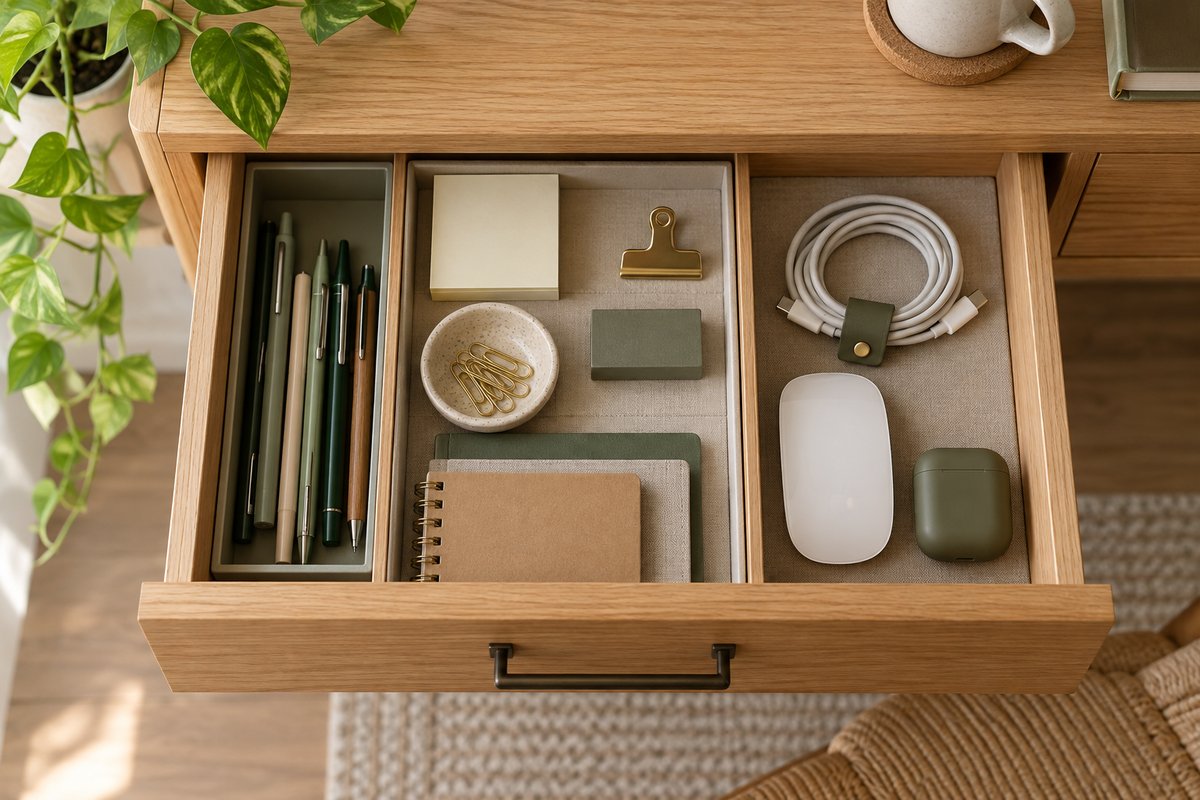
Set out the supplies you reach for during a normal week. Create broad zones for writing tools, small stationery, and technology accessories. An existing shallow box can separate a few categories without a full set of fitted dividers.
Keep the daily tools near the front and extras farther back. Avoid a separate compartment for every clip or cable; that creates more sorting than most people maintain. Test whether you can retrieve and return something one-handed while seated at the desk.
8. Limit the Desktop Pen Supply
Keep a few reliable pens, a pencil if you use one, and any tool needed for your current work. Test them before returning them to a cup. Spare pens and duplicate scissors can go into a supply box rather than compete with the keyboard.
Choose a short holder that does not obscure your screen or occupy the mouse area. If you rarely write by hand, a drawer may work better than a cup. Organization should follow your habits rather than imitate a styled desk photograph.
9. Route Cables Along One Accessible Path
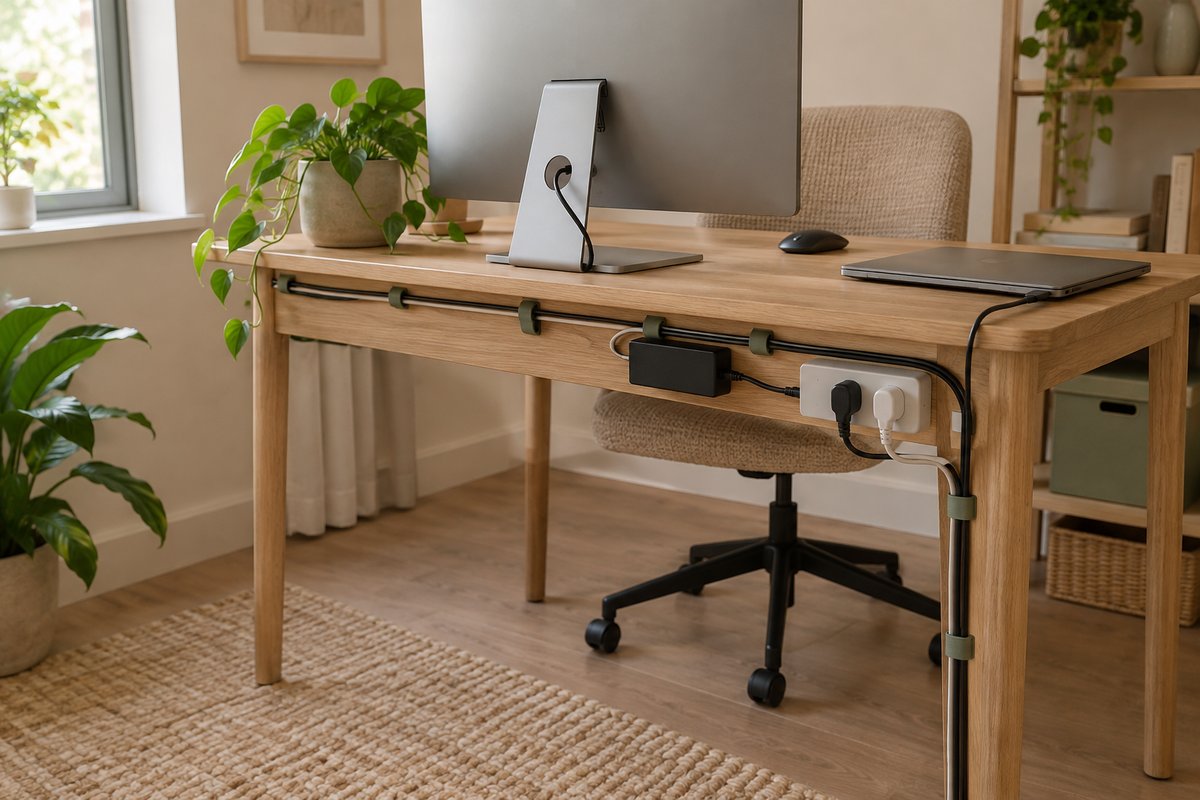
Group cables along the rear or side of the desk, keeping them away from the chair wheels and walking route. Use reusable ties with enough slack for the equipment to move normally. Mark similar chargers at the plug end if they are difficult to distinguish.
Keep connections accessible for unplugging and leave ventilation openings clear. Follow device instructions when arranging power supplies. Rental-friendly clips may help, but check the surface and adhesive requirements first; do not assume every removable product is suitable for a painted wall.
10. Make Charging a Small Defined Zone
Choose one accessible place for devices that need charging, rather than scattering them across the desk and floor. Keep the charger you use most plugged into its usual location and store occasional chargers together in a pouch.
A small tray can contain loose accessories, but it should not crowd the work surface or cover equipment. Place drinks elsewhere. If charging already works well in another room, avoid creating a second station simply to fill an empty corner.
11. Give Headphones a Clear Resting Spot
Give headphones a stable shelf spot, stand, or suitable hook near the workspace. Keep them out of the keyboard area and away from the chair, where a cable can snag as you get up. Leave enough room to remove them without shifting other supplies.
Use the same spot after every call. A soft pouch can contain small earbuds and their charging cable when they are not in use. Keep only the equipment you actually use here; old headsets can move to a separate decision or donation box.
12. Use Vertical Storage for Light Working Supplies
A shallow shelf, freestanding desk hutch, or suitable rail can hold notebooks and frequently used folders above the working surface. Check reach from the chair and keep the arrangement light enough that it does not feel like a wall over your desk.
Choose fixings and load limits appropriate to the furniture or wall, and check your lease before drilling. For room-wide placement, our small apartment organization ideas can help you keep storage from taking over narrow routes.

13. Use a Cart Only if It Has a Parking Place
A narrow rolling cart can hold a portable printer, project supplies, or reference folders beside a desk. First identify where it will park during work and where it will go afterward. Wheels do not solve a space problem if the cart stays in a doorway.
Give each shelf one purpose and keep heavier contents low within the cart’s specifications. Test whether it rolls easily on your flooring. If you never need to move it, a compact fixed shelf may be simpler and use the footprint better.
14. Keep Printer Supplies Beside the Printer
Store the paper, spare ink or toner, and small accessories for your printer together. Keep paper flat and dry, and retain supplies in their appropriate packaging. Leave the equipment’s vents and access panels unobstructed.
If you print occasionally, the printer may belong on a nearby cabinet rather than the desk. Test the full paper path and lid opening before choosing its location. A storage spot that requires unpacking several objects for every printout will quickly become frustrating.
15. Separate Current Notebooks From Finished Ones
Keep the notebooks you actively use in a narrow upright holder. Mark the spine or cover with a clear subject so you can retrieve the right one. Finished notebooks and older reference books should leave the desk once they are no longer part of daily work.
Review them before moving everything to another shelf. Preserve useful notes in a system you can find again, then reduce duplicates. Keeping six half-used notebooks within reach often makes it harder to remember where you wrote something.
16. Build a Work Kit for a Shared Table
If the dining table is your desk, gather the laptop sleeve, notebook, charger, and writing tools in one portable container. Choose something you can lift easily and store on an existing shelf. Keep it small enough that setup takes one trip.
Return the whole kit when work finishes, rather than distributing supplies around the room. Our living room organization guide offers ideas for keeping shared seating and tables usable once the workday ends.

17. Give Each Person Their Own Working Container
In a shared workspace, use separate folders or small bins for each person’s active materials. Shared tools can have one agreed drawer, but personal notes should not get mixed into a communal pile. Leave the desktop ready for the next user.
Choose boundaries that fit your schedule: one side of a drawer or one shelf may be sufficient. Discuss what can stay out between sessions. A shared desk works better when nobody has to move another person’s unfinished work just to begin.
18. Stop Household Mail at Its First Landing Spot
Keep incoming mail from becoming office clutter before it reaches the desk. Open it at a consistent landing spot, remove packaging, and bring only action documents into the workspace. Keep keys, shopping receipts, and delivery materials in their proper zones.
For homes where the front door opens into the living area, our entryway organization ideas help create that first sorting point. Use one route for paperwork instead of several scattered holding piles.
19. Keep Supply Backups Outside the Daily Drawer
Store spare notebooks, unopened stationery, and occasional accessories in one defined box. Check this box before buying replacements. Keep its contents visible or use a short inventory if the box lives on a higher shelf.
Match the boundary to your actual consumption. Bulk stationery rarely saves usable space when most of it waits untouched.
20. Remove Work From the Room at Closing Time
Choose a short shutdown routine: save your work, note the next step, put active papers in their folder, and return loose tools. In a bedroom or living room, tuck the kit away or close the cabinet so the room can serve its evening purpose.
Do not pack away equipment you will immediately need again if that creates unnecessary friction. The useful boundary is between active work and the rest of the room. A clear desktop or contained kit is often enough to mark that change.
21. Review the System After a Normal Workweek
Notice what still lands outside its assigned home. Is the inbox too far away? Does a charger require moving the desk? Does the supply drawer jam because a container is too tall? Fix the repeated obstacle before adding another organizer.
Do a brief weekly check of action folders, loose paper, and backup supplies. Keep the changes that save effort. Small home office organization ideas are most useful when they support actual work, including the busy days when you have little time to tidy.
Small Home Office Organization Ideas That Support Your Day
A useful workspace makes it easy to begin, find what you need, and stop without leaving work scattered through the apartment. The right system might be a few folders and a drawer, or one portable kit for a shared table.
Start with the surface you work on and the paper that keeps collecting there. Give each a simple boundary, then tackle cables and supplies. Keep the changes that make an ordinary workday easier, and remove storage that adds extra steps.
Keep Organizing
Continue with more practical TidyLuma ideas for small spaces.