19 Small Kitchen Cabinet Organization Ideas for Apartments
Small kitchen cabinets can fill up quickly, especially in an apartment where every shelf has to work harder. Pots get stacked awkwardly, food packages disappear at the back, and everyday items often compete for the same limited space.
The right small kitchen cabinet organization ideas can make a compact kitchen feel much easier to use without adding more cabinets. The goal is not to fit as much as possible into every shelf. It is to create a simple system that keeps useful items visible, accessible, and easy to put away.
Start with the cabinets that cause the most frustration, then improve them one zone at a time. A few practical changes can often create more usable space than buying a large collection of organizers.
Quick Kitchen Cabinet Wins
- Remove duplicates and items you rarely use.
- Keep everyday essentials on the easiest shelves to reach.
- Group similar items instead of storing them randomly.
- Use vertical space before adding more containers.
- Measure cabinet interiors before buying organizers.
- Leave some open space for groceries and changing needs.
Check Your Cabinet Before Choosing an Organizer
Use this fit check on the one cabinet that causes the most trouble. The space behind a closed door is not always the space you can actually use: hinges, shelf supports, and the cabinet opening can stop an organizer that fits the interior from going in or coming out.
- Opening and interior: Measure the clear opening with the door fully open, then the usable shelf width, depth, and height. Note hinges, pipes, shelf supports, and other obstacles.
- Removal path: Check that a loaded bin, tray, or turntable can be lifted or pulled out through the opening, not just placed inside an empty cabinet.
- Door and load: Close the door gently with a temporary cardboard size guide in place. For shelves, racks, and mounted organizers, follow the maker’s fit and load instructions, especially when storing dishes or bottles.
Your measurements: Clear opening: ____ wide × ____ high; usable shelf: ____ wide × ____ deep × ____ high; hinge/support obstacle: __________; space to pull out a bin or drawer: __________. Write the unit beside each number.
Match the tool to the access problem. Try the no-purchase move first; an organizer helps only if the contents remain easy to take out and return.
On a phone, swipe the table sideways to see every column.
| If the problem is… | Try without buying | If choosing a tool, check… |
|---|---|---|
| Unused height above short dishes | Separate daily dishes from occasional pieces and make two shorter stacks. | A shelf riser clears the cabinet opening, leaves room to lift dishes from both levels, and suits the shelf and intended load. |
| Small jars hidden at the back | Bring everyday jars forward and group similar ones. | A turntable rotates fully with the tallest jar on it and can be removed through the opening. |
| Trays or lids falling into a pile | Stand a small group in an existing stable slot if it can be done safely. | A vertical divider fits the shelf depth and height while allowing the door to close and each item to be lifted out. |
| Deep shelf with hard-to-reach packets | Use an existing shallow box for one category and pull the whole box forward. | A handled pull-out bin passes the door hinge and shelf lip when full; its handle and load remain manageable. |
1. Empty One Cabinet at a Time
Trying to organize the entire kitchen at once can turn a simple project into a mess. Start with one cabinet, remove everything, and look at what you actually keep there.
Discard expired food, donate useful duplicates you never reach for, and move items that belong somewhere else. An empty cabinet also makes it easier to see its true width, depth, and shelf spacing before you decide what kind of organization will help.
2. Separate Everyday Items From Occasional Items
Not everything deserves the easiest cabinet space. Plates, glasses, mugs, cooking oils, and frequently used ingredients should usually be easier to reach than holiday dishes or appliances you use a few times a year.
Move occasional items higher up or farther back. This simple change can make a small kitchen feel more organized without adding a single new product.
3. Group Similar Items Together
Create broad categories so you always know where something belongs. You might group baking supplies, breakfast foods, canned goods, snacks, mugs, food-storage containers, or cooking ingredients together.
Keep the categories simple enough that they are easy to maintain. If a system requires too many tiny subcategories, it often becomes harder to use than the clutter it replaced.
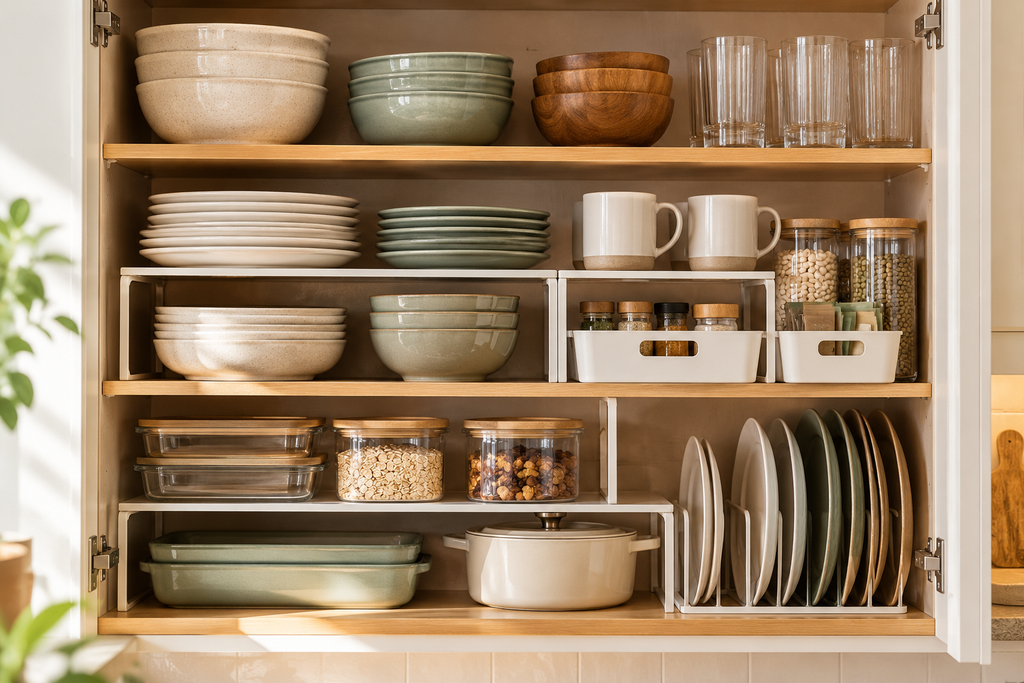
4. Add Shelf Risers to Double Short Spaces
A shelf riser can create a second level inside a cabinet where shorter items leave unused space above them.
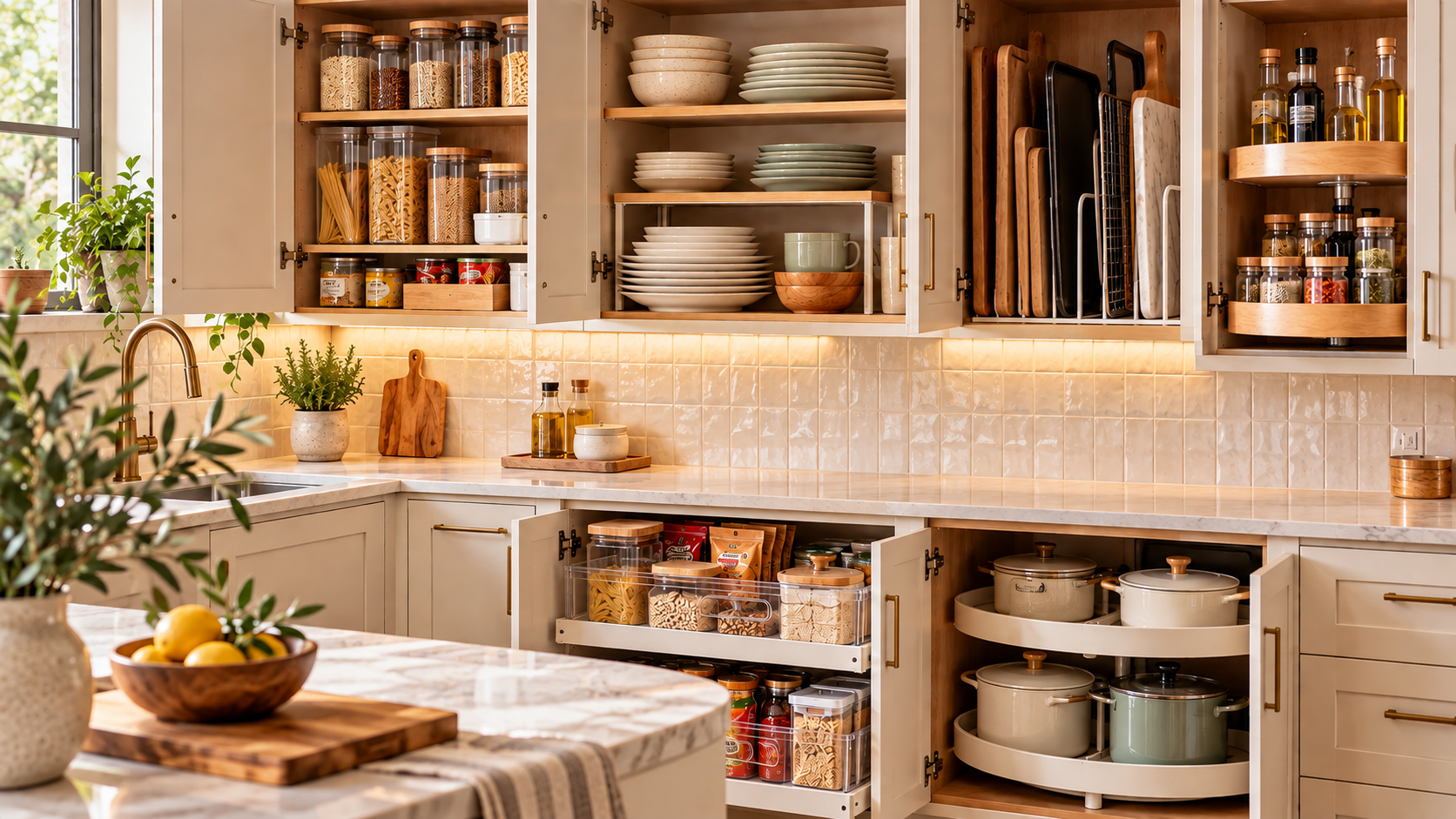
This works well for plates, bowls, mugs, canned goods, and pantry jars. Instead of creating tall unstable stacks, you can separate items into two accessible levels.
5. Stack Plates and Bowls by Size
Keep similar dishes together and avoid building one very tall stack that has to be lifted every time you need something underneath.
Separate dinner plates, smaller plates, and bowls when cabinet width allows. Shelf risers can make this much easier in a compact cabinet.
6. Use Under-Shelf Baskets for Lightweight Items
Some cabinets have a large gap between the shelf and the items stored below it. An under-shelf basket can turn part of that empty space into useful storage.
Use it for lightweight items such as napkins, wraps, small towels, snack packets, or other supplies that do not need a full shelf.
7. Use a Turntable for Bottles and Jars
Deep cabinets make small bottles difficult to see, especially when several rows are stored in front of one another.
A small turntable can work well for oils, vinegars, sauces, spreads, or jars. Instead of removing the front row, rotate the tray until the item you need comes forward.
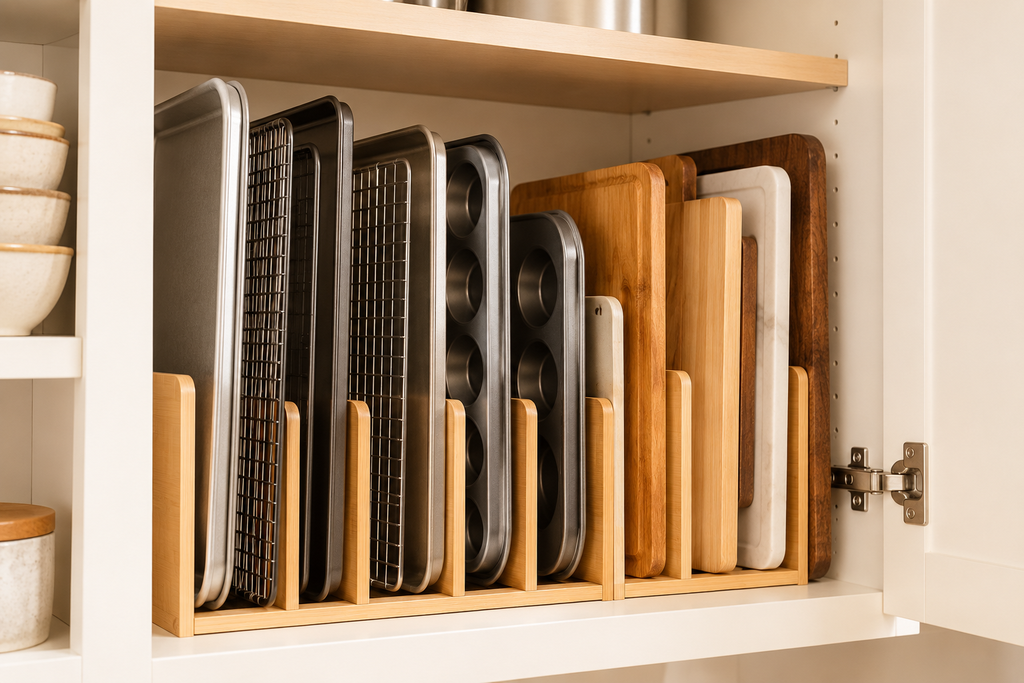
8. Store Baking Sheets and Cutting Boards Vertically
Flat items often become awkward when they are stacked horizontally. Baking sheets, trays, cooling racks, and cutting boards are usually easier to access when stored upright.
A vertical divider or simple rack keeps them separated so you can pull out one item without moving the entire stack.
9. Give Pot Lids Their Own Storage
Loose pot lids can take up surprising amounts of cabinet space. Instead of stacking them on top of pots, keep them upright in a divider, lid rack, or narrow section of the cabinet.
This leaves the pots easier to stack and keeps lids visible when you need the right size.
10. Use the Inside of Cabinet Doors
The inside of a cabinet door can offer useful shallow storage without taking over a shelf.
Depending on the cabinet, a slim rack or hooks can hold measuring spoons, lightweight lids, small cleaning tools, or other flat essentials.
Always check that anything added to the door will still clear the shelves when the cabinet closes.
11. Use Pull-Out Bins in Deep Cabinets
Deep shelves often become cluttered because the items in the back are difficult to reach.
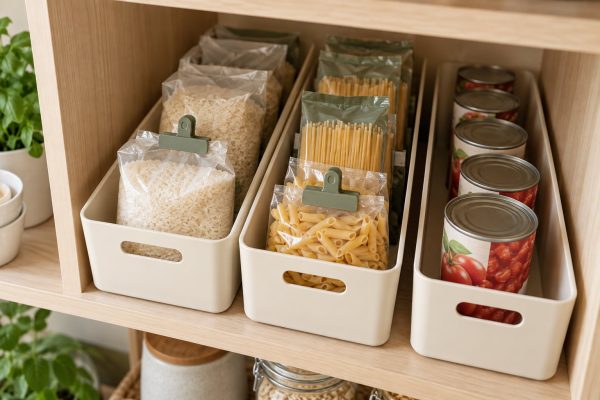
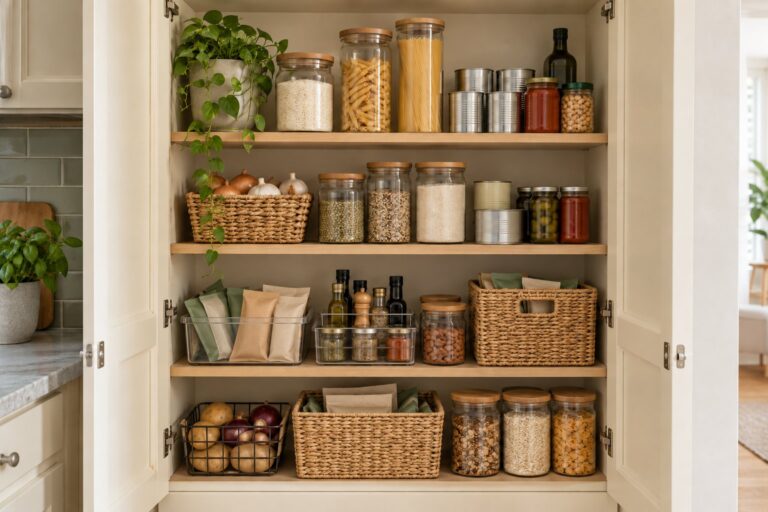
A handled bin can work like a simple drawer. Pull the entire category forward, take what you need, and slide it back into place. This is especially useful for snacks, packets, baking supplies, and small pantry items.

12. Create a Dedicated Baking Zone
If flour, sugar, baking powder, extracts, chocolate chips, and decorating supplies are scattered across several cabinets, baking becomes harder than it needs to be.
Keep frequently used baking ingredients together on one shelf or in one cabinet. Smaller ingredients can go in a bin so they do not disappear behind larger packages.
13. Decant Food Only When It Solves a Problem
Matching containers can look attractive, but transferring every ingredient into a new container is not necessary for good organization.
Use containers where they genuinely improve storage, visibility, or freshness. If the original package already stacks well and is easy to use, keeping it may be the simpler choice.
If you transfer food to a new container, keep the original package or record its ingredient and allergy information, date, and storage directions so you do not lose the details you may need later.
14. Keep Spices Near the Cooking Zone
Store frequently used spices close to where you prepare food rather than wherever there happens to be an empty shelf.
A shallow cabinet, tiered organizer, or small turntable can make spice jars easier to see. Avoid creating several rows where the jars in the back become forgotten.
For more ways to improve a compact kitchen beyond the cabinets, see our small kitchen organization ideas.
15. Use Bins to Organize Deep Upper Cabinets
Upper cabinets can be difficult to use when items are pushed far toward the back. Instead of reaching blindly, place similar items in a handled bin that can be pulled forward.
This works especially well for backup ingredients, coffee supplies, tea, snacks, or less frequently used pantry items.
16. Make Corner Cabinets Easier to Reach
Corner cabinets often have plenty of space but poor accessibility. Avoid filling the deepest part with small loose items that will be difficult to find later.
Use larger categories, turntables, or removable bins so the contents can come toward you instead of forcing you to reach around other items.

17. Keep Food-Storage Containers Together
Food-storage containers become much easier to manage when bases and lids have a defined home.
Nest similar container sizes where possible and store lids vertically in a small divider or bin. Removing containers with missing lids can also free valuable cabinet space.
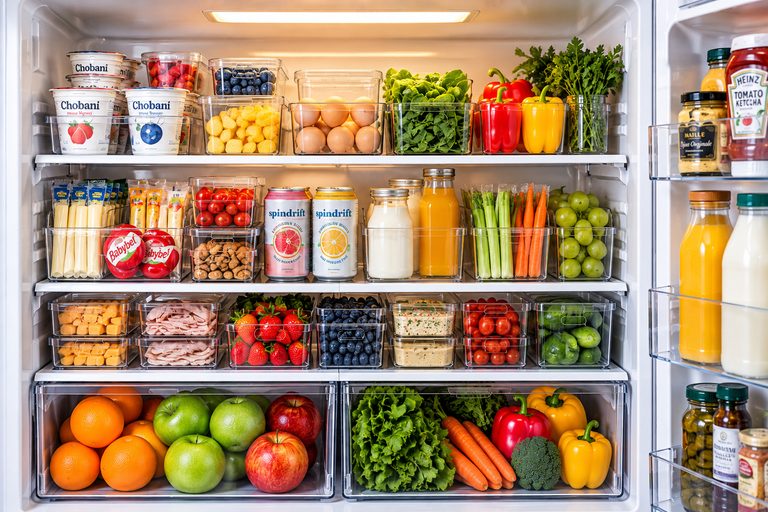
If you are also organizing food storage inside the refrigerator, our small fridge organization ideas can help create a system that works across both spaces.
18. Leave a Little Breathing Room
Do not treat every empty inch as a problem that needs to be filled.
A small amount of open cabinet space gives you room for new groceries, changing routines, and items that temporarily need a home. It also makes shelves easier to see and maintain.
19. Do a Five-Minute Cabinet Reset Each Week
A simple organization system works best when it receives a little maintenance.
Once a week, take a few minutes to return misplaced items, combine duplicates, straighten bins, and bring older pantry items forward.
- Return items to their regular zones.
- Move frequently used products back within easy reach.
- Check for empty or nearly empty packages.
- Remove anything that no longer belongs in the cabinet.
- Leave room for the next grocery trip.
Small Kitchen Cabinet Organization Ideas That Work in Real Life
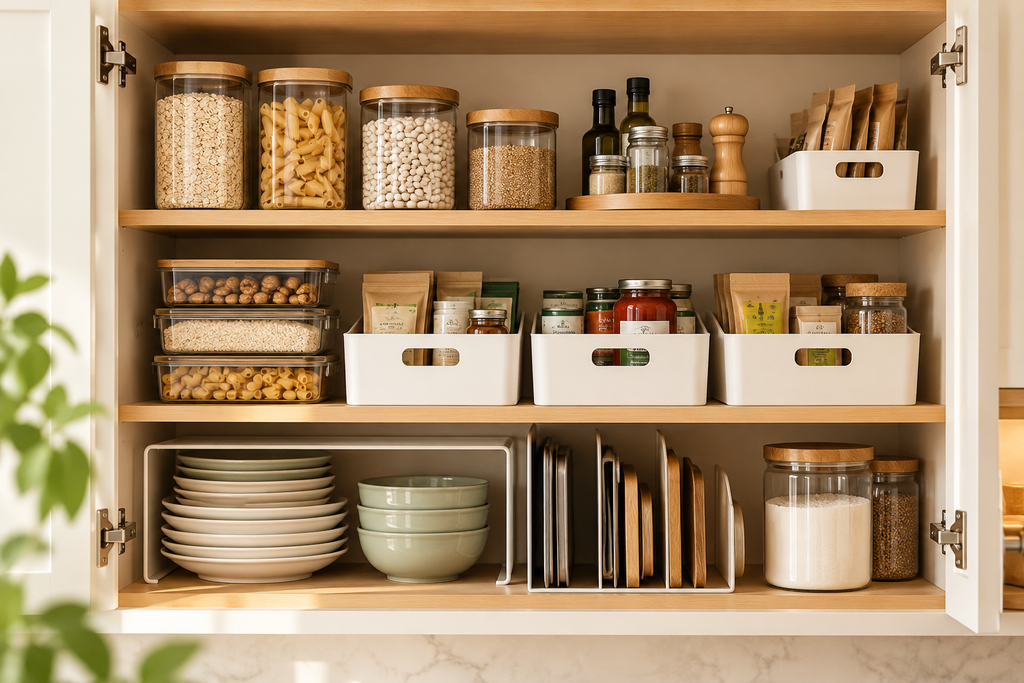
Small kitchen cabinets work best when every shelf has a clear purpose. You do not need matching containers in every corner or a complicated system to make a noticeable difference.
Start by removing what you do not use, keep everyday essentials easy to reach, and use simple tools only where they solve a real storage problem. Shelf risers, pull-out bins, vertical dividers, and turntables can make awkward cabinet space much easier to use.
If your entire apartment needs better organization, explore our small apartment organization ideas for more practical ways to use limited space efficiently.
Keep Organizing
Continue with more practical TidyLuma ideas for small spaces.