17 Small Entryway Organization Ideas That Keep Clutter Under Control
A small entryway can become cluttered faster than almost any other part of the home. Shoes collect near the door, bags land on the floor, coats pile up, and keys seem to disappear exactly when you need them.
The good news is that even a very compact entrance can work better with a few simple systems. You do not need a large mudroom or expensive built-ins to create an entryway that feels calmer and easier to use.
These small entryway organization ideas focus on using vertical space, creating clear drop zones, reducing visual clutter, and giving everyday items a practical home.
If the rest of your home also feels tight on space, start with our guide to small apartment organization ideas that actually save space.
QUICK ENTRYWAY WINS
Start with the changes that make the biggest difference.
If your entryway feels cluttered, you do not need to reorganize everything at once. Focus on these four areas first:
- Shoes: keep only the pairs you use most often near the door.
- Coats and bags: give everyday items one easy-to-reach hook.
- Keys and mail: create one small drop zone instead of several temporary piles.
- Surfaces: leave part of the bench, shelf, or console intentionally empty.
How to Choose an Organizer for a Small Entryway
Choose storage by the bottleneck you need to solve, not by how much an organizer can hold. Measure the walkway and door swing first, then prioritize the items used every day. A useful entryway organizer should be easy to reach, simple to maintain, and shallow enough to keep the route through the space clear.
- Use wall storage when the floor area is narrow.
- Choose closed storage when visual clutter is the main problem.
- Use open hooks and baskets for items that must be grabbed quickly.
- For rentals, favor removable or freestanding solutions that do not require permanent changes.
| Your entryway | Best first choice | Why it works |
|---|---|---|
| Narrow hallway | Shallow wall hooks and a slim shoe cabinet | Keeps the walking path clear |
| No closet | Hook rail with labeled baskets | Creates simple zones for coats and accessories |
| Rental | Removable hooks and a freestanding slim shelf | Adds storage without permanent changes |
| Shared home | One basket and assigned hook per person | Prevents belongings from mixing together |
| No floor space | Wall pocket and a high shallow shelf | Uses vertical space instead |
1. Decide What Actually Belongs in the Entryway
Before buying organizers, decide which items truly need to stay near the door.
For most homes, this might include everyday shoes, jackets, bags, keys, umbrellas, and a few seasonal essentials. Items you rarely use should usually live somewhere else.
Keeping the entryway limited to useful daily items prevents a small space from becoming a storage room for everything that does not have another home.
2. Create One Clear Drop Zone
Choose one specific place where small everyday items should go when you enter the home.
A small tray, shallow bowl, wall pocket, or narrow shelf can hold keys, sunglasses, transit cards, and other essentials.
The simpler the drop zone is, the more likely everyone in the home will actually use it.
3. Use Vertical Wall Space
When floor space is limited, look upward.
Wall-mounted hooks, rails, shelves, and slim organizers can provide useful storage without making the entrance feel crowded.
Keep frequently used items at an easy-to-reach height and reserve higher shelves for lighter or less frequently used belongings.
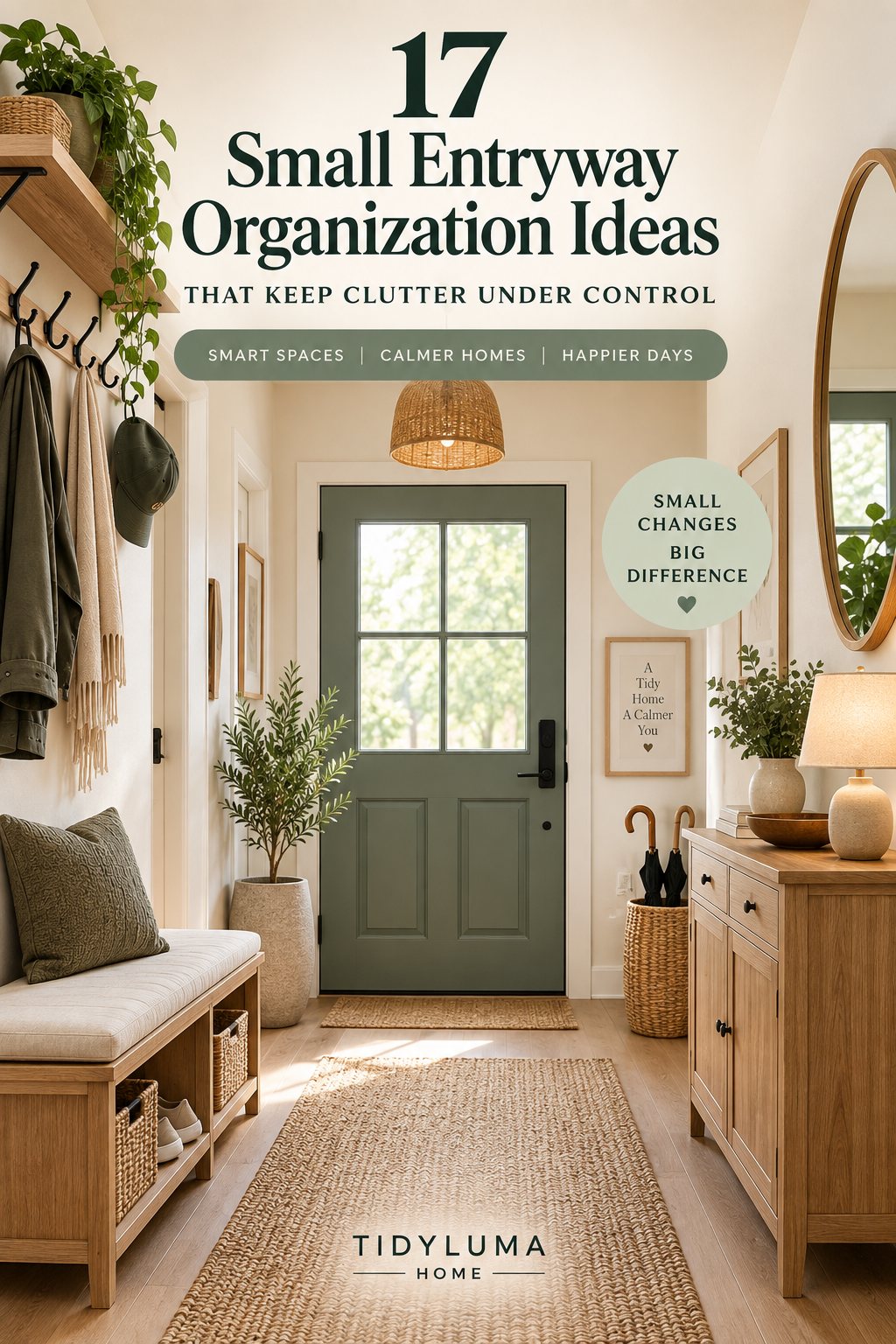
4. Install a Simple Row of Hooks
A row of hooks is one of the most practical additions to a small entryway.
Use them for jackets, reusable shopping bags, hats, lightweight backpacks, or umbrellas with hanging loops.
Avoid filling every hook. Leaving a little empty space makes the wall look calmer and gives you room for guests or seasonal items.
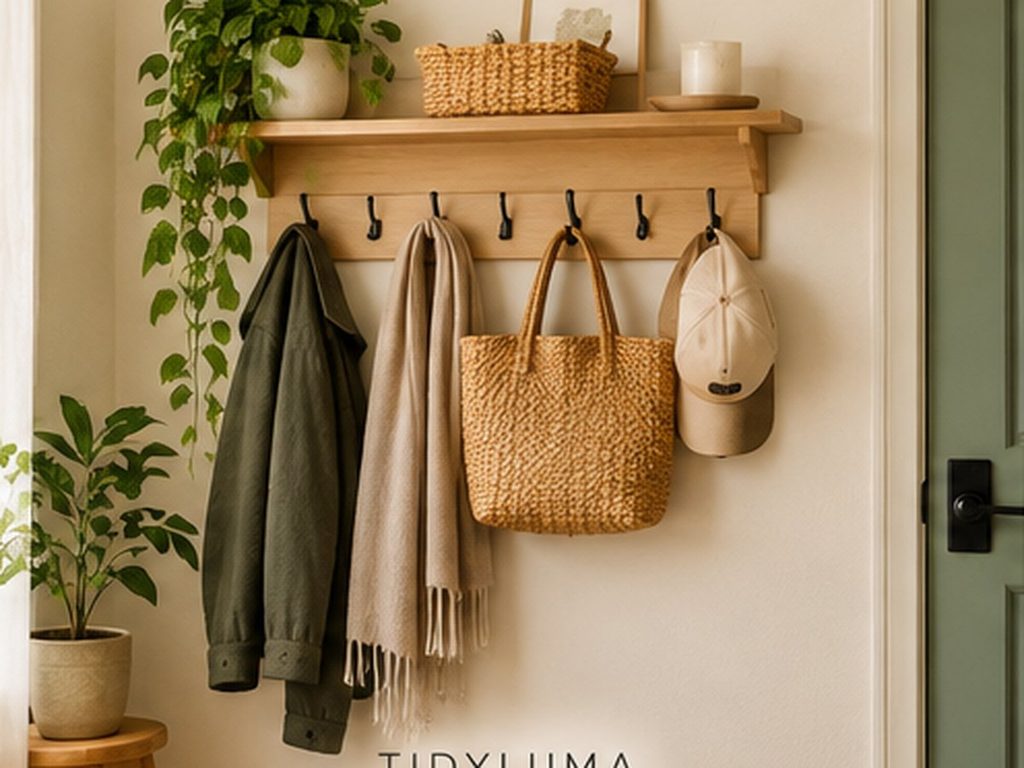
5. Add a Small Shelf Above the Hooks
If your hooks are mounted on an empty wall, the space directly above them can often provide extra storage.
A narrow shelf can hold baskets, hats, small decorative objects, or items that do not need to be accessed every day.
Choose a shallow shelf so it does not project too far into a narrow hallway.
6. Use a Basket for Each Person
In a shared home, individual baskets can make an entryway much easier to maintain.
Each person can have one basket for gloves, hats, small accessories, or items that need to leave the house the next day.
This reduces the number of loose objects sitting on benches, shelves, or the floor.
7. Keep Only Everyday Shoes by the Door
Shoes can quickly take over a compact entrance.
Try keeping only the pairs currently worn most often near the door. Store formal shoes, off-season footwear, and rarely used pairs somewhere else.
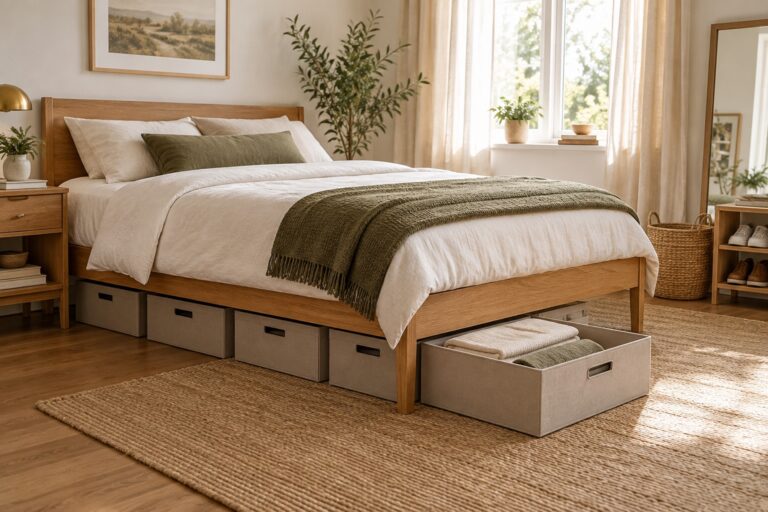
For hidden overflow storage, our under-bed storage ideas for small bedrooms can help you use space that might otherwise go unused.
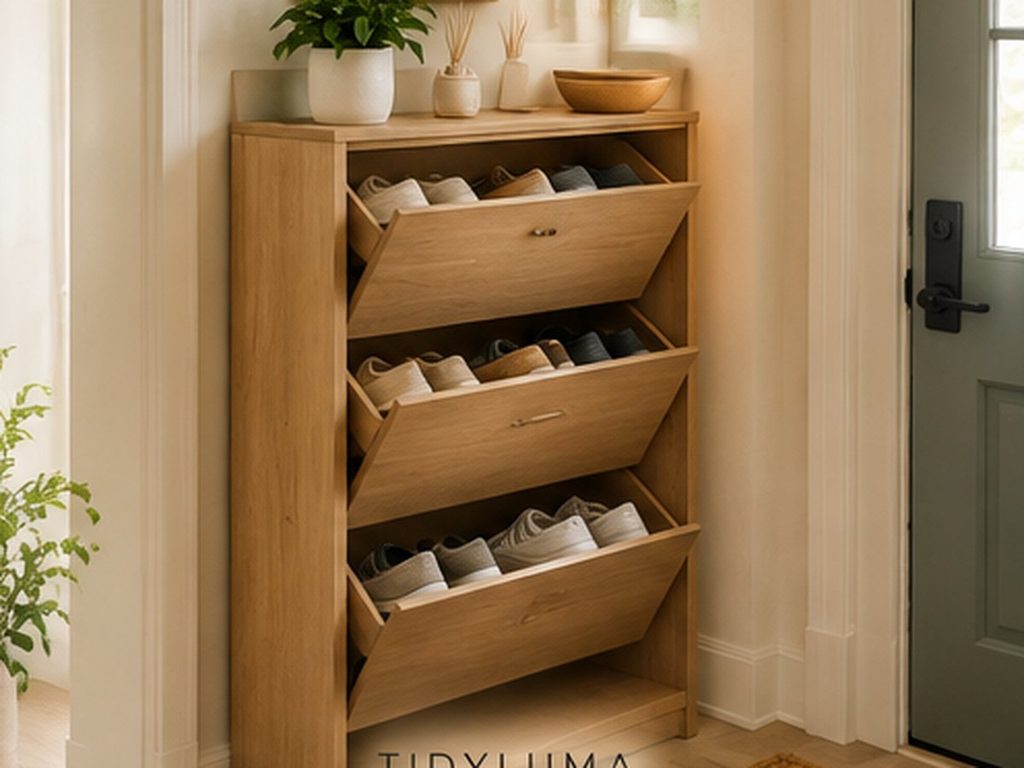
8. Choose Slim Shoe Storage
Traditional shoe racks can take up more floor space than a small entryway can spare.
Look for slim shoe cabinets, narrow racks, or low-profile shelves that keep footwear organized without blocking the walkway.
If the entryway is extremely narrow, vertical shoe storage may work better than a wide bench. For more layouts and renter-friendly options, explore our shoe storage ideas for small apartments.
9. Use the Space Under a Bench
If your entryway has a bench, make the space underneath it work harder.
Use baskets, bins, or a low shoe rack to store everyday footwear and accessories.
Open storage keeps items easy to reach, while matching baskets can make the area feel visually calmer.
10. Add a Small Mirror
A mirror does not create storage, but it can make a compact entrance feel brighter and more open.
It is also useful for a quick check before leaving the house.
Choose a mirror that fits the scale of the wall instead of one that overwhelms a very narrow entryway.
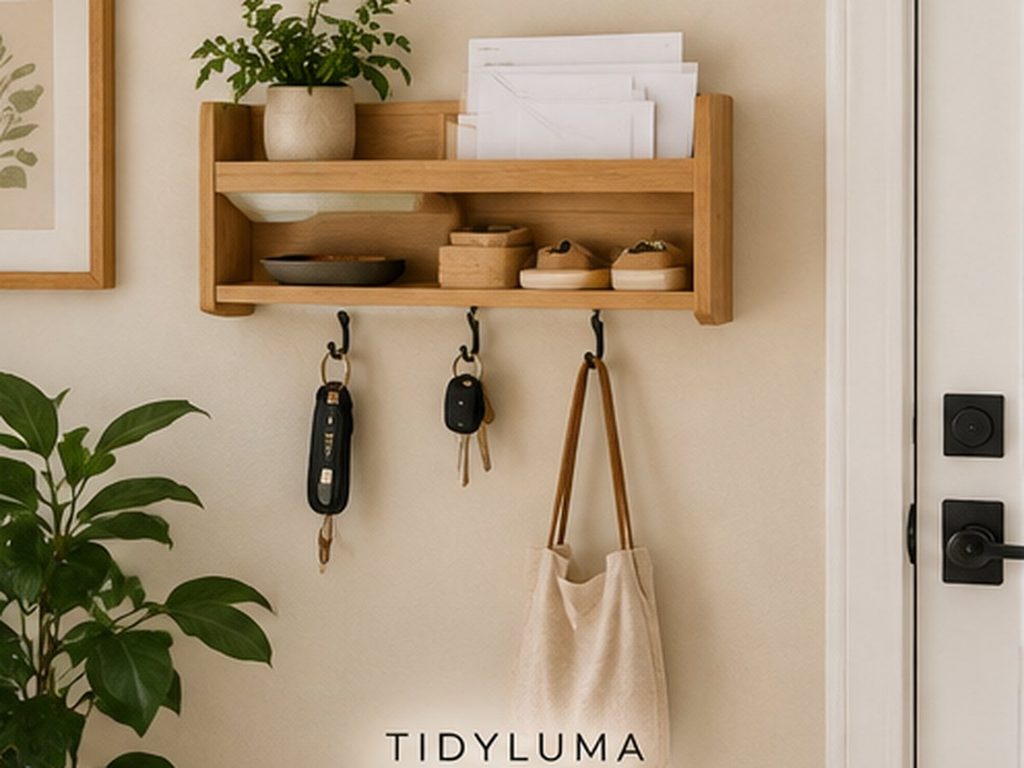
11. Create a Dedicated Spot for Keys and Mail
Keys and mail are two of the most common sources of entryway clutter.
Use a small tray, wall organizer, or divided container so incoming mail and keys do not spread across every available surface.
Sort mail regularly and remove anything that does not need to stay in the entryway.
12. Use the Back of the Door
The back of the entrance door can provide valuable storage without using any additional floor space.
Depending on the door, you might use hooks or a slim over-the-door organizer for lightweight bags, scarves, hats, or umbrellas.
Make sure anything you add does not interfere with the door closing securely.
13. Add a Small Umbrella Station
Umbrellas often end up leaning against walls or falling onto the floor.
A compact umbrella stand or tall basket can keep them contained in one place.
Choose a container that is easy to clean and appropriate for wet items.
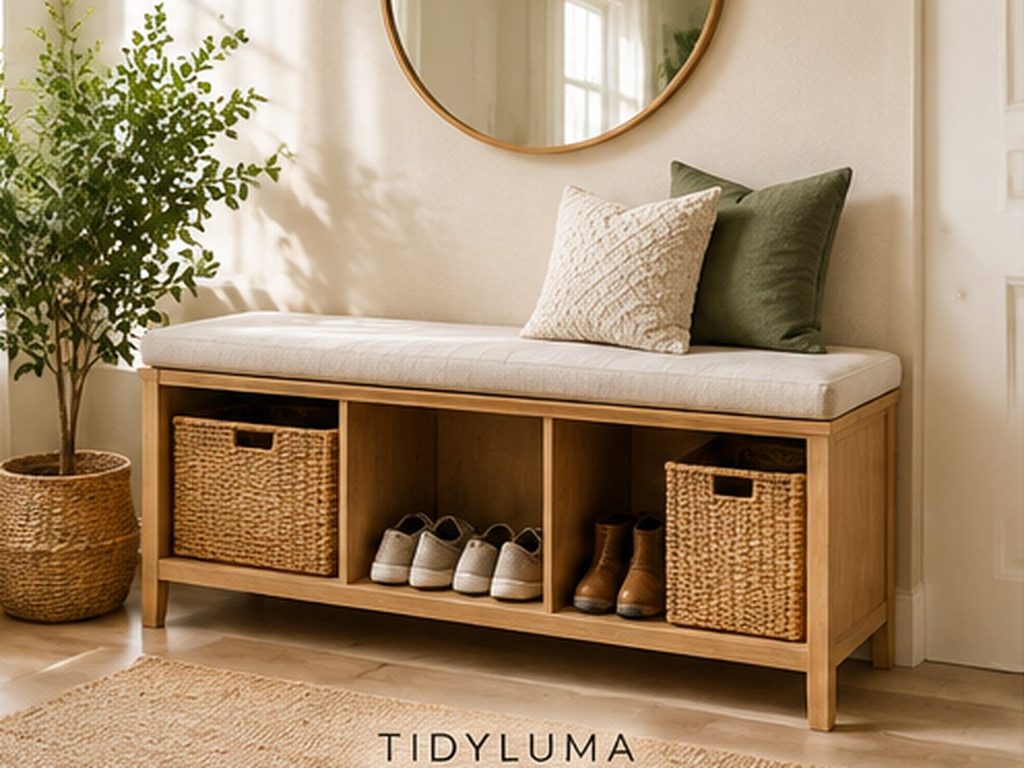
14. Choose a Narrow Bench With Storage
A small bench can make putting on shoes easier while also adding useful storage.
Look for a narrow model with a shelf, baskets, drawers, or an open space underneath.
In a tiny entryway, avoid oversized furniture. The bench should support the way you use the space without making the walkway feel tight.
15. Keep Seasonal Items Somewhere Else
A small entrance usually cannot comfortably hold every coat, scarf, shoe, and accessory throughout the year.
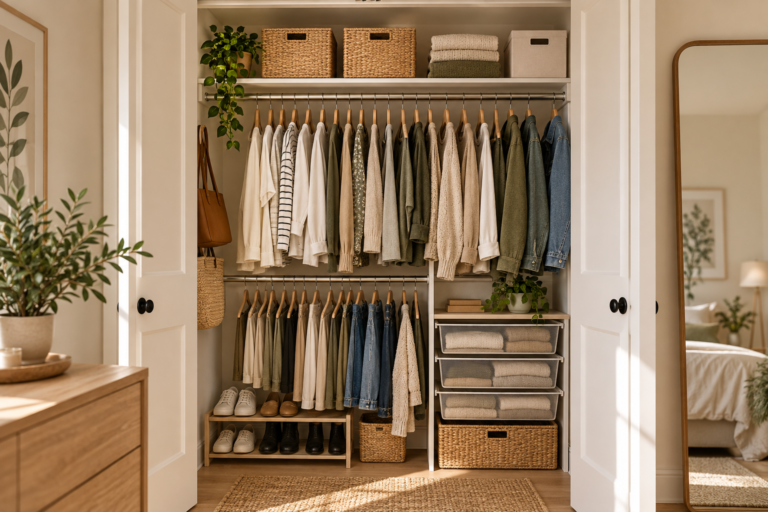
Rotate seasonal items when the weather changes. Keep only what you are currently using near the door. For coats and accessories that need a home elsewhere, try these small closet organization ideas.
This one habit can make a surprisingly large difference in how spacious the entryway feels.
16. Keep Surfaces Mostly Clear
A console table or narrow shelf can become cluttered quickly if every empty spot turns into temporary storage.
Try to keep the surface limited to one drop tray, one useful container, and perhaps one decorative item.
This makes the entryway easier to clean and creates a calmer first impression when you walk into the home.
17. Leave Some Empty Space
Not every hook, shelf, basket, and corner needs to be full.
Empty space gives you room to put things away without rearranging the entire entryway every time something new arrives.
It also helps a compact entrance feel more intentional instead of packed with storage solutions.

Small Entryway Organization Ideas That Work in Everyday Life
The best small entryway organization ideas are not the ones that add the most storage. They are the ones that make everyday routines easier.
Start by controlling the items that create the most clutter: shoes, coats, bags, keys, and mail. Give each category one clear place to live.
If you need inspiration for organizing another compact room, explore our small kitchen organization ideas and small bathroom storage ideas.
You do not need to complete all 17 ideas at once. Choose the two or three changes that would make your entrance easier to use today, then improve the rest gradually.
A small entryway can still feel welcoming, functional, and organized when every item has a purpose and every storage solution earns its place.
Keep Organizing
Continue with more practical TidyLuma ideas for small spaces.