19 Small Closet Organization Ideas for Apartments
A small closet can fill up surprisingly fast. Clothes compete for hanging space, shoes collect on the floor, bags end up stacked in corners, and the top shelf often becomes a place for things you rarely use.
The good news is that you do not need a walk-in closet or expensive built-ins to make the space work better. The right small closet organization ideas can help you use vertical space, create simple zones, and make everyday items easier to reach.
If your entire apartment feels short on storage, you may also want to start with our guide to small apartment organization ideas that actually save space.
QUICK CLOSET WINS
Start with the changes that free up space fastest.
Before buying organizers, focus on four simple improvements:
- Remove what does not belong: keep the closet focused on clothes, shoes, and accessories you actually use.
- Use vertical space: add another level of storage above or below existing shelves.
- Group similar items: give shoes, bags, folded clothes, and accessories their own zones.
- Leave breathing room: a closet is easier to maintain when every inch is not packed full.
Choose the Fix That Fits Your Closet
Before adding a rod, shelf, or bin, look at the closet you actually have. A shallow reach-in closet with mostly hanging clothes needs a different change from a deep closet full of folded clothes. Count what must live here, then choose the one category that is hardest to retrieve and put away.
Your closet inventory: hanging items: ____; folded stacks: ____; everyday shoe pairs: ____; bags or accessories: ____. Note the door type and the space it needs to open: __________. Measure the usable rod span, shelf width and depth, and the clear height below hanging clothes. Check whether a drawer, second rod, or door organizer would block the door, garments, or walking route. Follow the product maker’s mounting and load instructions; in a rental, check what your lease allows before fixing anything to the wall or door.
On a phone, swipe the table sideways to see every column.
| If the daily problem is… | Try without buying | Before adding a tool, check… |
|---|---|---|
| Clothes jammed on the rod | Move occasional pieces to a less accessible existing spot and group short garments together. | A second rod has enough clear drop for both rows, leaves longer garments a home, and meets its mounting and load instructions. |
| Folded clothes falling into piles | Make fewer, shorter stacks by category and keep the most-used stack in front. | Dividers or drawers fit the usable shelf depth and can be opened without hitting the door or hanging clothes. |
| Shoes blocking the floor | Keep only everyday pairs in the closet and assign each pair a visible spot. | A rack fits beneath hanging items; the tallest pair fits, and the floor stays reachable for cleaning. |
| Small accessories disappearing | Reuse a shallow box for one category and label it. | A door organizer clears the frame when closed and can be reached without removing other items. |
1. Start by Removing What You No Longer Wear
The easiest way to create more closet space is to reduce what the closet needs to hold.
Take out pieces that no longer fit, damaged items you do not plan to repair, and clothes you consistently skip when getting dressed. You do not need to create a minimalist wardrobe, but removing obvious excess makes every organization system work better.
Keep a donation bag nearby while you sort so unwanted items can leave the closet immediately instead of becoming another pile.
2. Group Clothes by Type
Instead of hanging everything randomly, create simple sections for shirts, jackets, dresses, pants, and other frequently worn categories.
This makes it easier to see what you own and prevents you from searching through the entire closet every morning.
You can also arrange each category from light to dark or short to long if you prefer a more visually organized look.
3. Use Slim Matching Hangers
Bulky hangers can take up a surprising amount of horizontal space in a small closet.
Slim hangers allow clothes to sit closer together while still keeping them neat. Using one hanger style also creates a calmer, more consistent appearance.
Avoid squeezing in so many clothes that they become difficult to remove. The goal is better use of space, not maximum density.
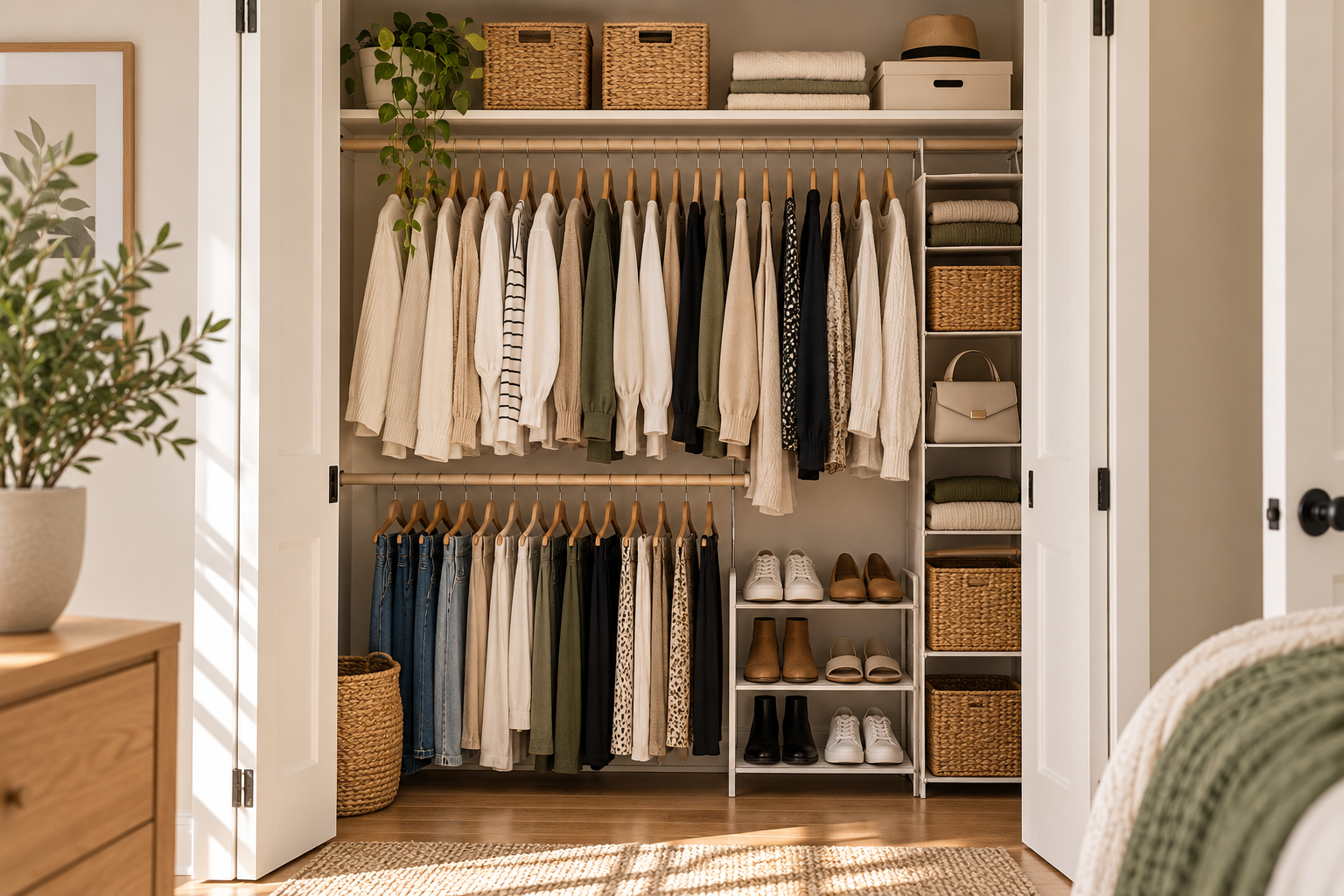
4. Add a Second Hanging Rod
If most of your wardrobe consists of shirts, jackets, skirts, or folded pants, one hanging rod may leave a large amount of unused space below your clothes.
A second rod can create another full level of hanging storage. Use the upper rod for tops and the lower rod for shorter garments.
This works especially well in apartment closets where floor space is limited but vertical space is available.
Check the clear hanging height for your shortest and longest garments first, and follow the rod maker’s mounting and load limits. A second level is not helpful if clothes drag on the floor or block the lower shelf.
5. Use the Top Shelf for Less-Frequent Items
The highest shelf is best for things you do not need every day.
Store seasonal clothing, special-occasion accessories, extra bedding, or travel items in lightweight bins or baskets. Keep daily essentials at a more comfortable height.
Avoid creating tall unstable stacks. Two or three clearly defined containers are usually easier to manage than many loose items.
6. Add Shelf Dividers
Folded sweaters, jeans, towels, and bags often collapse into each other when they share a wide shelf.
Shelf dividers create simple boundaries so each category stays in its own area. They can be especially helpful if your closet has one long shelf without built-in compartments.
7. Store Seasonal Clothes Somewhere Else
Your everyday closet does not need to hold every piece of clothing you own at the same time.
Move heavy winter clothing, bulky blankets, or off-season items into another storage area when you are not using them.
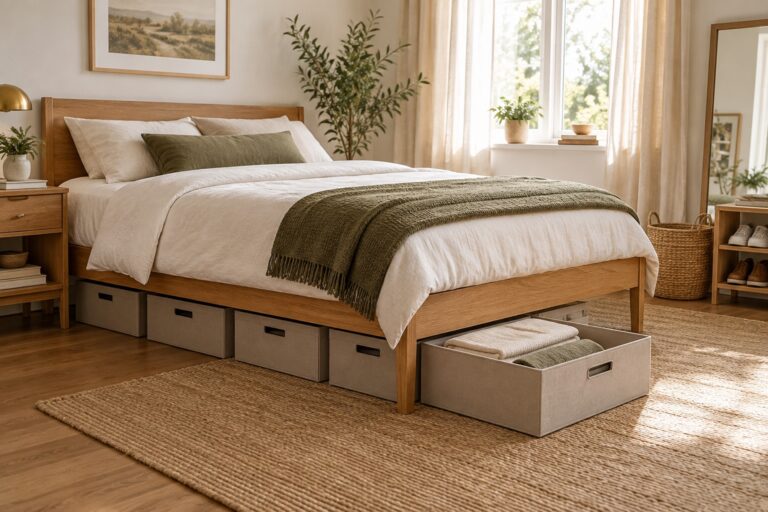
For bedrooms with limited closet space, our guide to under-bed storage ideas for small bedrooms has practical ways to use the space beneath the bed without making the room feel cluttered.
8. Use Baskets to Control Small Categories
Loose accessories can make an otherwise organized closet feel messy very quickly.
Use small baskets for scarves, belts, workout clothes, handbags, or other categories that do not need to be hung.
Choose baskets that fit the shelf rather than buying containers first and trying to make them fit later.
9. Keep Everyday Clothes at Eye Level
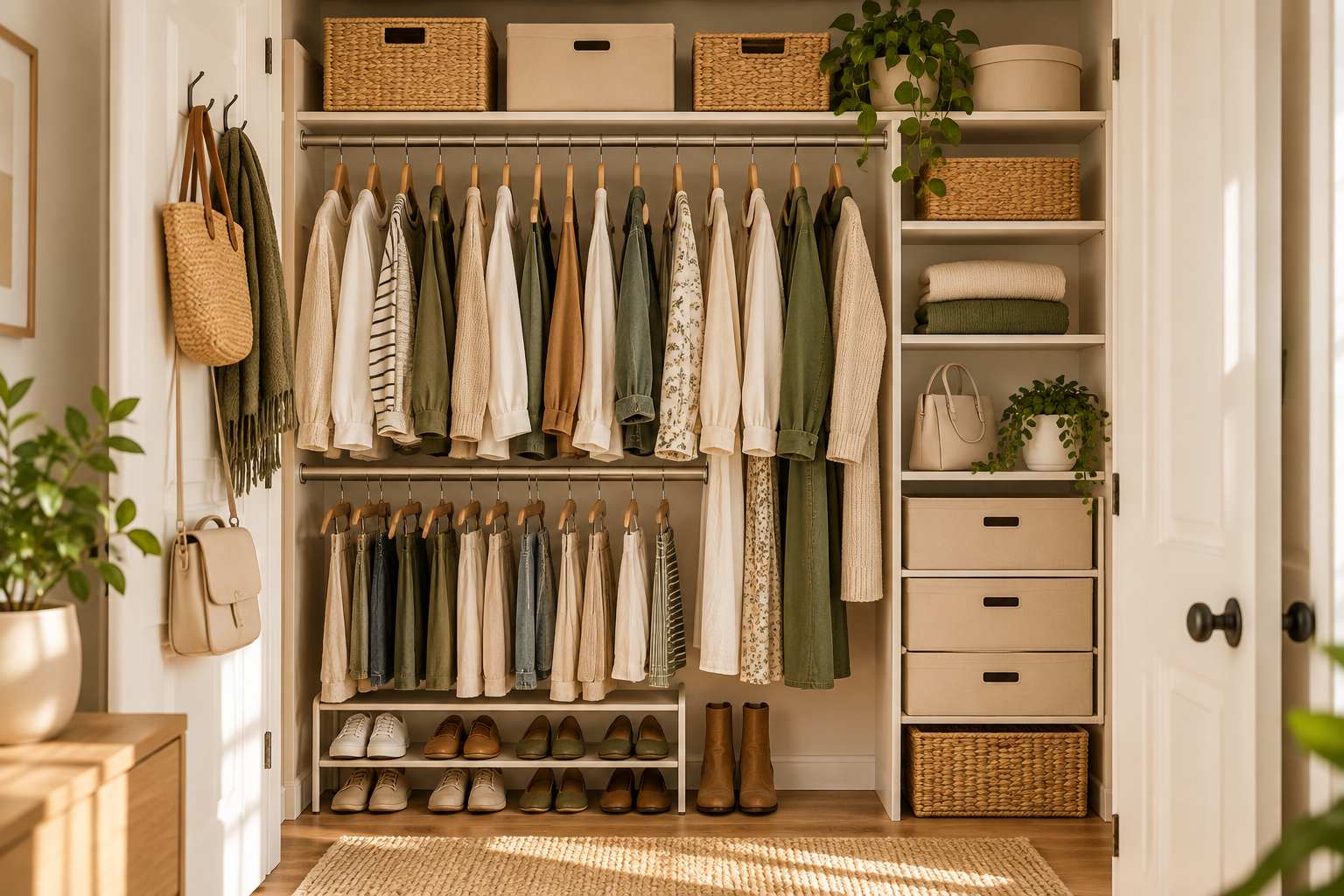
The easiest storage areas should hold the things you use most often.
Place everyday shirts, pants, work clothes, and frequently worn accessories between roughly waist and eye level. Reserve higher and lower spaces for less frequently used items.
This small change can make a closet feel much easier to use even if the total amount of storage stays the same.
10. Use the Closet Floor Intentionally
The floor often becomes the first place where clutter collects.
Instead of leaving it open for random bags and shoes, assign it a clear purpose. You might use one low shoe rack, two baskets, or a small set of drawers.
Try to keep at least part of the floor visible. An overcrowded closet is harder to clean and usually feels smaller than it really is.
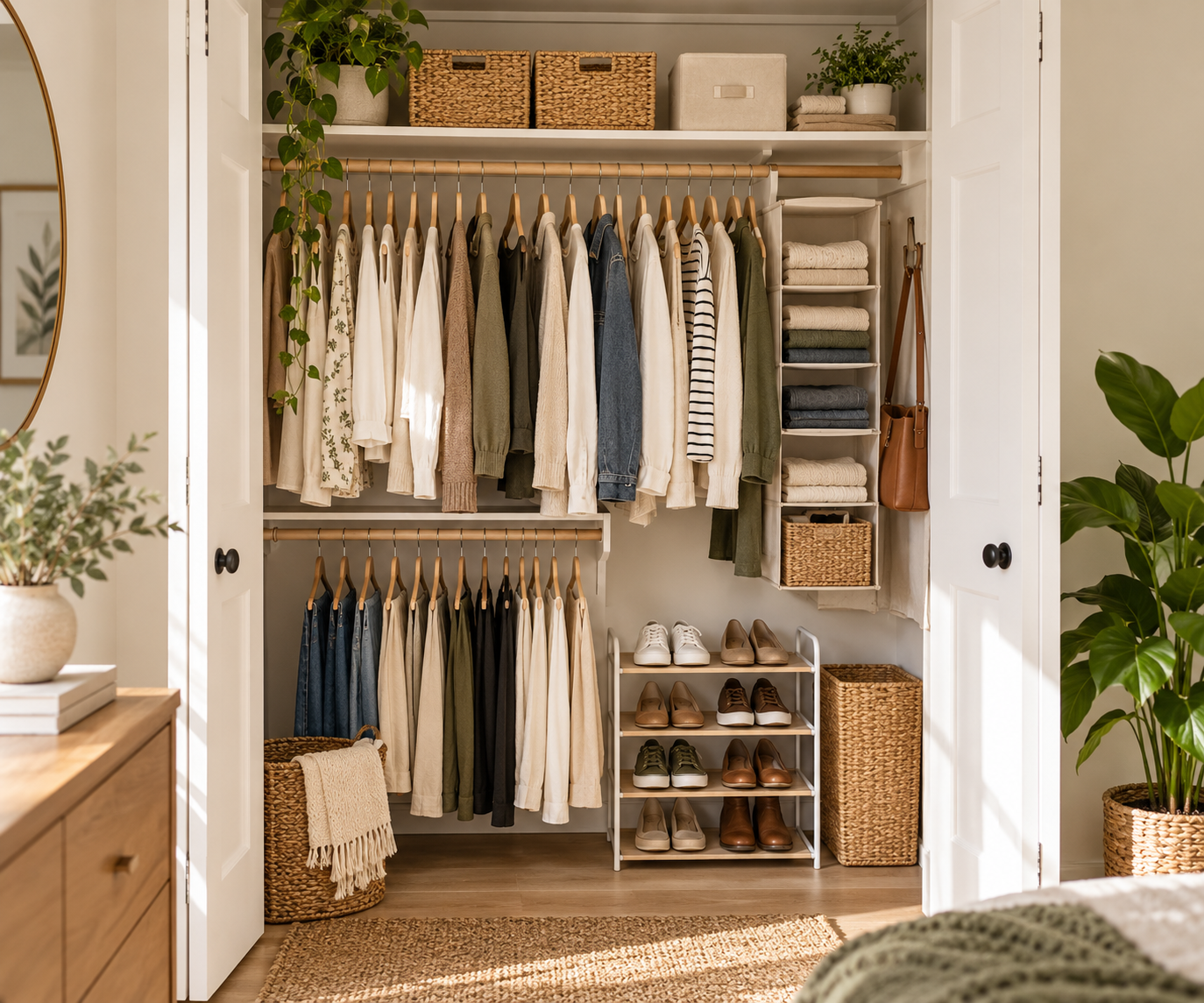
11. Choose a Slim Shoe Storage System
Shoes can consume a large amount of floor space when every pair is stored separately.
A narrow rack, stackable shoe shelves, or clear shoe boxes can keep pairs together without taking over the closet.
Keep the shoes you wear most often easiest to reach, and move special-occasion or seasonal pairs higher up or toward the back.
12. Use the Back Corners for Occasional Items
Deep closet corners are not ideal for daily essentials because items can disappear behind one another.
Instead, use these areas for things you reach for occasionally, such as travel bags, formal accessories, or seasonal pieces.
Keeping frequently used belongings toward the front prevents the closet from becoming a daily digging exercise.
13. Add Small Drawers for Folded Items
If your closet has unused space beneath hanging clothes, a compact drawer unit can turn that area into practical storage.
Use drawers for underwear, socks, T-shirts, workout clothes, or accessories that do not need to be displayed.
Measure the available height and depth carefully so the drawers can open without hitting doors or hanging garments.
14. Add a Narrow Bench or Storage Ottoman Nearby
If the closet itself is completely full, a small piece of nearby furniture can reduce pressure on the space.
A narrow storage bench or ottoman can hold seasonal shoes, bags, or folded accessories while also creating a convenient place to sit.
Choose one piece with hidden storage rather than several small containers scattered around the bedroom.
Mark out its footprint before bringing it home. Leave room to walk past, open the closet door, and lift the bench lid or ottoman top without moving other furniture.
15. Use the Inside of the Closet Door
The inside of a closet door can provide useful vertical storage without taking up shelf or floor space.
Add slim hooks, a hanging organizer, or a small rack for belts, scarves, jewelry, bags, or other lightweight accessories.
Make sure anything you add is shallow enough for the door to close comfortably.
16. Give Bags Their Own Zone
Handbags and backpacks easily become an unstable pile when they do not have a defined home.
Keep them together on one shelf, inside a large basket, or on sturdy hooks. Stuff softer bags lightly with tissue or another bag if they tend to collapse.
A dedicated zone makes it easier to find the bag you want without disturbing the rest of the closet.
17. Use Clear Containers for Small Accessories
Small items are easier to forget when they disappear inside deep opaque boxes.
Clear containers work well for belts, scarves, jewelry, and other small clothing accessories that need to stay visible.
You do not need every container to match perfectly. Consistent sizes and a limited number of categories usually matter more.
18. Create a Simple Weekly Reset
A closet is much easier to maintain when you reset it before clutter has time to build up.
Once a week, return stray hangers, put shoes back in their zone, refold anything that has fallen over, and remove clothes that belong somewhere else.
The same principle works well throughout a small home. If the entrance is another clutter point, see our small entryway organization ideas for creating simple everyday drop zones.
19. Leave a Little Empty Space
One of the most useful small closet organization ideas is also one of the simplest: do not fill every available inch.
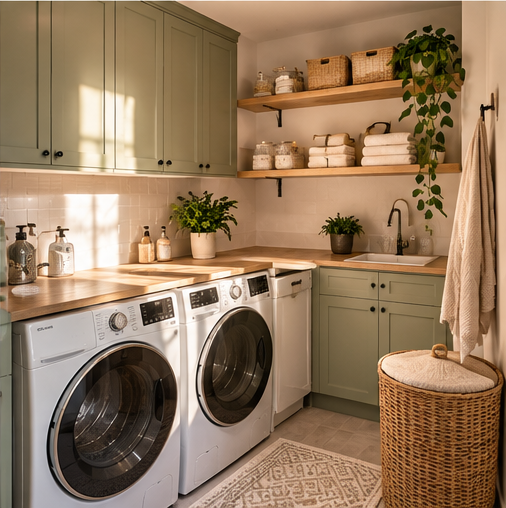
A little open space makes it easier to put clean laundry away, add a new item, or reorganize a category without rearranging the entire closet. Our small laundry room organization ideas can help keep the washing and folding side of that routine manageable, too.
It also makes the space feel calmer and helps you notice when a category is starting to grow beyond the area assigned to it.
A Reach-In Closet Test (Illustrative)
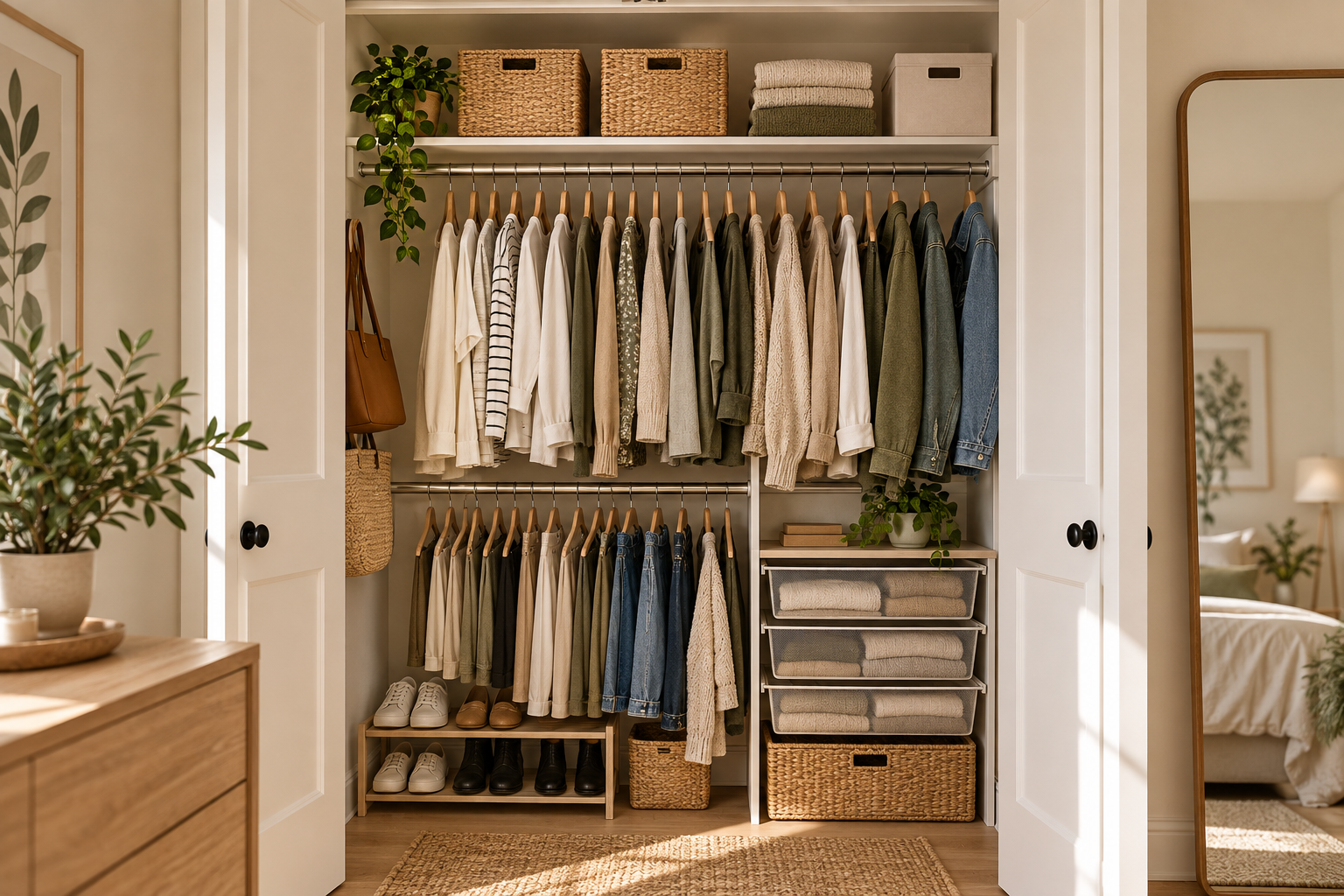
This is a hypothetical example, not a documented makeover. Imagine a reach-in closet where shirts crowd the rod, shoes cover the floor, and folded sweaters are hidden on a high shelf. Start by counting each category and moving only occasional clothes to a safe existing storage spot. Group short hanging items together, keep the everyday shoes you actually use in one visible floor zone, and bring the current-season sweaters within reach. There is no need to buy a second rod or shoe rack before seeing whether that rearrangement solves the problem.
For seven days, notice two things while getting dressed and putting laundry away: can you retrieve each daily item without moving another category, and can you return it in one step? If one answer stays no, measure that exact zone using the inventory above and choose a tool for that bottleneck. Keep the rest of the arrangement that already works.
Small Closet Organization Ideas That Work in Everyday Life
A well-organized closet is not the one with the most containers or the most complicated system. It is the one that makes getting dressed, putting clothes away, and finding everyday items easier.
Start with the biggest source of frustration in your closet. That might mean adding another hanging rod, creating better shoe storage, clearing the floor, or simply removing clothes you no longer wear.
Once each category has a practical home, even a compact apartment closet can feel noticeably more functional and easier to maintain.
Keep Organizing
Continue with more practical TidyLuma ideas for small spaces.