21 Small Bathroom Storage Ideas That Make a Tiny Bathroom Feel Bigger
Small bathrooms can become cluttered quickly. Towels, toiletries, cleaning supplies, skincare products, and everyday essentials all compete for a limited amount of space.
Before adding organizers, check what will actually fit: the usable width, depth, and height, plus the space a door, drawer, or person needs to move. Those measurements make it easier to choose storage you can use every day.
These small bathroom storage ideas show where to look for usable space and how to check an organizer before you buy it. The fit plan below works for apartments, rentals, and other compact bathrooms.
If you are organizing an entire compact home, you may also like our guide to small apartment organization ideas that actually save space.
Before you buy bathroom storage: make a one-page fit plan
A storage product is only useful if you can reach it without blocking a door, drawer, towel, or the space where you stand. Start with the things that actually need to live in this room. Put daily-use items near the sink or shower; keep sealed backups in a secondary zone; move things that should not be stored in a humid room elsewhere according to their storage instructions.
Measure the usable space, not just the wall or cabinet opening. For an under-sink bin, note the width, depth, and height on both sides of the plumbing. Open the cabinet door and check the path a bin would take when you pull it out. For a shelf or cart, check whether it interrupts a door swing or the normal walking route. In a rental, confirm what you are allowed to attach and follow the product’s mounting and weight instructions. Fill in this mini worksheet before choosing an organizer:
On a phone, swipe the worksheet sideways to see every column.
| Zone | What belongs here? | Usable width × depth × height | Obstacle or moisture concern | Access test |
|---|---|---|---|---|
| Sink counter | Daily-use items only | Measure the clear surface W ___ × D ___ × H ___ | Water splashes; cleaning space | Can the surface be wiped easily? |
| Under sink | One or two contained categories | Measure each side of pipes W ___ × D ___ × H ___ | Plumbing, hinges, possible leaks | Can the bin be removed with the door open? |
| Wall or over-toilet area | Lightweight, suitable items | Measure the available wall W ___ × D ___ × H ___ | Fixtures, mounting limits | Can you reach items safely? |
| Door or floor gap | Hooks or a slim unit only if needed | Measure with door fully open W ___ × D ___ × H ___ | Door swing and walking path | Does the room still work normally? |
Decision rule: If a proposed organizer fails the access test, choose a smaller one, change the zone, or reduce what needs storage. Do not buy the organizer simply because a space looks empty.
If you already have storage that fits but clutter keeps returning, see our guide to organizing a small bathroom around your daily routine.
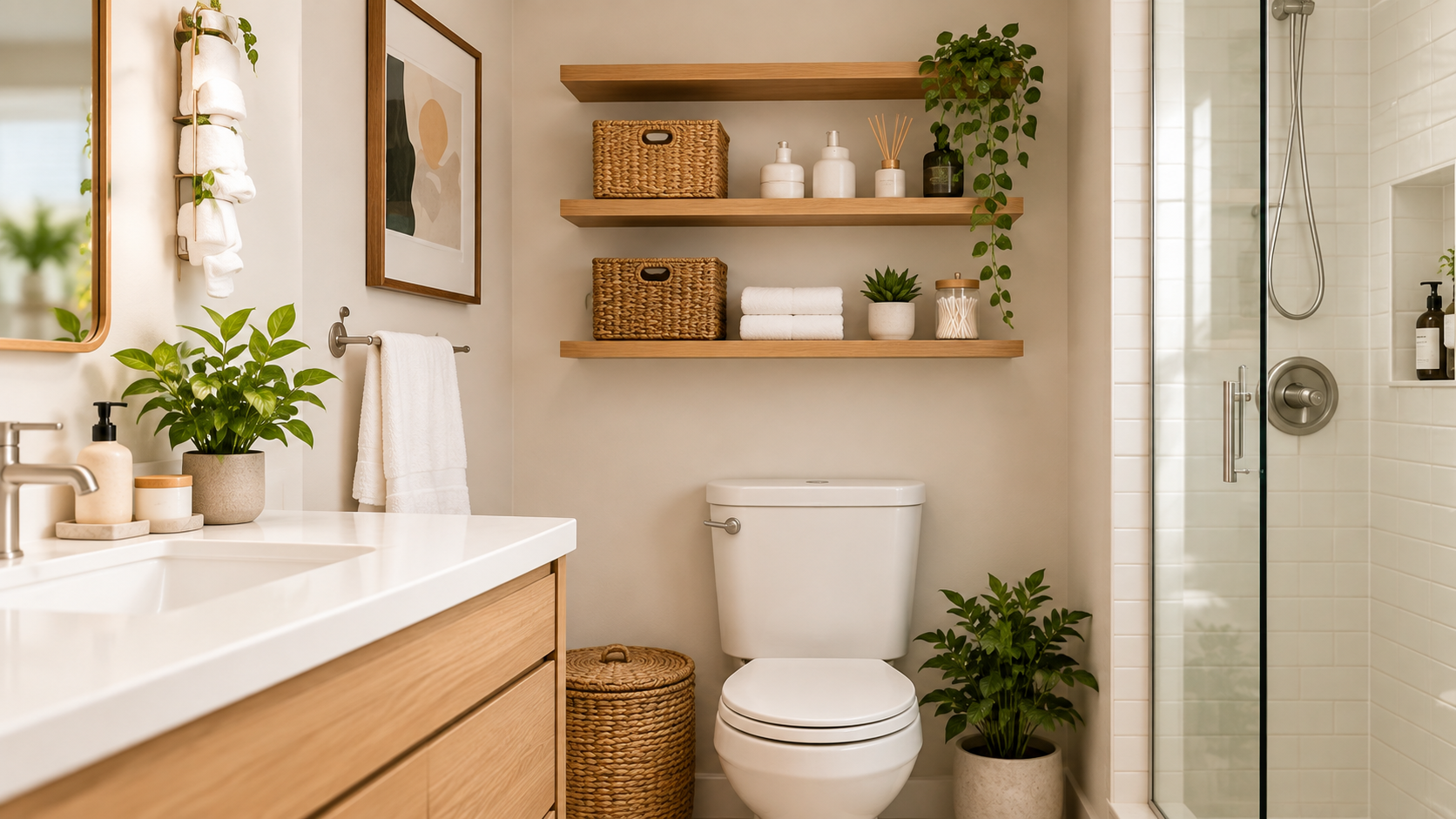
1. Use the Space Above the Toilet
The wall above the toilet is often left completely empty, even though it can provide useful storage.
Add a slim shelf, a small wall cabinet, or two floating shelves for extra toilet paper, folded towels, baskets, or decorative items.
Measure the wall width between fixtures and the shelf depth above the toilet. Check that you can stand, reach the shelf, and use the toilet without bumping it; follow the mounting and weight instructions.
2. Add Floating Shelves to Empty Walls
Look for small stretches of unused wall space near the sink, toilet, or bathtub.
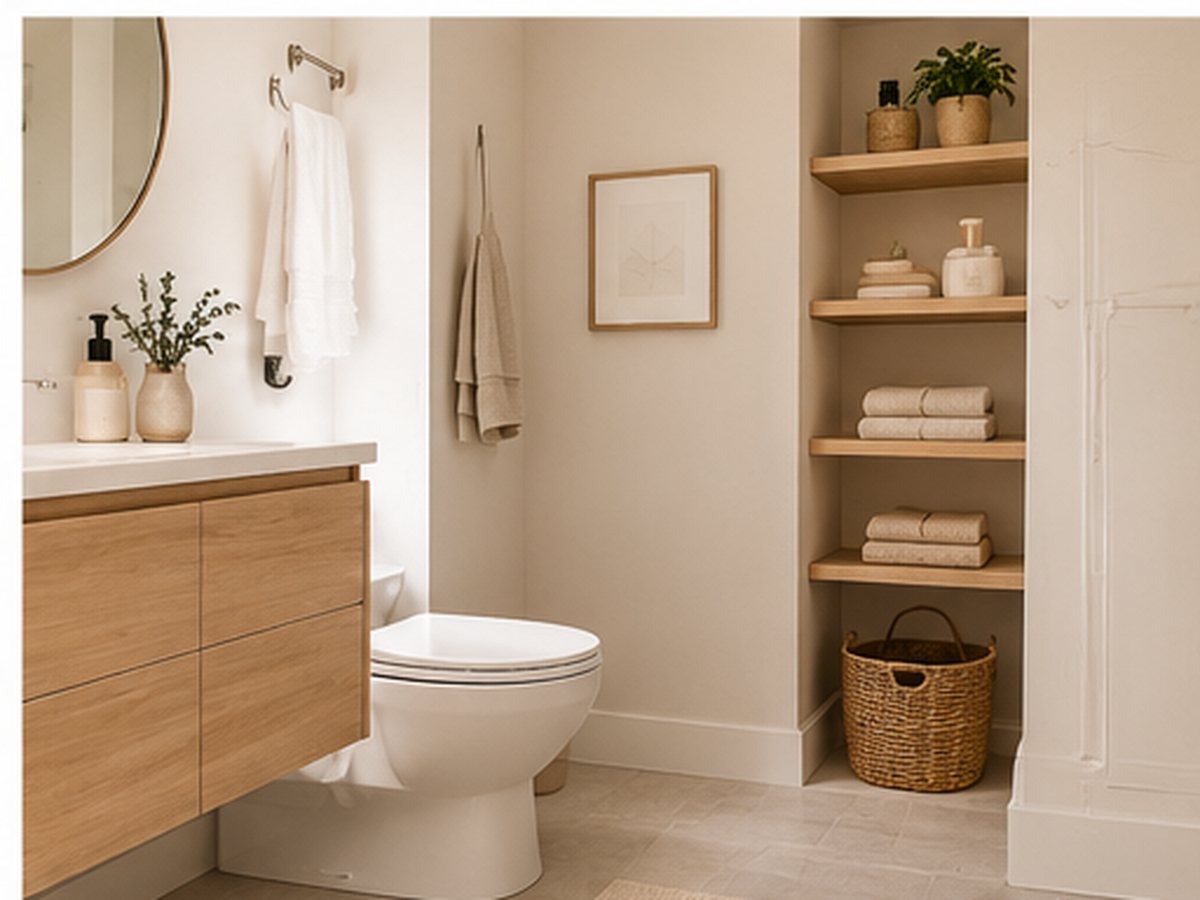
Floating shelves can hold folded hand towels, small baskets, skincare products, extra toiletries, and decorative containers.
Try to keep only a few items visible on each shelf. Too many small objects can make a tiny bathroom feel busier rather than more organized.
3. Choose Baskets That Fit the Shelf
A basket should fit the shelf or cabinet with room to pull it out by its handle. Measure the opening and the basket at its widest point, including any flared rim.
Use one basket for a contained category, such as backup toiletries or hair products, instead of filling every gap with small containers.
In a damp zone, choose a material you can clean and dry. Keep woven baskets where they can stay dry.
4. Add Organizers Inside Vanity Doors
The inside of a vanity door can hold more than you might expect.
Use small adhesive containers, slim racks, or hooks to store lightweight items such as brushes, combs, hair accessories, cleaning cloths, and small tools.
Make sure organizers do not interfere with pipes, shelves, or hinges when the door closes.
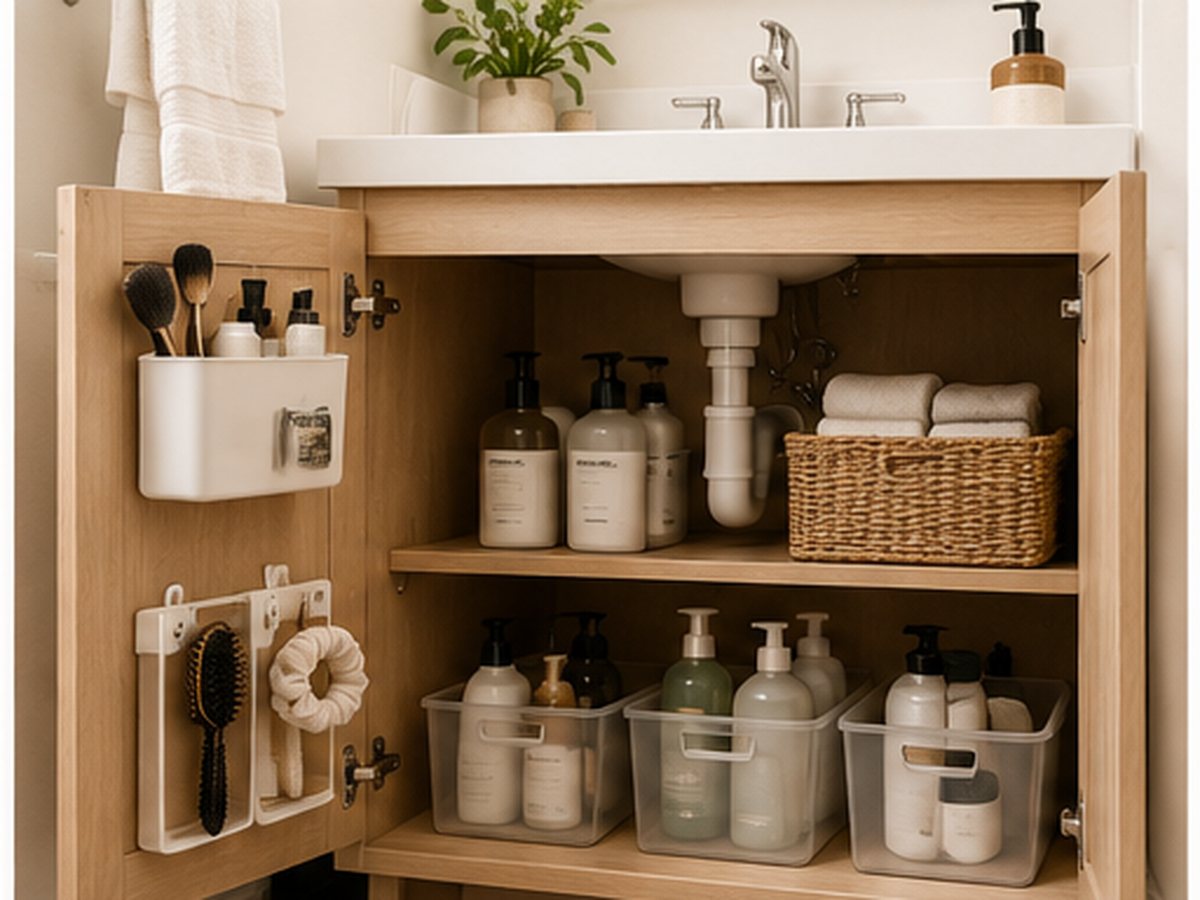
5. Use Clear Bins Under the Sink
The cabinet under the bathroom sink often becomes a collection of unrelated products.
Clear bins make the space easier to organize because you can quickly see what is inside.
Measure each side of the plumbing separately, including the height under the sink and the route through the open cabinet door. Choose a bin you can lift out without catching a pipe or hinge, then use it for one or two categories such as backups or hair products.
The same idea of creating simple storage zones can also help in a compact kitchen. See our small kitchen organization ideas for tiny apartments for more examples.
6. Add a Small Shelf Around Plumbing
Under-sink plumbing creates awkward empty areas.
A compact shelf or modular organizer can help you use the vertical space around pipes instead of storing everything directly on the cabinet floor.
Place less frequently used items on the lower level and everyday products where they are easier to reach. A smaller organizer that fits properly is usually easier to maintain than a large one forced into the space.
7. Keep Countertops Mostly Clear
A clear countertop can make a tiny bathroom feel noticeably larger.
Try to keep only a few everyday essentials visible, such as hand soap, toothbrushes, one skincare product, or a small tray.
Move backup products, hair tools, and less frequently used items into drawers or cabinets. Visual space matters just as much as physical storage in a small room.
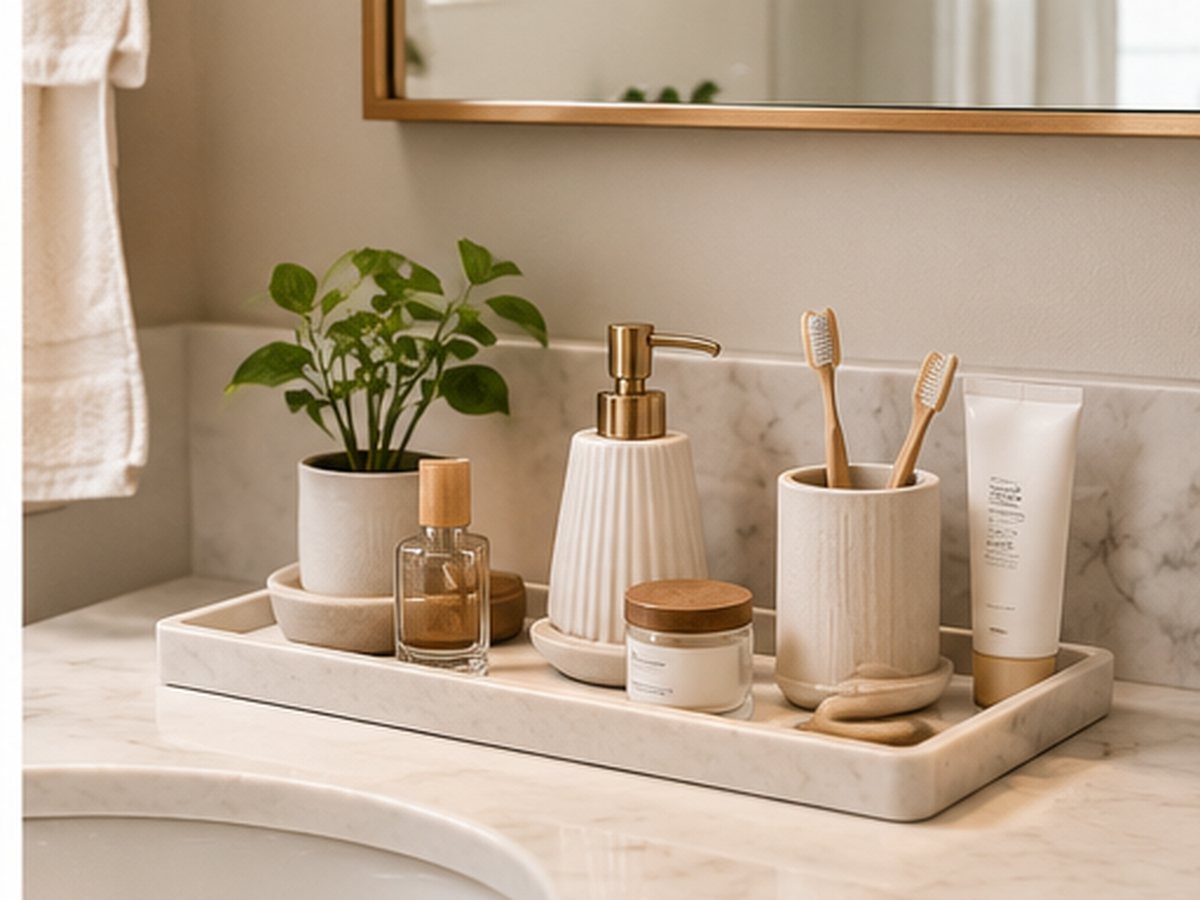
8. Use a Tray for Everyday Products
If you need to keep several items on the counter, group them on one small tray.
A tray makes individual products feel like one organized collection rather than scattered clutter.
It also makes cleaning easier because you can move everything at once instead of lifting each bottle individually. Choose a tray that is easy to wipe clean and suitable for a humid bathroom environment.
9. Use Drawer Dividers
Bathroom drawers can become messy quickly because they usually contain many small items.
Dividers can separate makeup, razors, dental products, hair ties, grooming tools, and small skincare items.
Use only as many sections as you need. The goal is to make each category easy to find and easy to put back.
10. Install Hooks Instead of Adding Furniture
When floor space is limited, wall hooks can be more useful than another storage unit.
Use hooks for towels, robes, shower caps, lightweight baskets, or reusable toiletry bags.
Hooks are especially useful behind the bathroom door or on narrow wall sections that cannot fit shelves. For rentals, removable adhesive hooks can be practical when used according to the manufacturer’s instructions and on suitable surfaces.
11. Use the Back of the Bathroom Door
The back of the bathroom door is another overlooked storage area.
An over-the-door organizer can hold towels, hair tools, toiletries, cleaning cloths, or lightweight bathroom accessories.
Open the door fully and measure the gap to the wall, trim, and nearby fixtures. Choose a hanger and pockets that clear the frame and do not block the normal door swing when filled.
12. Add a Narrow Rolling Cart
A slim rolling cart can fit into spaces that are too narrow for traditional bathroom furniture.
Use it beside the vanity, next to the toilet, or near the bathtub.
Measure the gap with the door and nearby drawers open, including the cart’s wheels and handles. Check the route you would use to roll it out for cleaning; if it blocks a walkway or fixture, choose a narrower cart or another zone. Keep daily-use items on the easiest level to reach.
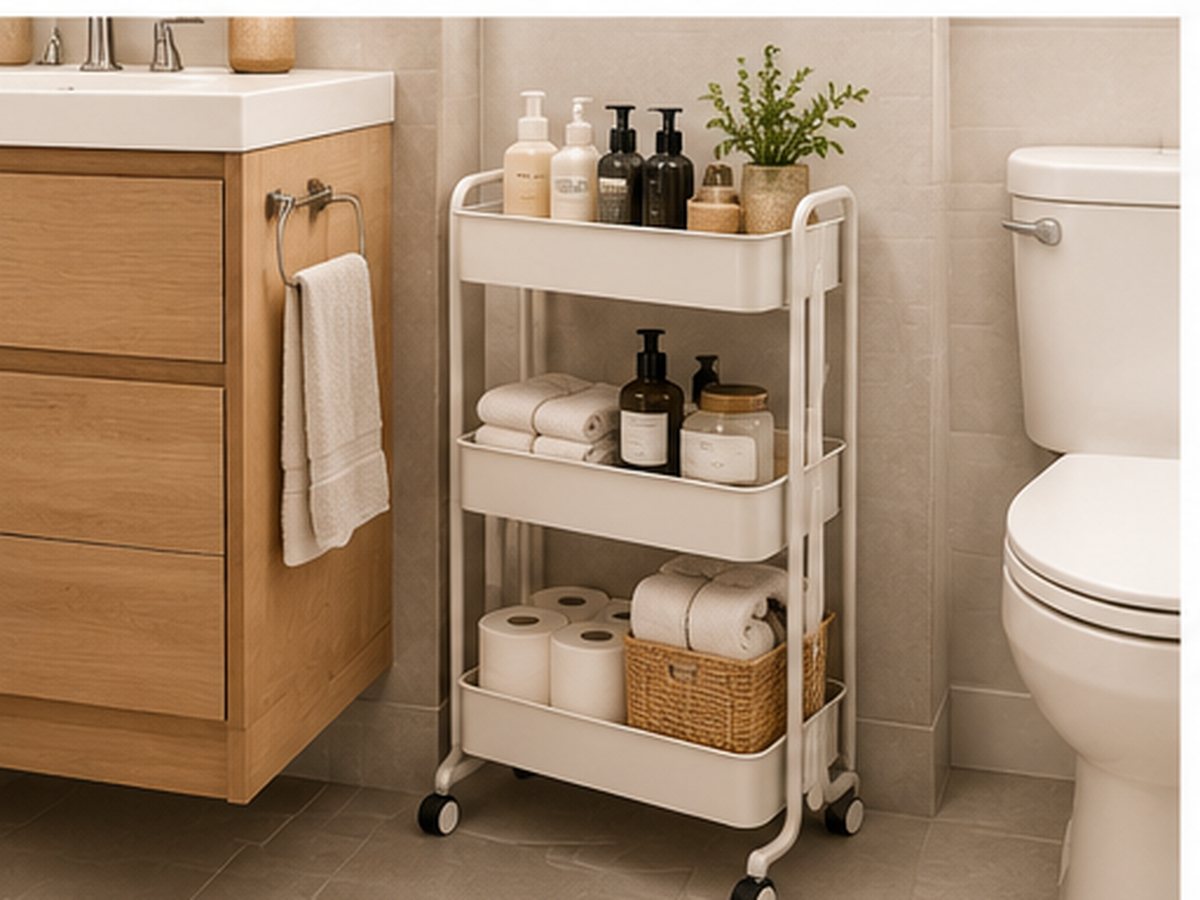
13. Use Vertical Storage Beside the Vanity
A narrow wall next to the sink can sometimes fit a tall, slim storage unit.
Vertical cabinets use height instead of valuable floor width and can work well for towels, toilet paper, toiletries, baskets, and backup supplies.
Measure the cabinet’s full footprint and open-door clearance, then check its anchoring requirements. A shallow unit is useful when it leaves the normal walking route clear.
14. Install a Recessed Medicine Cabinet
If you are renovating, a recessed medicine cabinet can provide storage without extending far into the room.
It can hold small everyday items while keeping the wall visually clean.
One practical note: bathrooms can become humid, so avoid storing medications there unless their storage instructions specifically allow it. Many medicines are better kept in a cool, dry location. Use the cabinet instead for grooming products, dental items, or other bathroom-safe essentials.
15. Use Shower Caddies More Efficiently
A shower caddy can help keep bottles off the floor and edges of the bathtub.
Instead of filling it with every product you own, keep only the products currently in use and store backups somewhere else.
This simple rule keeps the shower easier to clean and reduces visual clutter. Choose rust-resistant materials designed for wet environments.
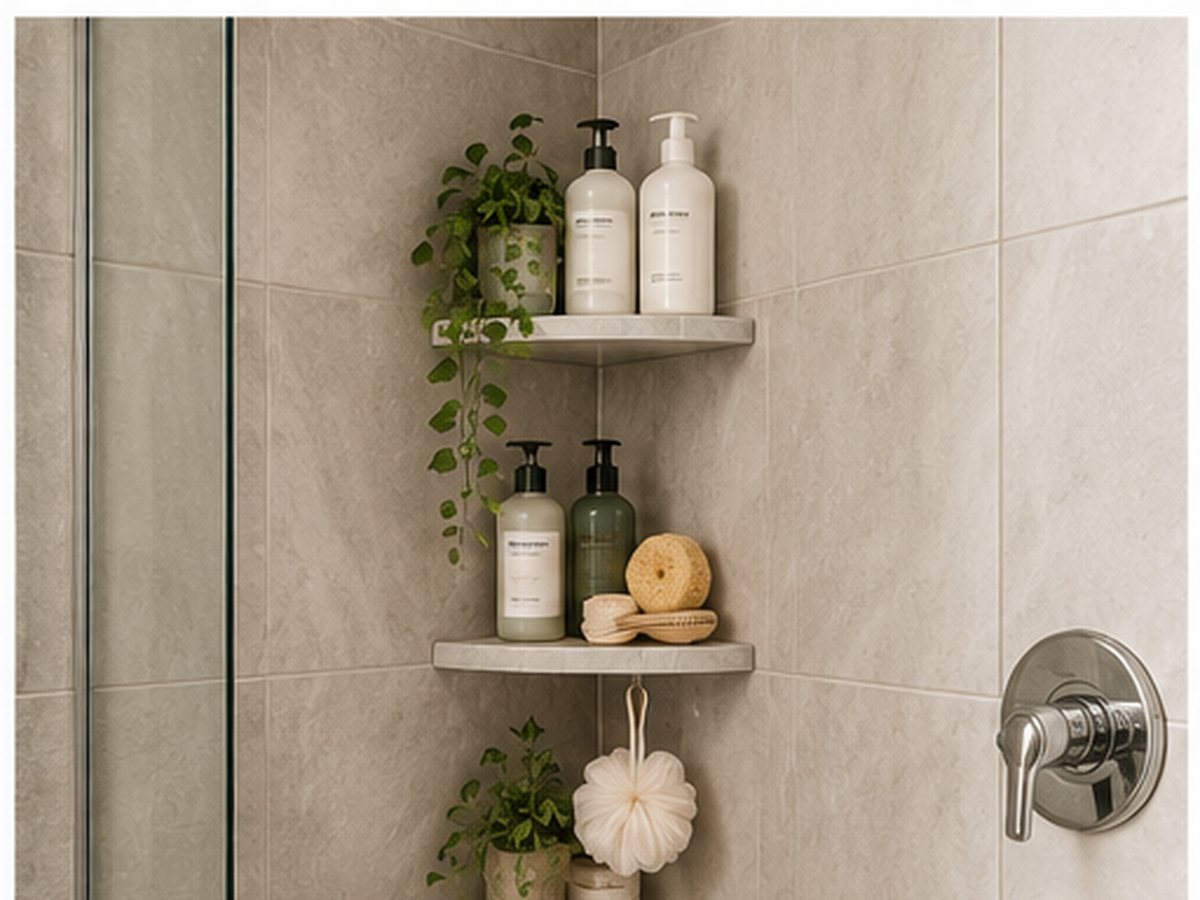
16. Add Corner Shelves in the Shower
Corners can provide useful storage without taking up much visual space.
Small corner shelves can hold shampoo, conditioner, soap, and other shower essentials.
Avoid overcrowding them. A few neatly arranged products usually look cleaner and are easier to reach than a shelf packed with bottles.
17. Use Matching Containers for Small Essentials
Cotton pads, cotton swabs, bath salts, and other small items can look cluttered when stored in different packages.
Simple matching containers can create a cleaner appearance, but there is no need to transfer every product into a decorative jar.
Use containers where they genuinely improve organization, and keep original packaging whenever labels, warnings, or instructions are important.
18. Store Extra Towels Vertically
If shelf space is limited, try rolling towels or folding them vertically inside baskets.
This can make it easier to see each towel and remove one without disturbing the entire stack.
Keep only a reasonable number of towels in the bathroom and store rarely used extras somewhere else if storage is extremely limited.
19. Create a Small Backup-Supplies Zone
Backup products often create more clutter than everyday items.
Instead of placing extras throughout the bathroom, choose one designated area for extra soap, toothpaste, shampoo, toilet paper, and personal-care products.
This makes it easier to see what you already own before buying more.
20. Use Labels Only Where They Help
Labels can make bathroom storage easier to maintain, especially in shared homes.
Useful categories might include Hair, Skincare, Cleaning, Towels, or Backups.
Avoid labeling every individual item. Simple category labels are more flexible and easier to maintain when products change.
21. Keep Some Storage Space Empty
One of the best small bathroom organization strategies is also one of the simplest: do not fill every container completely.
A little empty space makes storage easier to use. It gives you room for new products, makes items easier to remove, and prevents cabinets from becoming overcrowded again.
Small bathrooms usually feel better when they contain fewer things, not simply more organizers.
Final Thoughts
In a small bathroom, choose storage by measuring the usable space and testing how you will reach items.
Use the fit plan to compare above-toilet walls, vanity doors, under-sink areas, and floor gaps. Keep options that clear door swings, plumbing, and walking routes.
Then focus on reducing visual clutter. Clear countertops, simple categories, baskets, drawer dividers, and a few well-placed shelves can make a significant difference.
The most effective bathroom storage system is one that is easy to use every day.
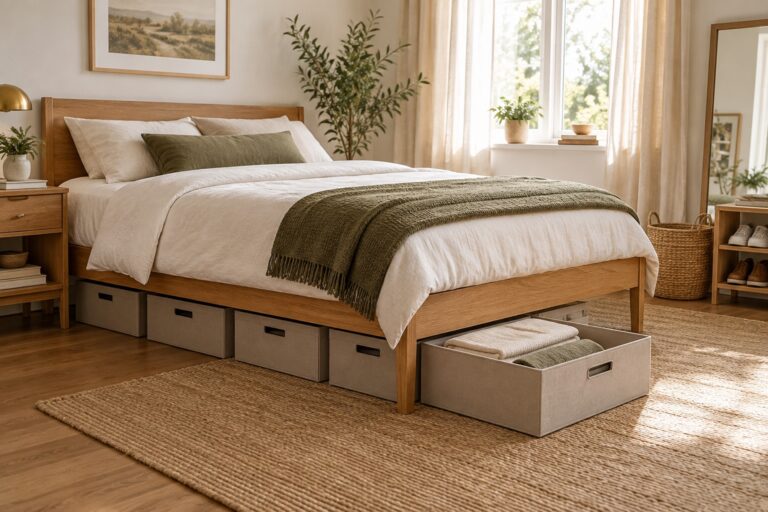
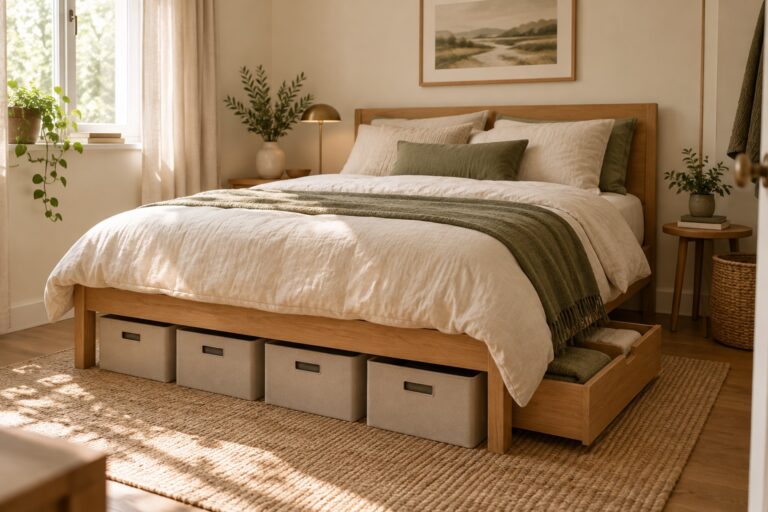
If you need extra overflow storage outside the bathroom, these under-bed storage ideas for small bedrooms can help you use hidden space without adding more furniture.
Start with two or three ideas that solve your biggest storage problems first. Once those areas are working well, you can improve the rest of the bathroom gradually.
A more organized bathroom can feel calmer, cleaner, and surprisingly more spacious—even when the room itself has not changed.
Keep Organizing
Continue with more practical TidyLuma ideas for small spaces.