13 Small Balcony Organization Ideas for Apartments
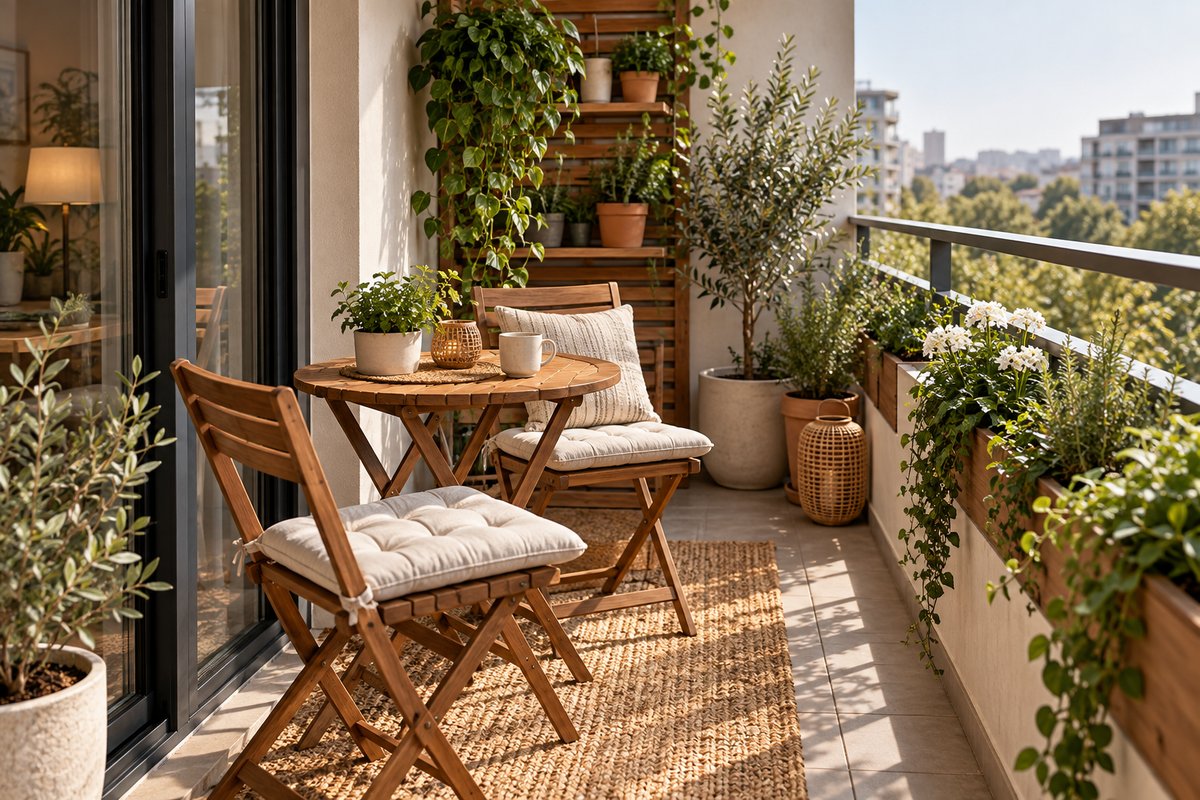
A small apartment balcony can become useful very quickly, but it can also become crowded just as fast. One chair turns into three, plant supplies collect in corners, and storage boxes slowly take over the little floor space you actually wanted to enjoy.
The best small balcony organization ideas do not try to fit an entire backyard onto a few square feet. They protect walking space, keep outdoor items contained, and make the balcony easy to reset after everyday use.
The key takeaway: Organize the balcony around open floor space first. Choose only the furniture, plants, and storage that support how you actually use the space.
Before adding organizers, decide what the balcony is for. It might be a quiet coffee spot, a small plant zone, an outdoor reading corner, or simply extra breathing room beside the apartment. A clear purpose makes every storage decision easier.
Start here
Quick Small Balcony Wins
- Remove anything you have not used outdoors in the last month.
- Keep one clear route from the balcony door to the far side.
- Choose folding or movable furniture before adding permanent pieces.
- Give plant tools and watering supplies one contained home.
- Keep heavy or wind-sensitive items low and secure.
Make a One-Purpose Balcony Layout Plan
Choose one main use for the balcony before placing storage: sitting, caring for plants, or keeping a small set of outdoor supplies. Test the layout with items you already own, then decide whether anything else has earned its place.
Copy this layout card: Main use: ______; items needed for that use: ______; items to move indoors: ______; clear route from the door: ______; place for folded furniture or plant-care tools: ______.
Check before buying or attaching anything: Open the door fully and walk the route with furniture in its real-use position. Check that drainage and any required access remain open. Review your building or lease rules, product instructions, and the balcony’s stated limits before adding a cabinet, shelf, heavy planter, or railing-mounted item. Account for wind and weather rather than assuming an indoor organizer will be suitable outside.
Choose one first change: For seating, remove extra chairs and test one folding seat. For plants, gather existing small tools in one portable caddy and keep pots in a stable, permitted area. For outdoor storage, first limit supplies to one group and test whether an existing protected spot works.
Review after a week: Did the balcony still support its main use without moving objects out of the way? ______ What should be removed or relocated? ______
1. Protect Open Floor Space First
The easiest way to make a small balcony feel even smaller is to fill every edge with furniture and storage. Before deciding where anything goes, look at the floor as your most valuable resource.
Keep one clear walking route from the door and leave enough room to turn around comfortably. If you have to move a chair, planter, or storage box every time you step outside, the layout is working against you.
2. Choose Folding Furniture for Flexible Seating
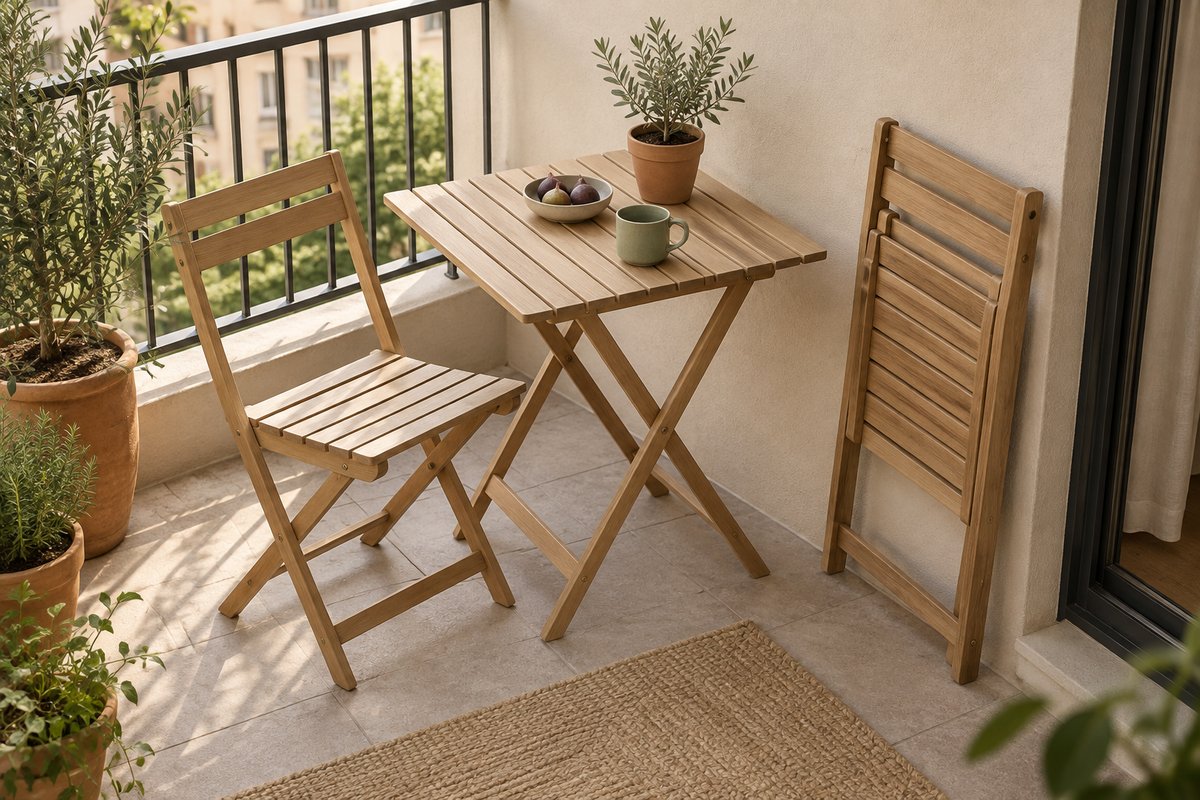
Folding chairs and compact folding tables are useful because they can disappear when you need more space. That flexibility matters more on a balcony than having a larger piece of furniture that stays out all year.
Store folded pieces against a protected wall or inside the apartment when weather is bad. Keep only the number of seats you use regularly instead of furnishing the balcony for occasional guests.
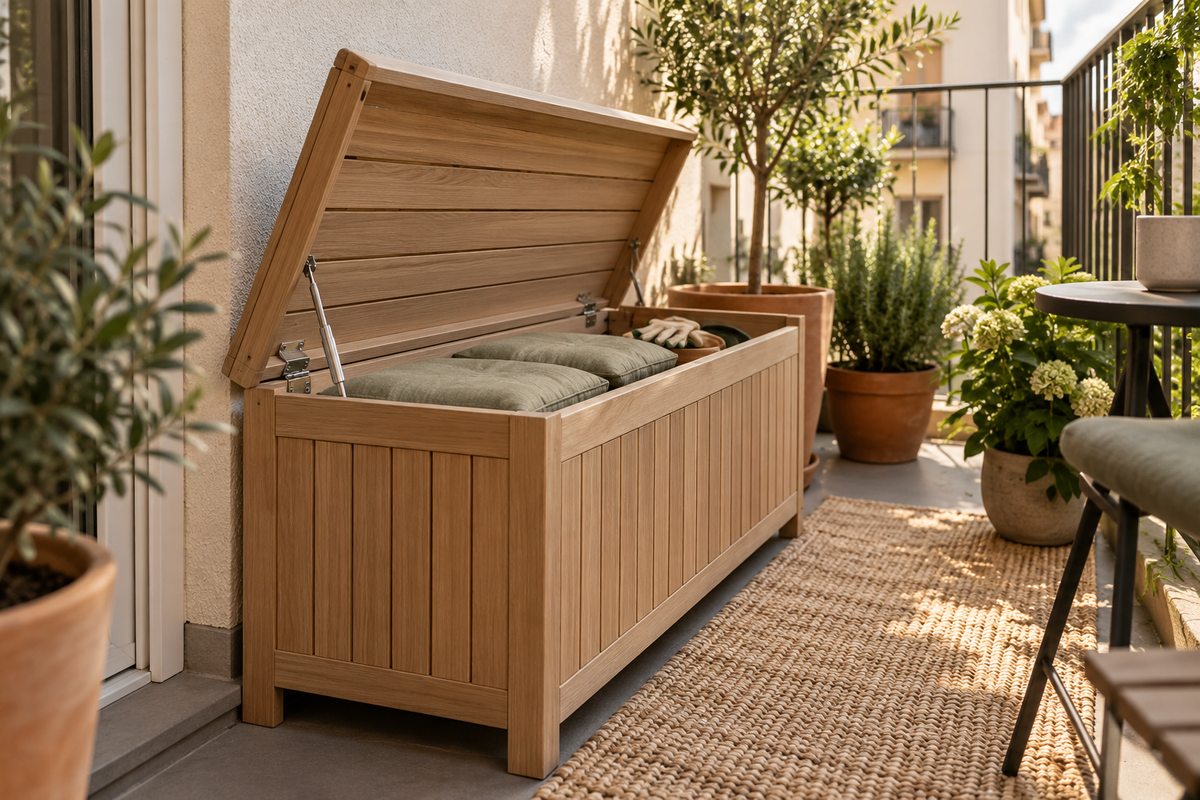
3. Use a Narrow Storage Bench Instead of Separate Seating and Storage
A slim storage bench can solve two problems at once. It adds seating while creating one contained place for lightweight outdoor items such as cushions, gardening gloves, or a small watering can.
Choose a model that is appropriate for outdoor conditions and does not block drainage or the main walking path. Avoid using the bench as a dumping zone for unrelated household items.
4. Keep Plant Supplies in One Portable Caddy
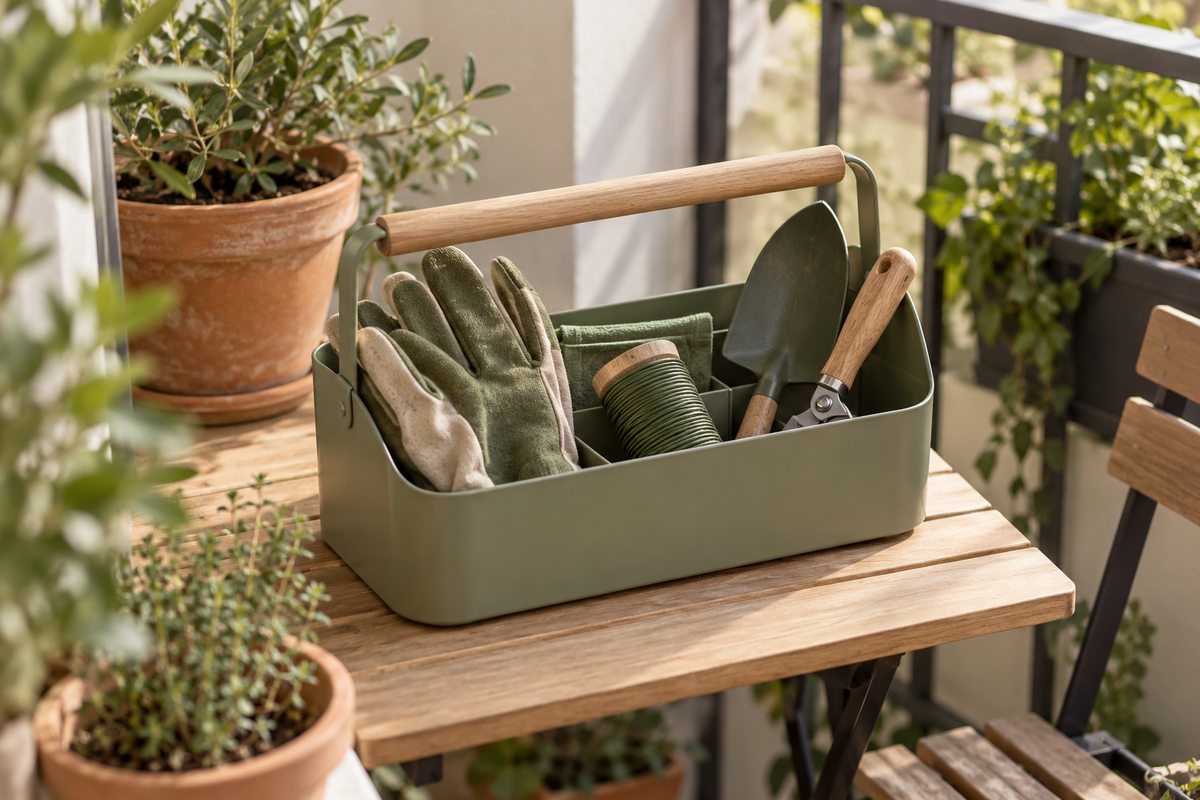
Plant care becomes messy when soil scoops, ties, fertilizer, gloves, and pruning tools live in several corners. Put the small supplies you use most often into one portable caddy.
The caddy can move to whichever plant you are working on and return to one shelf or cabinet afterward. Keep larger bags of soil and rarely used supplies somewhere protected instead of permanently on the balcony floor.
5. Use Vertical Space Carefully
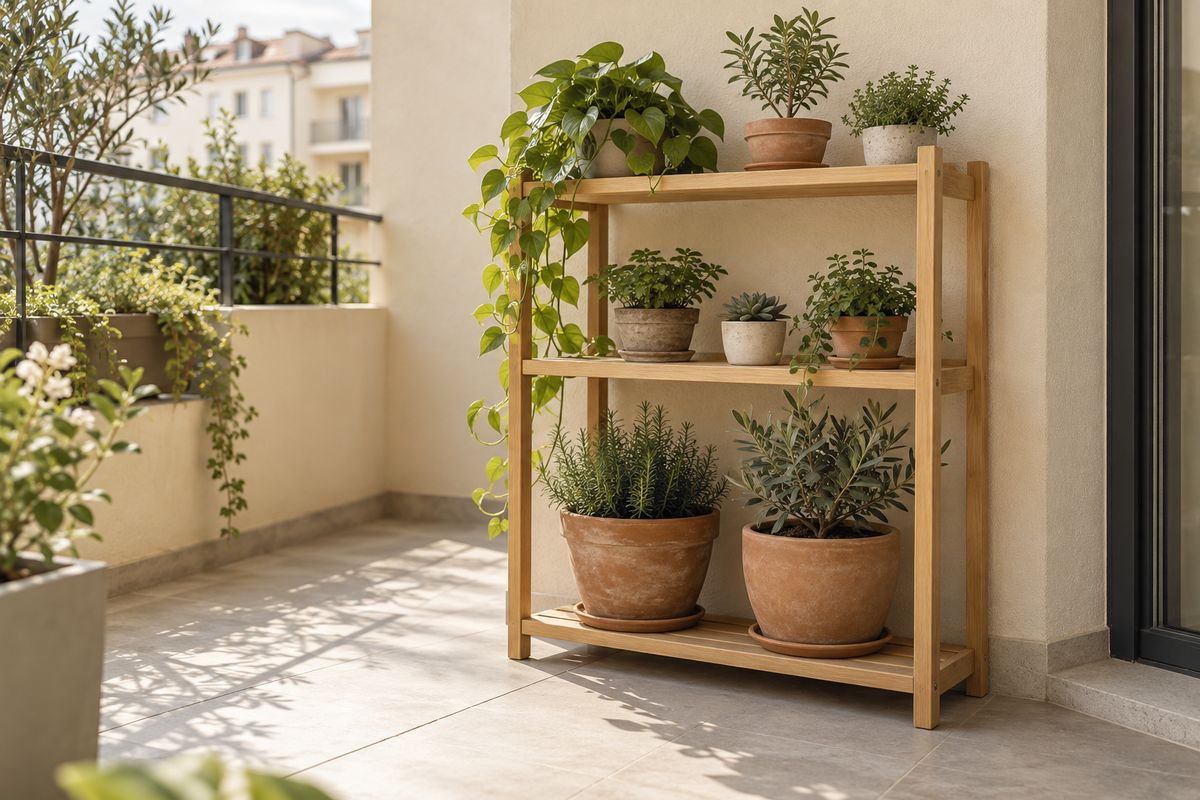
A small balcony often has more usable height than floor area. A narrow freestanding shelf can hold small planters, lightweight outdoor items, or gardening supplies without taking much space.
Keep the heaviest items on the lowest shelves and make sure the unit is stable. Check your building or rental rules before attaching anything to exterior walls or railings, especially in exposed or windy locations.
6. Keep the Balcony Door Area Completely Clear
The area immediately outside the balcony door should never become a storage zone. Planters, folded chairs, boxes, and cleaning tools placed there make the entire balcony harder to enter and leave.
Treat that first section of floor as permanent open space. A clean entrance also makes the balcony feel more connected to the room inside rather than like a crowded storage area attached to it.
7. Create One Small Plant-Care Zone
If you grow several plants, place the watering can, plant caddy, and a small work surface close together. That creates one practical care zone instead of spreading tools across the balcony.
Keep the setup simple. You do not need a full potting station unless gardening is the main purpose of the balcony. One shelf or corner is usually enough for everyday maintenance.
8. Use Matching Planter Zones Instead of Scattered Pots
Individual pots placed randomly around the floor can make a balcony look crowded even when there are not many of them. Group plants into two or three intentional zones instead.
For example, keep taller plants along one protected edge and smaller pots together on a shelf or stand. Repeating a few planter colors or materials also creates a calmer visual rhythm.
9. Add One Slim Outdoor Cabinet if You Truly Need Closed Storage
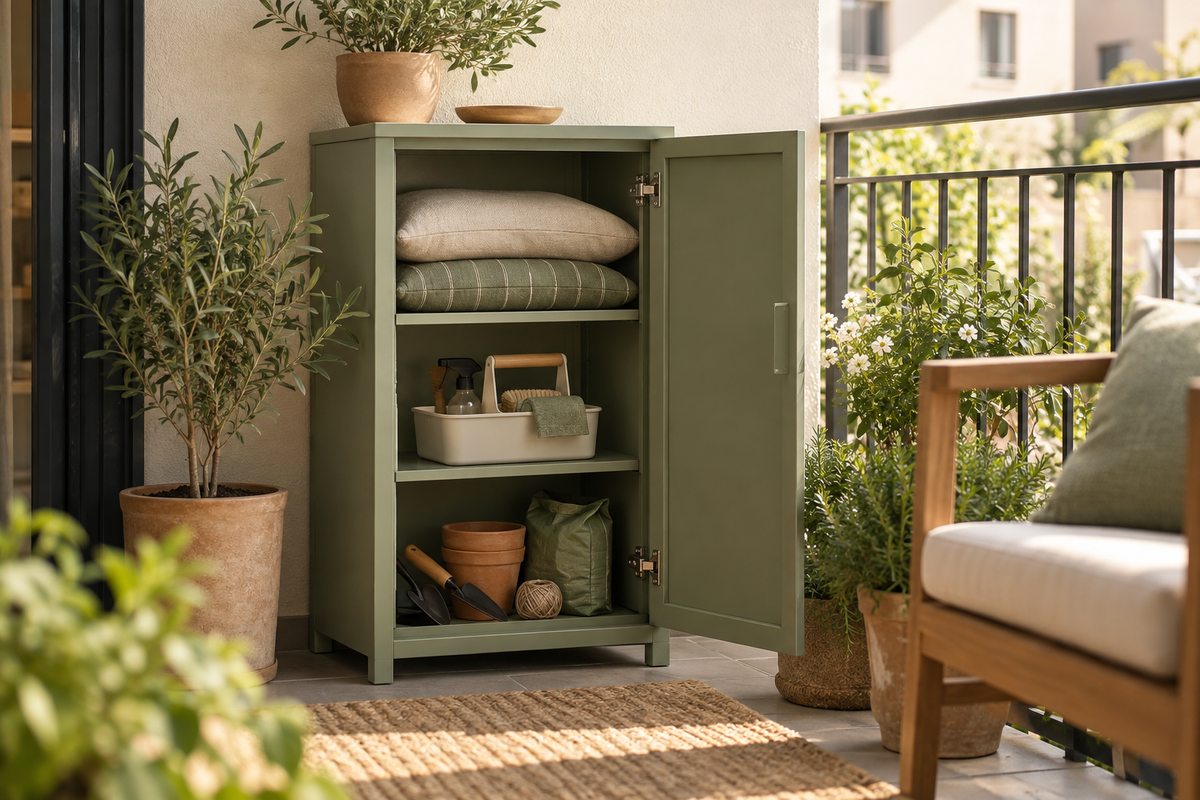
If cushions, cleaning items, or plant supplies need protection, a narrow outdoor-rated cabinet can be more useful than several exposed baskets and boxes.
Measure carefully before buying one. Make sure doors can open fully and the cabinet does not interfere with seating, drainage, or the balcony door. Closed storage should simplify the space, not dominate it.
10. Give Outdoor Cleaning Supplies One Defined Spot
A balcony may need a small broom, dustpan, cloth, or surface cleaner, but those items should not become permanent visual clutter. Store them together instead of leaning tools in several corners.
A narrow cabinet, secured hook inside an approved storage area, or small cleaning caddy can work well. For the rest of the apartment, our cleaning supply organization guide covers how to separate everyday products, backups, and bulky tools.
11. Keep Soft Furnishings Limited
Outdoor cushions, throws, and rugs can make a balcony comfortable, but too many textiles quickly become another storage problem. Keep only the pieces you actually use.
If cushions need to come indoors during rain or strong sun, give them one designated indoor storage place. Do not let the dining area, living room, or entryway become temporary storage every time the weather changes.
12. Connect the Balcony to the Living Room Without Mixing Their Storage
A balcony next to the living room often feels like an extension of the same space, which is useful visually but can create storage confusion. Keep outdoor items outdoors and living-room items inside.
Use similar colors or materials to create continuity without mixing categories. If the living room also needs clearer zones, see our small living room organization ideas for practical ways to manage seating, storage, and everyday clutter.
Small-space rule: If an outdoor item has no clear job, no protected storage place, and makes it harder to walk through the balcony, it probably does not belong there.
13. Do a Five-Minute Balcony Reset Each Week
Balconies collect small items slowly: empty pots, fallen leaves, tools, packaging, cups, and things that were placed outside temporarily. A short weekly reset stops those items from becoming permanent clutter.
Return tools, clear the floor, wipe the table, check the plant zone, and remove anything that no longer belongs outside. Keeping the balcony close to its baseline is easier than organizing it from scratch every few months.
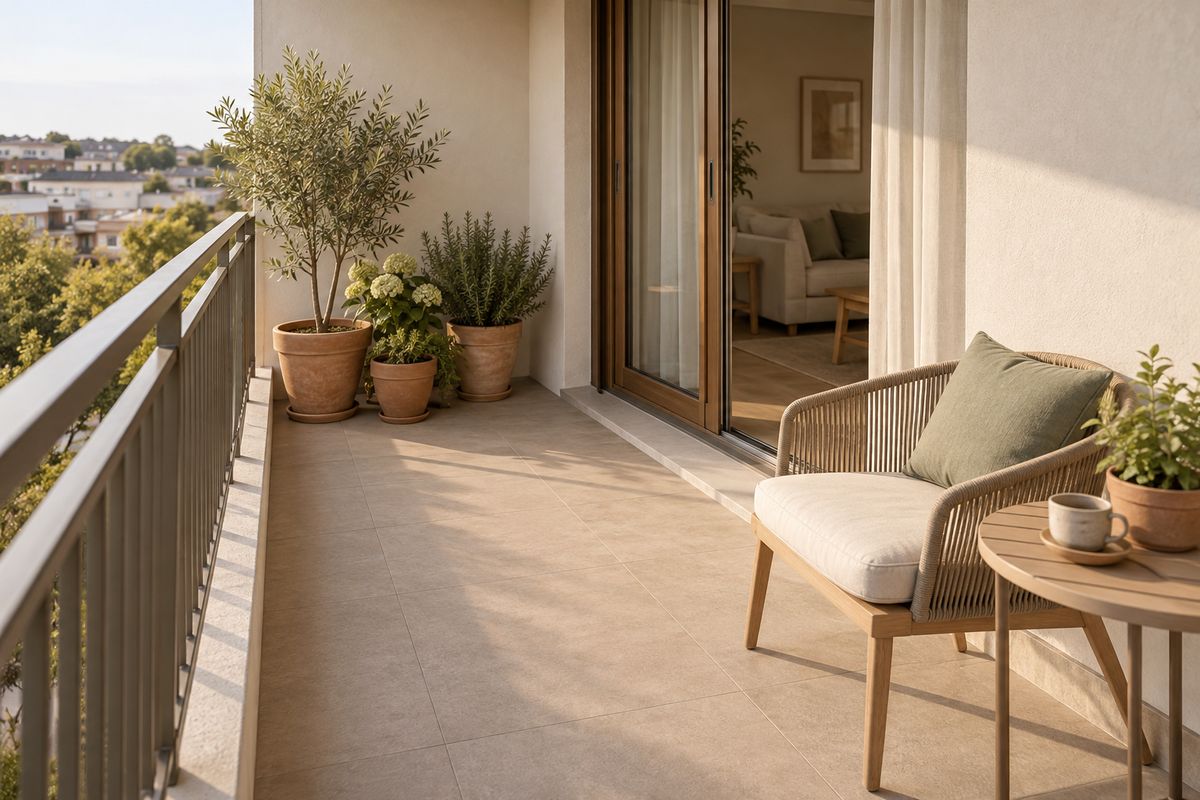
A Small Balcony Works Best When It Still Feels Open
The goal of balcony organization is not to fit the maximum number of objects outside. It is to make a limited space easier to use.
Protect the floor, choose flexible furniture, group plants intentionally, and keep maintenance supplies contained. When each item has a clear purpose and the walking path stays open, even a very small apartment balcony can feel calm, useful, and inviting.
Continue your space
Keep Organizing
Continue with practical organization guides for the indoor spaces connected to your balcony.