21 Small Laundry Room Organization Ideas for Small Spaces
Small laundry rooms can become cluttered surprisingly fast. Detergent bottles, cleaning supplies, hampers, loose socks, and everyday laundry can quickly take over when there is not much room to work with.
The good news is that you do not need a large utility room to create a laundry space that feels organized and easy to use. The best small laundry room organization ideas focus on using vertical space, giving everyday items a clear home, and keeping unnecessary clutter out of the room.
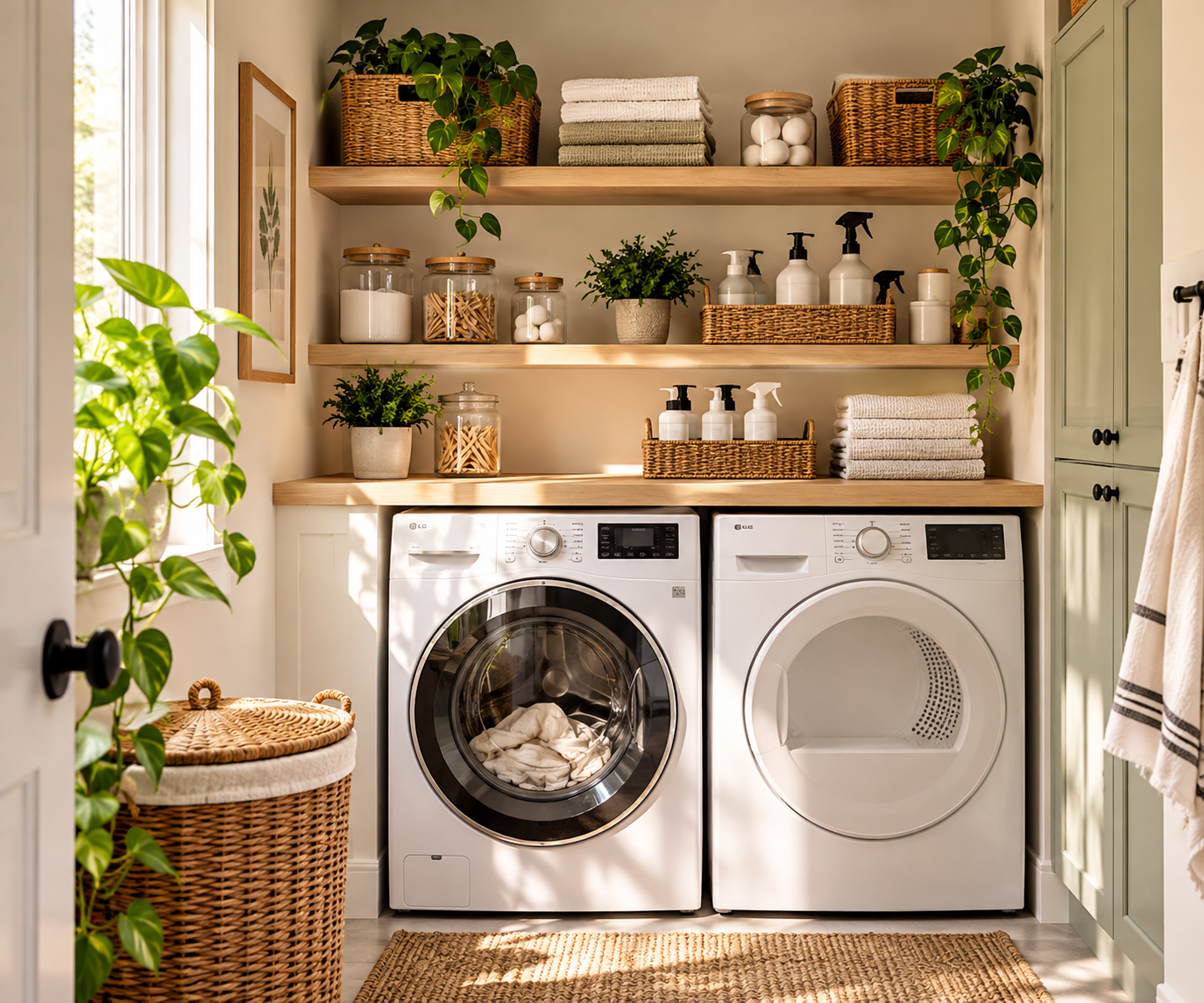
Whether you have a narrow laundry room, a stacked washer and dryer, or a tiny laundry closet in an apartment, these 21 practical ideas can help you make better use of every inch.
Quick Start
Quick Laundry Room Wins
Before making major changes, start with a few simple improvements:
- Remove products you no longer use.
- Keep everyday supplies within easy reach.
- Use the wall above your machines for storage.
- Group similar products together.
- Move bulk supplies out of the laundry room.
- Leave some open space instead of filling every shelf.
Small changes like these can make a compact laundry area feel calmer almost immediately.
Choose Storage for Your Laundry Layout
A side-by-side pair, a stacked unit, and a laundry closet leave very different places for a hamper and everyday supplies. Decide where a load starts, where clean items land, and which doors or lids must open before choosing any organizer.
Pick the first no-purchase test for your setup:
- Side-by-side machines: Move the hamper to the side where clothes naturally come off, then keep only the supplies used for a normal load on one existing reachable shelf.
- Stacked machines: Group lightweight, non-chemical daily tools in one existing basket beside the unit, where the controls and appliance doors remain easy to reach. Move refills out of this small working zone.
- Laundry closet: Test the closet doors fully open and closed with the hamper in place. If an over-door organizer catches or blocks access, keep the door bare and move the small-item basket to an existing nearby shelf.
Copy this fit note before buying: Appliance model/manual clearance: ______; door or lid swing: ______; hose, vent, and service access: ______; usable shelf width × depth × height: ______; hamper route: ______; clean-laundry landing spot: ______.
Follow the clearances and ventilation instructions for your own appliances; a promising gap is not usable storage if it blocks a vent, hose, service panel, or door. Keep detergents and other chemicals in their original labeled containers and safely out of children’s reach. After a normal laundry week, ask: could you wash, dry, fold, and return supplies without moving the organizer out of the way?
1. Clear Out What Does Not Belong
Start by removing anything that does not need to live in the laundry room.
Small spaces become difficult to organize when they slowly turn into storage areas for unrelated household items. Empty bags, old cleaning products, random tools, and unused containers can quickly take up valuable space.
Keep the room focused on laundry and the few cleaning supplies you actually use there.
If clutter tends to spread throughout your apartment, these small apartment organization ideas can help you create better storage habits in the rest of your home too.
2. Measure Before Adding Storage
In a small laundry room, even a few inches can make a difference.
Measure the space above, beside, and between your appliances before buying shelves, baskets, carts, or cabinets.
Keep the clearances, ventilation openings, and service access required by your appliance manuals; storage should never block vents or squeeze hoses.
Pay special attention to narrow gaps that might otherwise go unused. Knowing your measurements also helps you avoid adding storage that makes the room feel crowded.
The goal is not to fit as much storage as possible into the room. It is to choose storage that makes the space easier to use.
3. Use the Wall Above the Washer and Dryer
The wall above your appliances is often the most valuable unused space in a small laundry room.
Instead of leaving it empty, use it for shelves or compact cabinets.
This area works well for detergent, stain removers, clothespins, dryer sheets, and other laundry essentials.
Keeping supplies above the machines also frees up the floor and prevents products from collecting on top of your washer and dryer.
4. Add Floating Shelves
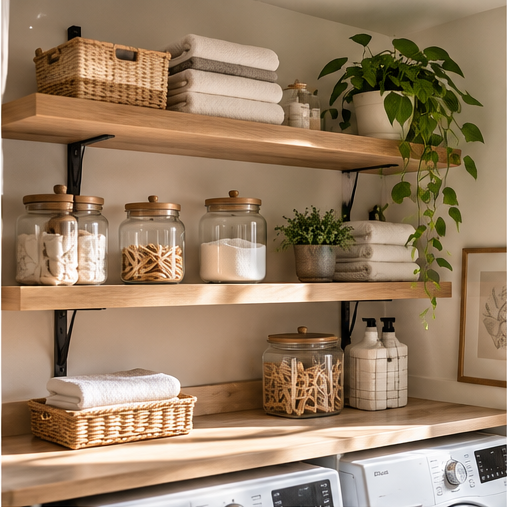
Floating shelves are especially useful when a full cabinet would feel too heavy for a small room.
Two or three simple shelves can create plenty of storage without taking up floor space.
Use the lowest shelf for frequently used products and reserve higher shelves for extra towels, refills, or less frequently used items.
For a calmer look, avoid filling every inch of the shelves.
5. Use Baskets to Group Laundry Supplies
Instead of placing individual products across a shelf, group similar items inside baskets.
For example, you might have one basket for stain-removal products, another for cleaning cloths, and another for extra laundry supplies.
This makes shelves look more organized while making it easier to find what you need.
Choose baskets that fit the depth of your shelves so they do not stick out into an already narrow space.
6. Keep Everyday Products Within Easy Reach
Not every item deserves the best storage position.
Your everyday detergent, stain remover, and other frequently used products should be easy to reach without moving several other things first.
Less frequently used products can go on higher shelves or toward the back.
Organizing according to how often you use something is one of the simplest ways to make a small room function better.
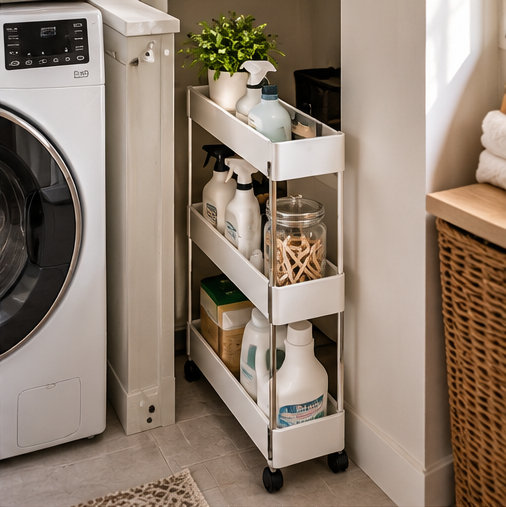
7. Add a Slim Rolling Cart Between Appliances
Have a narrow gap beside your washing machine?
A slim rolling cart can turn that awkward space into useful storage.
Use it for detergent, cleaning sprays, dryer supplies, or small household essentials. When you need something, simply pull the cart out and slide it back when you are finished.
This works particularly well in small apartments where every narrow gap matters.
8. Use the Inside of the Door
The back of the laundry room door is another useful storage area that is easy to overlook.
Add an over-the-door organizer, a few hooks, or a slim hanging rack.
It can hold reusable bags, cleaning cloths, small laundry accessories, or lightweight supplies without using valuable wall or floor space.
The same idea works well throughout compact homes, especially in small entryways where doors and walls often provide extra storage opportunities.
9. Install Wall Hooks for Small Essentials
Hooks take up very little room but can solve several small storage problems.
Use them for a laundry bag, ironing accessories, cleaning brushes, reusable bags, or lightweight baskets.
Place hooks on unused side walls rather than filling the main walls with more bulky storage.
A few carefully placed hooks are usually more useful than a wall covered with them.
10. Add a Hanging Rod for Air-Drying Clothes
If you regularly air-dry shirts or delicate clothing, a hanging rod can be extremely useful.
Install one between two cabinets, underneath a shelf, or across a narrow section of the room.
It creates a dedicated drying area without requiring a freestanding clothes rack.
Once the clothes are dry, the rod barely takes up any visual or physical space.
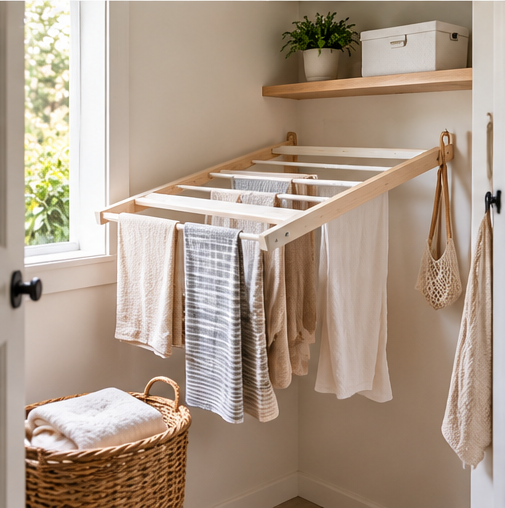
11. Use a Fold-Down Drying Rack
When there is not enough room for a permanent drying area, consider a wall-mounted rack that folds away.
Open it when you need to dry clothing and fold it back against the wall afterward.
This is especially useful for laundry closets and very narrow rooms where a traditional drying rack would block the walkway.
Furniture and storage that can disappear when not in use are particularly valuable in small spaces.
12. Create a Small Folding Surface
You do not need a large countertop to create a useful folding area.
If your washer and dryer sit side by side, a suitable surface above them can sometimes create a convenient place for folding clothes.
In other layouts, a small wall-mounted fold-down surface may work better.
The important thing is to create one clear place where clean laundry can be handled instead of allowing it to spread into other rooms.
13. Use Clear Containers for Smaller Supplies
Small items are often responsible for surprisingly large amounts of visual clutter.
Clear containers can work well for clothespins, dryer balls, laundry bags, small cleaning accessories, and similar supplies.
Because you can see what is inside, you are less likely to forget what you already have.
Avoid transferring products into containers simply for appearance. Use them when they genuinely make storage easier.
Keep detergents and cleaning products in their original labeled containers, stored out of sight and reach of children. See Poison Control’s laundry-product storage guidance.
14. Give Lost Socks Their Own Spot
Almost every laundry room eventually collects a few unmatched socks.
Instead of leaving them on top of the washing machine, give them one small basket or container.
When the matching sock appears, you immediately know where to look.
It is a tiny organization system, but it prevents another pile of miscellaneous items from forming.
15. Store Bulk Refills Somewhere Else
Buying larger packages can save money, but that does not mean everything needs to stay in your laundry room.
Keep a reasonable amount of detergent and everyday supplies nearby, then store bulk refills somewhere with more room.
A hallway cabinet, storage closet, or another household storage area may work better.
This keeps your laundry space functional rather than turning it into a stockroom.
16. Use Vertical Storage Beside the Machines
Look at the narrow wall beside your washer or dryer.
A tall, shallow shelving unit can sometimes provide useful storage without taking up much floor space.
Vertical storage is particularly effective in compact rooms because it uses height instead of expanding outward.
This same principle is one of the most useful strategies for organizing a small closet.
17. Choose a Slim Laundry Hamper
An oversized hamper can make a tiny laundry room feel even smaller.
Look for a tall, narrow hamper that fits beside a machine, underneath a counter, or against an unused wall.
If you sort laundry before washing, a divided hamper can help—as long as it fits comfortably in the room.
Choose the smallest system that actually works for your household.
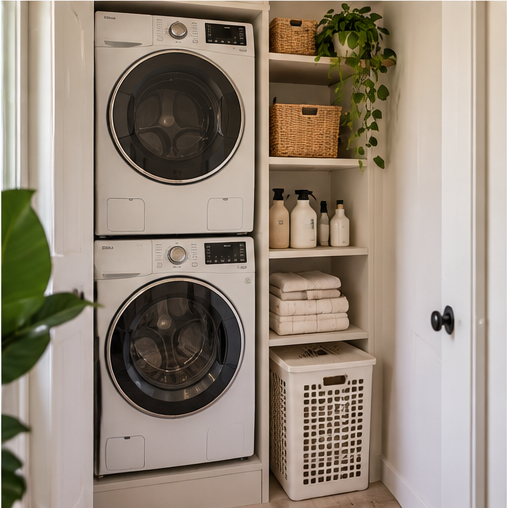
18. Make a Stacked Washer-Dryer Setup Work Harder
A stacked washer and dryer already saves valuable floor space, so use the surrounding area carefully.
A narrow cabinet, floating shelves, or a few baskets beside the machines can create storage without making the setup feel crowded.
If your machines are inside a closet, keep the organization especially simple.
The less visual clutter surrounding a stacked setup, the cleaner and more intentional the space tends to feel.
19. Keep Cleaning Supplies in One Zone
If your laundry room also stores household cleaning products, give them one clearly defined area.
Avoid spreading sprays, brushes, cloths, and refills across several shelves.
A basket, cabinet section, or dedicated shelf can keep everything together.
This makes supplies easier to find and prevents cleaning products from slowly taking over the entire laundry room.
Similar zoning can make a big difference in other compact areas, including a small bathroom.
20. Hide Visual Clutter Where Possible
A small room can feel cluttered even when everything technically has a place.
Too many bottles, labels, packages, baskets, and accessories competing for attention can make the space feel busier than it really is.
Use closed cabinets for less attractive supplies when possible, or group smaller products inside simple baskets.
You do not need to hide everything. The goal is simply to create a few calm surfaces and give your eyes somewhere to rest.
21. Create a Five-Minute Laundry Room Reset
The best organization system is one you can maintain.
Once a week, spend five minutes returning products to their places, throwing away empty containers, putting away clean laundry, and clearing the tops of your machines.
This prevents small messes from turning into a complete reorganization project.
A simple weekly reset is often more effective than waiting until the room becomes overwhelming.
Small Laundry Room Organization Ideas That Work in Real Life
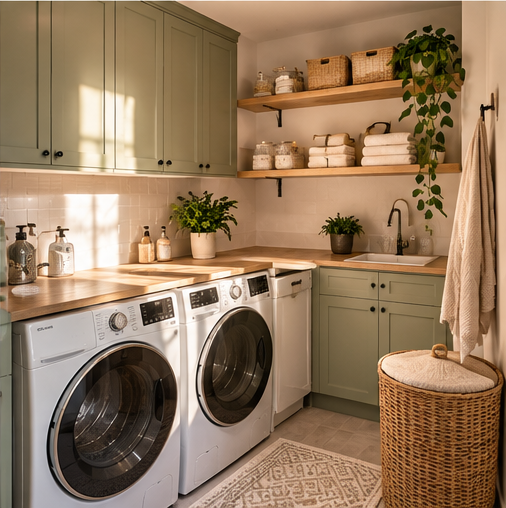
A small laundry room does not need dozens of organizers or a complete renovation to work well.
Start with the areas that will make the biggest difference: clear unnecessary clutter, use the wall above your appliances, keep everyday products easy to reach, and give smaller items a defined home.
Then look for opportunities in the spaces you may have overlooked—the back of the door, narrow gaps beside appliances, empty walls, and vertical space.
Most importantly, leave a little breathing room. An organized laundry room should make everyday tasks easier, not simply hold more things.
A few thoughtful changes can turn even a tiny laundry closet or apartment laundry area into a space that feels practical, calm, and much easier to maintain.
Keep Organizing
Continue with more practical TidyLuma ideas for small spaces.