
15 Clever Under-Bed Storage Ideas for Small Bedrooms
Make the most of hidden space with practical, renter-friendly storage ideas that help a small bedroom feel calmer, cleaner, and easier to live in.
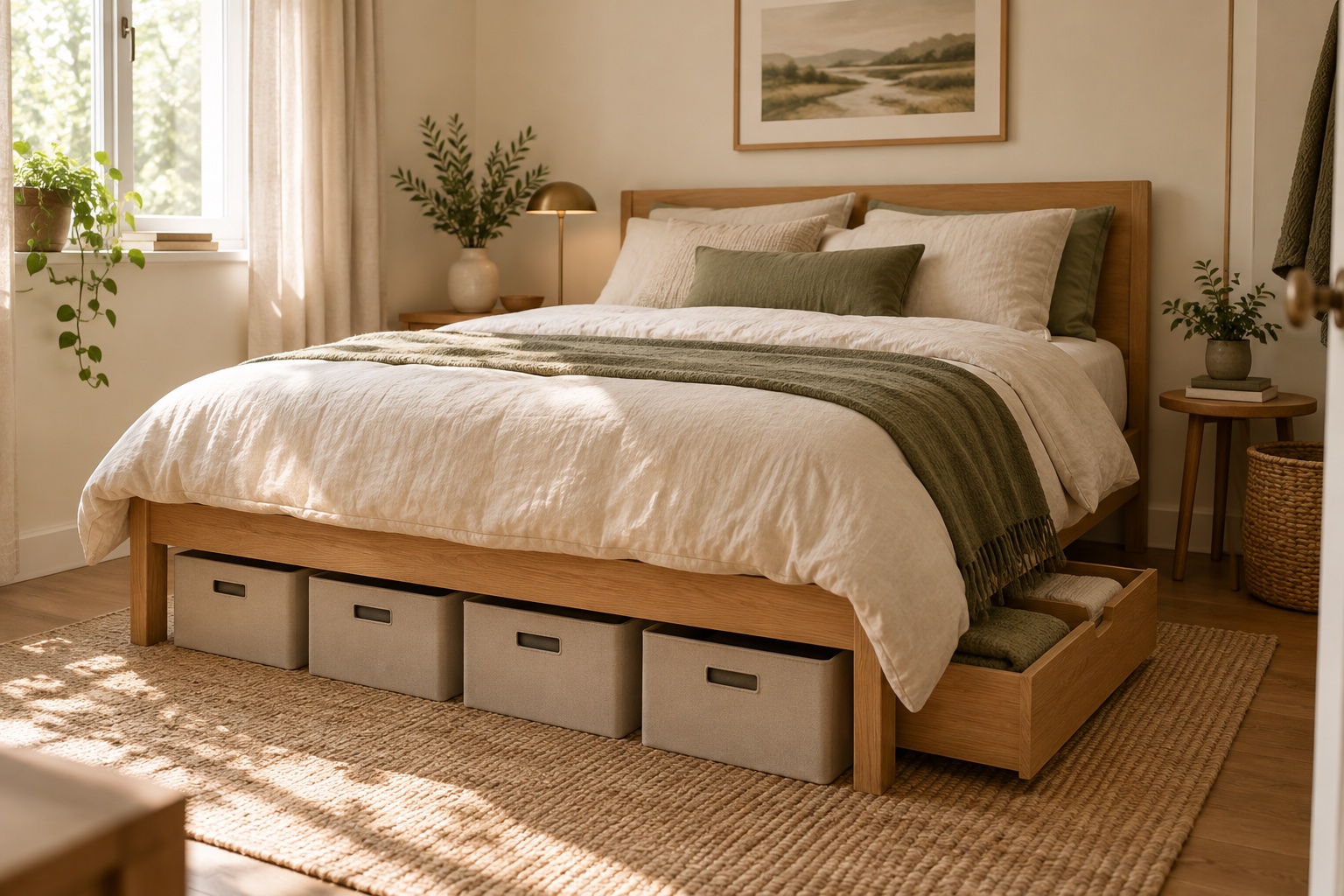
In a small bedroom, the space under your bed can be some of the most useful storage in the room. It is large, hidden, and already part of your floor plan, which means you can gain meaningful storage without adding another cabinet or bulky piece of furniture.
The goal is not to fill every inch. Good under-bed storage should keep things easy to reach, protected from dust, and simple to put away again. The ideas below work especially well in apartments, rentals, guest rooms, and bedrooms where closet space is limited.
Here are 15 clever under-bed storage ideas you can use to reduce clutter and make a small bedroom work harder without making it feel crowded.
1. Use Low-Profile Rolling Storage Bins
Rolling bins are one of the easiest ways to use the space under a bed without making access difficult. Choose low-profile containers with smooth wheels and secure lids so you can slide them in and out without lifting the bed or reaching too far underneath it.
Use them for off-season clothing, extra bedding, shoes, bags, or anything you want to keep nearby but do not need every day. Clear bins make it easy to see what is inside, while opaque bins create a cleaner visual look if the bed frame leaves the storage visible.
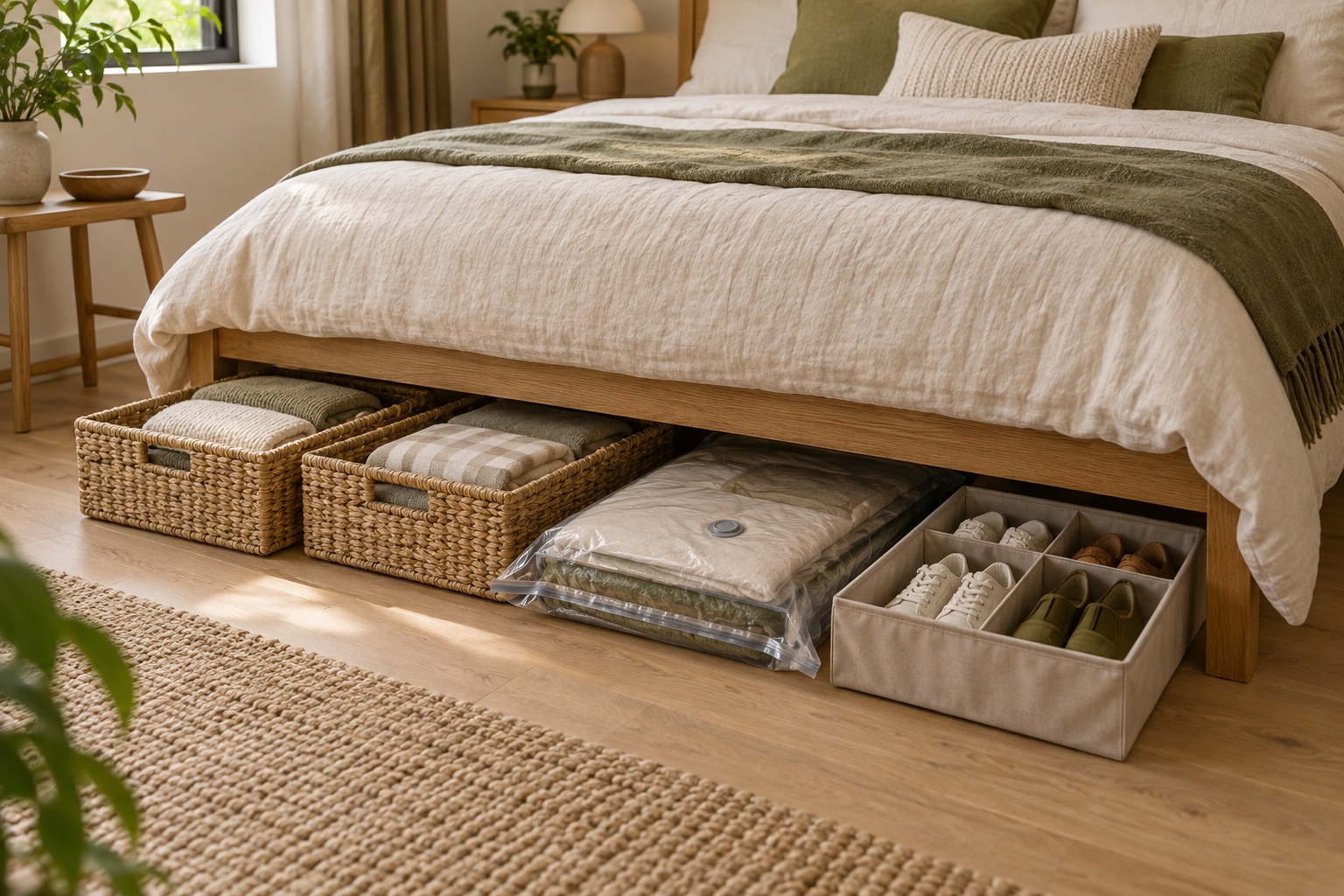
2. Try Vacuum Storage Bags for Bulky Items
Seasonal clothing and bulky bedding can take up a surprising amount of space. Vacuum storage bags can help suitable textiles fit into shallow areas, but check the item’s care guidance before compressing it. Store down-filled bedding loosely in a breathable bag unless its manufacturer specifically approves vacuum storage.
Keep similar items together and avoid overfilling the bags. A flat bag is easier to slide under a bed than a lumpy one. Vacuum bags are especially useful for seasonal rotation, but they work best for textiles you do not need to access every week.
3. Choose Under-Bed Drawers with Dividers
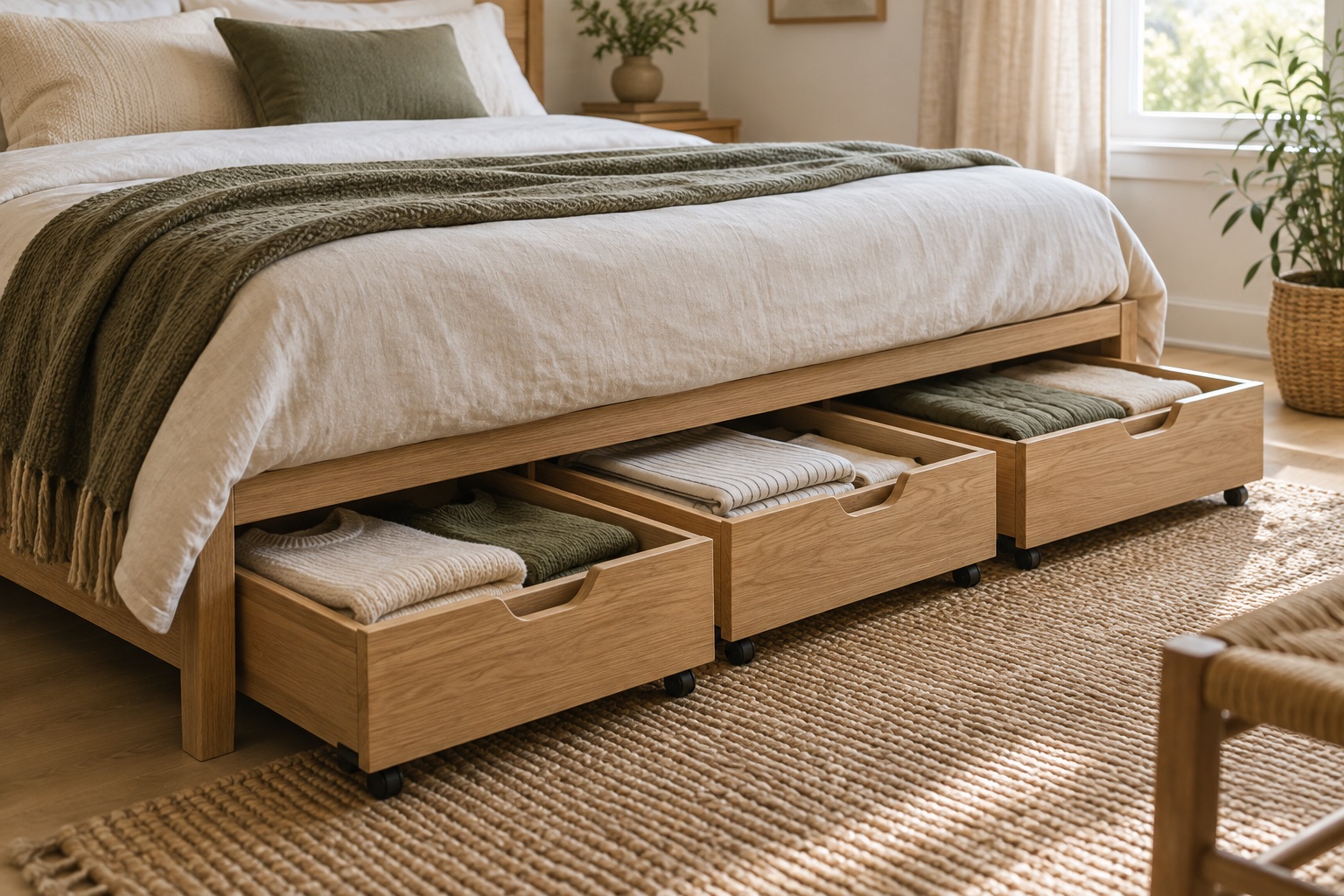
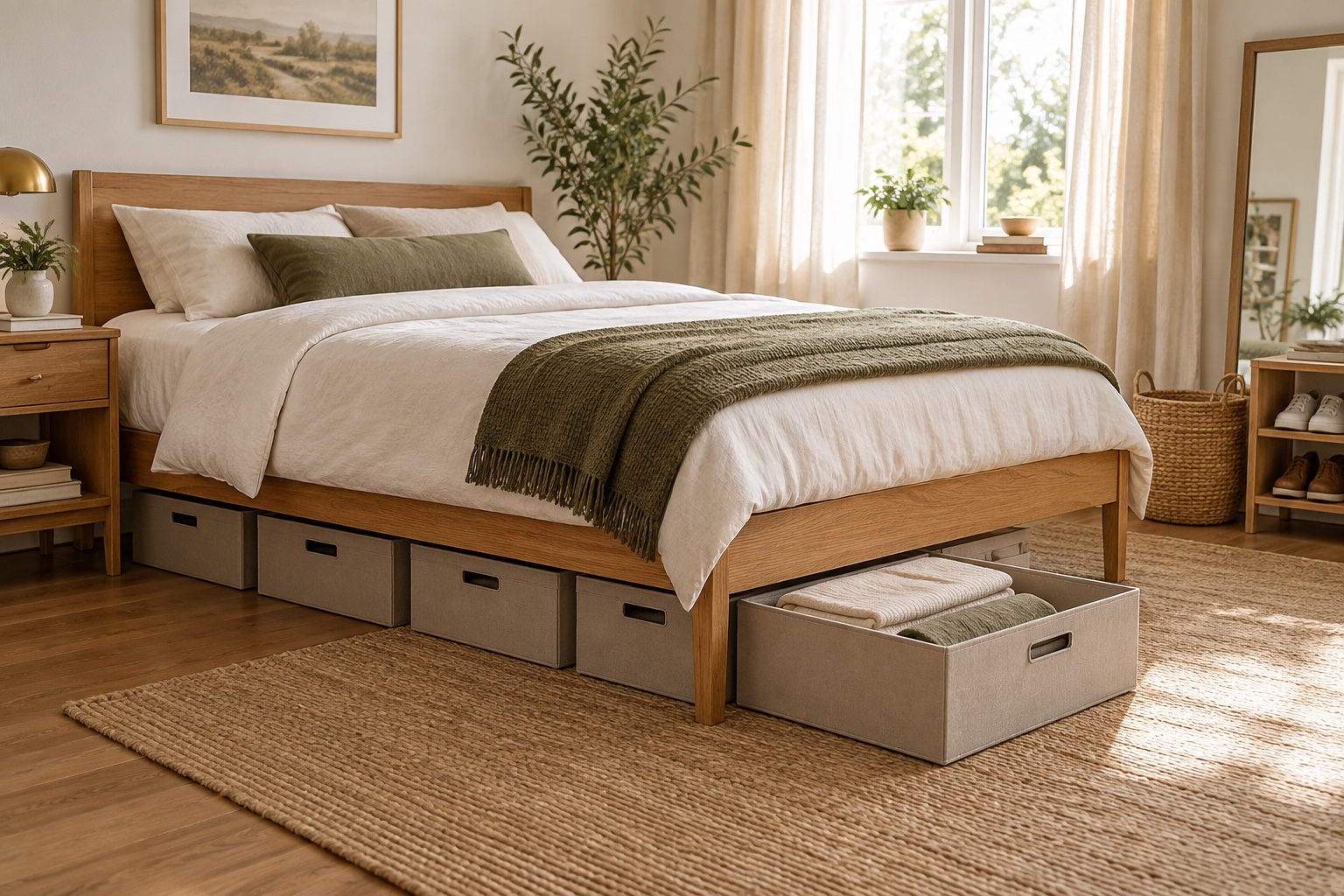
If you want storage that feels more like built-in furniture, use shallow drawers under the bed. Drawers with wheels or smooth glides are easy to access and can look much neater than a collection of mismatched boxes.
Add simple dividers inside the drawers to separate clothing, accessories, workout gear, or personal items. Broad categories are easier to maintain than overly detailed sections, so keep the system simple enough that you will actually use it every day.
4. Store Shoes in Clear or Labeled Boxes
Shoes can quickly take over the bottom of a closet. Under-bed space is ideal for pairs you wear occasionally, such as formal shoes, seasonal footwear, or extra sneakers.
Use clear shoe boxes, divided organizers, or one shallow container with sections. If the boxes are opaque, add a simple label to the front. Keep your everyday shoes somewhere more accessible so you are not constantly pulling storage in and out.
5. Keep Extra Bedding Close to the Bed
Sheets, pillowcases, duvet covers, and spare blankets make sense to store close to where they are used. Put one complete bedding set together in a fabric bag or shallow lidded bin so you can grab everything at once.
This also frees up linen-closet space for towels or larger household items. If you have more than one bed in the home, label the container by bed size or room so sets do not get mixed together.
6. Choose a Lift-Up or Built-In Storage Bed
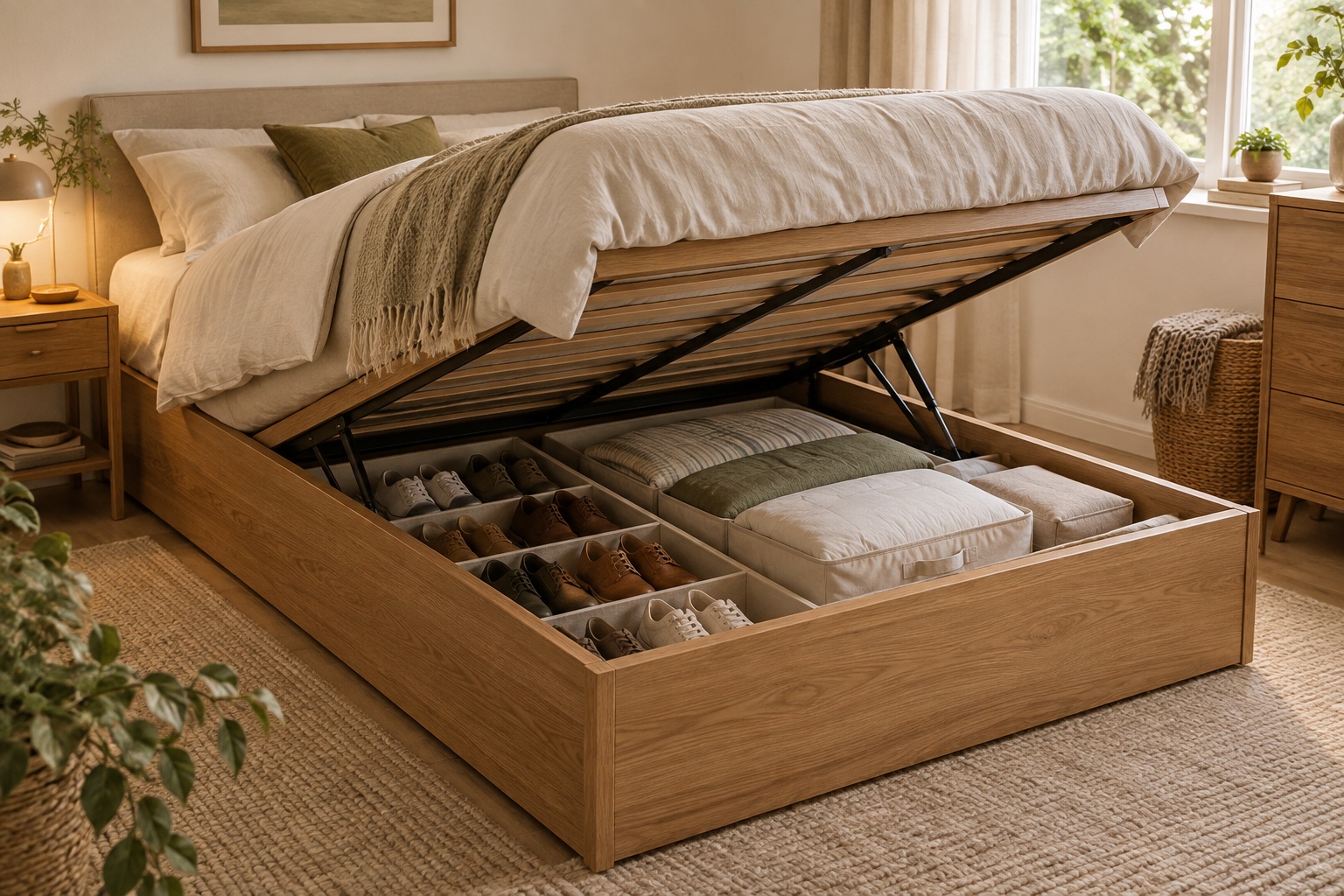
If you are replacing your bed frame, consider a design with built-in drawers or a lift-up platform. These beds can make better use of the space beneath the mattress, with capacity depending on the frame and storage design.
They are useful for bulky items, luggage, extra bedding, and seasonal clothing. Measure the room carefully before choosing one, especially if drawers need space to open. An end-opening lift-up design can suit a narrow bedroom because it avoids the clearance needed for side drawers. Check the space needed to open and reach the compartment, along with the manufacturer’s mattress-weight requirements.
7. Use Woven Baskets for a Softer Look
If the space under your bed is visible, woven baskets can make storage feel intentional rather than purely functional. Choose baskets that are low enough to slide comfortably beneath the frame and sturdy enough to hold their shape.
They work well for scarves, bags, books, extra pillowcases, or light blankets. Baskets suit items you use regularly; choose a container with a well-fitting lid when you need better protection from dust.
8. Rotate Out-of-Season Clothing
Under-bed storage is a natural place for clothes you will not wear for several months. At the start of each season, move out-of-season pieces into labeled containers suited to their care requirements and bring your current wardrobe into the closet.
This rotation keeps the closet easier to use and reduces the feeling that everything is packed together. Before storing clothes, make sure they are clean and fully dry so they stay fresh while packed away.
9. Store Luggage Under the Bed
Suitcases and travel bags take up a lot of space when they are empty. If the clearance allows it, slide smaller luggage under the bed instead of using valuable closet shelves.
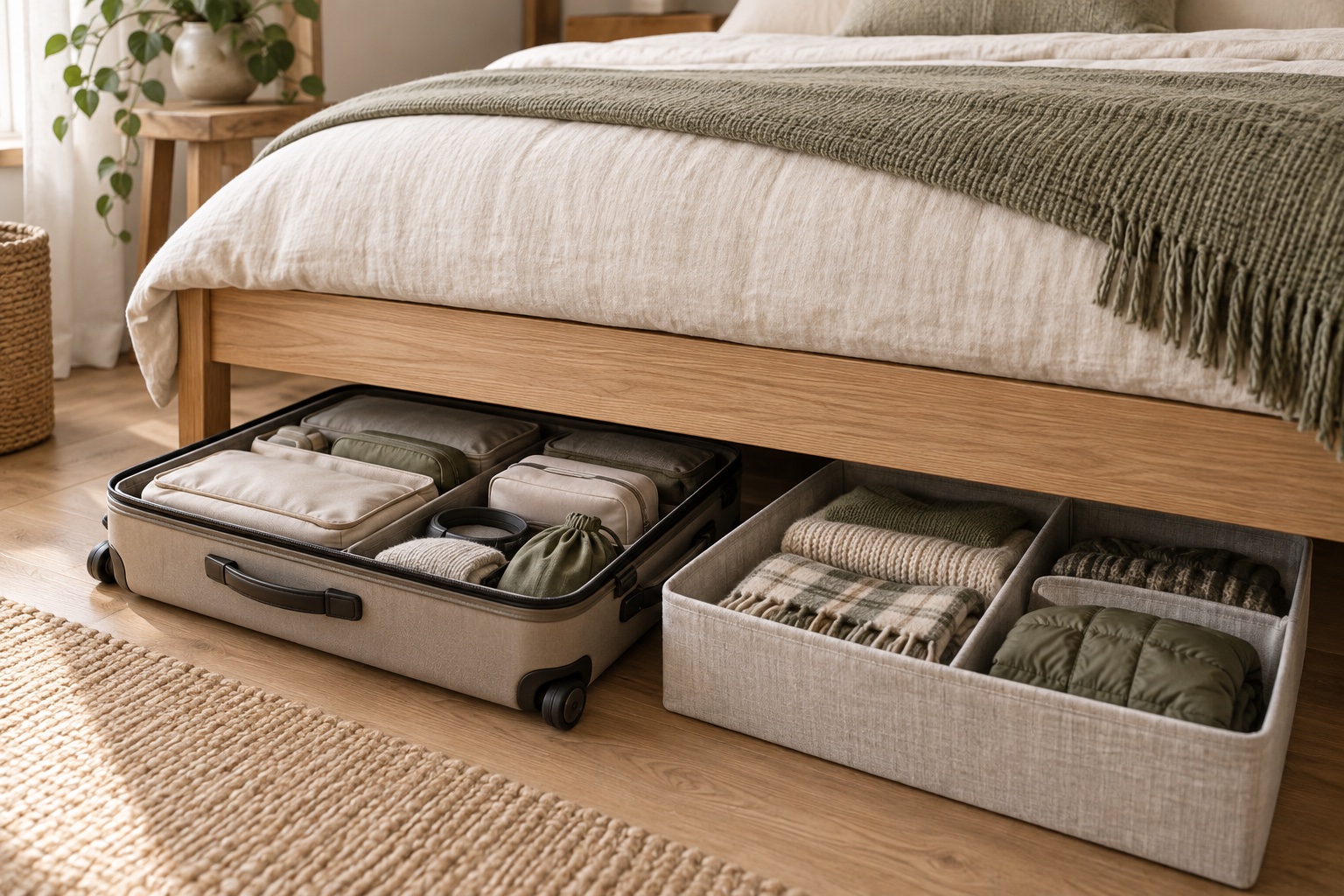
Use the empty suitcase as storage too. You can keep travel accessories, packing cubes, beach items, or out-of-season bags inside it. Just make sure the luggage is clean before bringing it close to bedding and textiles.
10. Use Dividers Inside Large Bins
Large containers can become cluttered very quickly when everything is mixed together. Add smaller boxes, fabric cubes, or simple dividers inside a large under-bed bin to create clear zones.
For example, one bin can hold belts, scarves, hats, and small bags without becoming one messy pile. Dividers also make it easier to remove one category without disturbing everything else.
11. Keep Books and Magazines in Flat Lidded Boxes
If your shelves are full, a small collection of books, magazines, journals, or notebooks can live under the bed. Use a flat container with a lid to protect paper from dust.
Avoid packing the box too heavily, especially if you need to pull it out regularly. Keep current reading beside the bed and store only the books you want to keep but do not need every day.
12. Create a Hobby or Craft Supply Zone
Craft materials, art supplies, puzzles, camera accessories, or other hobby items can be difficult to store in a small room. Under-bed containers give these items a defined home without taking up desk or closet space.
Use one container per hobby when possible and keep small pieces in pouches or smaller boxes inside it. The goal is to make the whole category easy to pull out, use, and put away again.
13. Label Storage by Category, Not by Individual Item
Labels help most when they describe a useful group, such as “Winter Clothes,” “Extra Bedding,” “Travel,” or “Craft Supplies.” Labels that are too specific can make the system harder to maintain as your belongings change.
Place labels where you can read them without pulling every container completely out. A simple, consistent labeling system makes it much faster to find what you need.
14. Use Bed Risers Only When the Extra Height Is Worth It
Bed risers can create several additional inches of storage clearance, but they should be used thoughtfully. Choose risers compatible with your bed frame and legs, with a stated capacity that covers the bed, mattress, bedding, and everyone using it. Follow the installation instructions, including support for any center legs, and check that the raised bed is level, stable, and comfortable to get into.
Use the added space for containers that truly need the extra clearance. If raising the bed makes the room feel awkward or the bed difficult to get into, a lower storage solution is usually the better choice.
15. Keep the System Simple and Easy to Maintain
The most useful under-bed storage is not the system that holds the most things. It is the one you can use without creating extra work. Avoid stuffing containers completely full, leave enough room to slide them easily, and keep only items that make sense to store there.
A little empty space is useful. It gives the system room to change and prevents the area under the bed from becoming a hidden clutter zone. Review the contents a few times a year and remove anything you no longer use.
Final Thoughts
Under-bed storage can make a noticeable difference in a small bedroom, but it works best when the system stays simple. Start with the items that are currently taking up valuable closet or floor space and choose one storage method that fits them well.
Use containers that are easy to pull out, protect the contents from dust, and leave a little breathing room instead of filling every box to the top. The easier the system is to use, the more likely it is to stay organized.
A calmer bedroom is not about hiding more stuff. It is about giving the things you actually use a clear, practical place to live.